
REVIEW · WALKING TOURS IN MOSTAR
2-Hour Cultural Walking Tour in One City-Three Stories of Mostar
Mostar rewards a closer look. This two-hour walk moves beyond the postcard view of the Old Bridge and connects Partisan-era art, Austro-Hungarian influences, Catholic heritage, and Ottoman architecture. I like that it begins away from the crowded center, and I like the way it ends at Mostar’s best-known sight with more context in your pocket.
The tour is also praised for its calm pace and strong guiding. Mirko, one of the guides, has excellent German and a friendly manner, which may matter if you prefer a tour in German. The main consideration is the walking: with several stops and no private transport, this is not a good fit if you have serious mobility problems.
In This Review
- Key Points Before You Book
- Why This Two-Hour Walk Gives You More Than the Old Bridge
- Partisan Cemetery: Modern Memorial Art in Mostar
- The Diocese Museum and Zlatko Ugljen’s Building
- Austro-Hungarian Influences Along the Way
- Old Bridge: A Better Ending to Mostar’s Best-Known Sight
- How the Guide Shapes the Experience
- Price, Pace, and Who Gets Good Value
- Booking Details That Affect Your Day
- Should You Book the Mostar Stories Walk?
- FAQ
- How long does the cultural walking tour last?
- Where does the tour begin?
- Where does the tour end?
- Is admission to the Diocese Museum included?
- What are the museum’s opening hours?
- Is the Old Bridge included in the tour?
- Is transportation included?
- How many people can join the tour?
- Can I cancel for a full refund?
Key Points Before You Book
- A WWII memorial begins the story: The Partisan Cemetery is a major work by architect Bogdan Bogdanović, built in 1965.
- Contemporary art adds a different side of Mostar: The Diocese Museum holds secular and religious works in a building designed by Zlatko Ugljen.
- The route ends at the Old Bridge: You reach Mostar’s famous Ottoman center after seeing less familiar parts of the city.
- The guide is central to the experience: Mirko is praised for his friendly style, excellent German, and broad knowledge of useful places around town.
- The museum schedule matters: Visits are possible from 9 AM to noon and from 4 PM to 7 PM Monday through Friday, and from 9 AM to noon on Saturday.
- The price reflects a small cultural tour: At $58.07 per person, the value depends on how much you want interpretation rather than a quick orientation walk.
Why This Two-Hour Walk Gives You More Than the Old Bridge
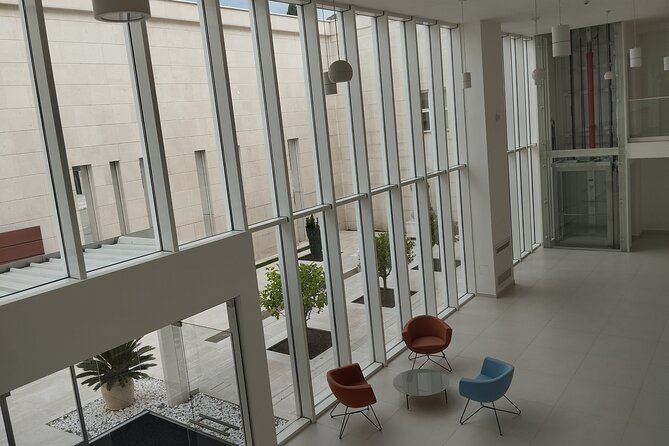
Mostar is easy to reduce to one image: a graceful stone arch over the Neretva River. The bridge deserves its fame, but it tells only part of the city’s story. This walk uses three very different places to show how Mostar has been shaped by war, faith, architecture, art, and daily life.
I like the structure because it avoids spending the entire two hours in the Old Town. You begin at Španski trg, then move to the Partisan Cemetery and the Diocese Museum before finishing in the Ottoman center. That order gives the Old Bridge a stronger setting. You see it not as an isolated monument, but as one chapter in a city with several cultural layers.
The tour lasts about two hours and accepts a maximum of 20 people. That is large enough to keep the price below a private tour, but still manageable for a walking group. At $58.07 per person, this is not the cheapest way to see Mostar. I would choose it for explanation and local perspective, not simply for transportation or a checklist of sights.
The tour includes museum admission. The stated fee is 5 euros per person, reduced to 1 euro for groups of 10 or more. Parking, private transportation, lunch, and other transport costs are not included.
More Walking Tours in Mostar
- Mostar Private Walking Tour
★ 5.0 · 93 reviews - Charming Mostar: Private Mostar Walking Tour
★ 5.0 · 23 reviews - Best of Mostar – Private Walking Tour
★ 5.0 · 21 reviews
Partisan Cemetery: Modern Memorial Art in Mostar
The first stop is the Partisan Cemetery, about 30 minutes from the start of the walk. This is one of the most unusual places on the route, and one of the best reasons to choose this experience over a standard Old Town visit.
Architect Bogdan Bogdanović designed the memorial complex, which was built in 1965. It honors the Partisans who died during the Second World War and is regarded as one of the most important WWII memorials in the Balkans. The design still draws attention from artists as well as people interested in history.
I appreciate that the tour places this site first. You begin with a work of public art rather than a souvenir street or a familiar viewpoint. The cemetery gives you a chance to think about how former Yugoslavia remembered the war, and how architecture can carry political and emotional meaning.
The provided information does not promise a formal museum inside the cemetery or a long guided lecture, so your experience will depend heavily on the guide’s explanation. That is important here. Without context, the forms and layout may be interesting but difficult to read. With a good guide, the stop can become one of the most memorable parts of the morning.
Admission is free. The 30-minute visit is long enough for an introduction and a look around without taking over the entire tour.
The Diocese Museum and Zlatko Ugljen’s Building
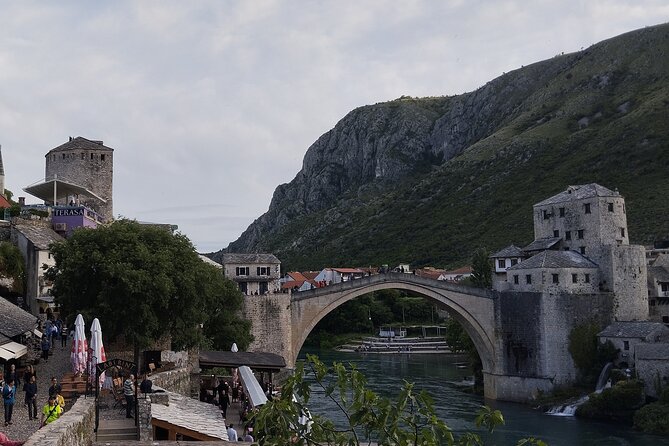
The second stop lasts about 45 minutes and takes you to the Cathedral of Mary, Mother of the Church area. The main visit is to the Diocese Museum across the street, housed in a building designed by architect Zlatko Ugljen.
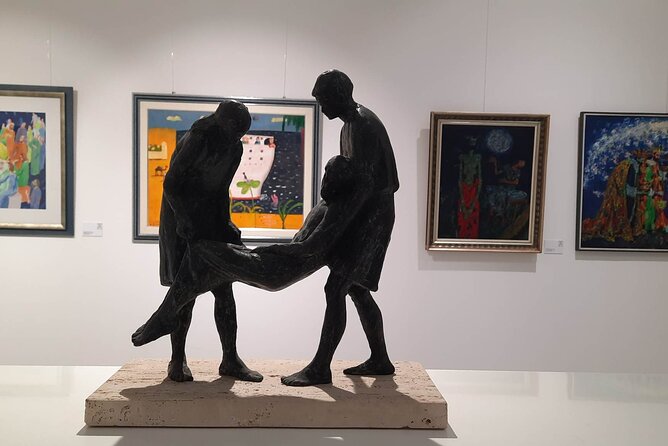
This stop changes the tone of the walk. After the Partisan memorial, you move into a space focused on art and religious culture. The collection includes contemporary secular and religious art, giving you a chance to see Mostar through creative work rather than monuments alone.
I like this pairing of building and collection. The architecture matters before you even consider the exhibits. Zlatko Ugljen is a famous architect, and the museum itself provides another example of how modern design can sit beside older religious and civic traditions.
The museum schedule is the most important practical detail. It operates from 9 AM to noon and from 4 PM to 7 PM Monday through Friday. On Saturday, it is open from 9 AM to noon. The supplied information does not list Sunday hours, so I would confirm the visit time if you are booking for that day.
This schedule can affect the whole experience. A morning tour fits the first opening period. An afternoon tour may work during the 4 PM to 7 PM window on weekdays. If the museum is closed at your chosen time, the indoor portion could be affected, so this is worth checking before you commit.
Admission is included in the tour price. The stated regular fee is 5 euros, or 1 euro per person for groups of 10 or more. That inclusion is useful, though it only accounts for a modest part of the total cost. The larger value comes from having someone explain why the collection and building matter.
Austro-Hungarian Influences Along the Way
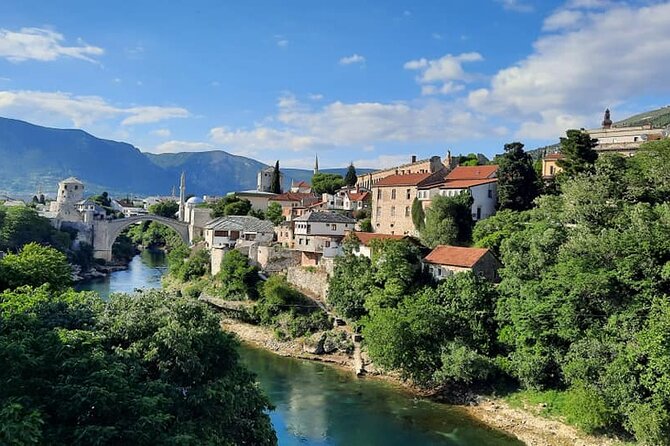
The route also introduces the Austro-Hungarian period in Mostar. The available description does not give a separate named stop for this subject, so you should think of it as part of the guide’s wider explanation rather than a standalone museum visit.
That makes sense for Mostar. The city’s identity is not contained in one period or one architectural style. Ottoman, Austro-Hungarian, religious, Yugoslav, and postwar stories overlap. A guide can point out those changes as you walk, helping you notice details you might otherwise pass without a thought.
One positive account describes the tour as professional and exciting, especially because it begins outside the main tourist center and introduces these Austro-Hungarian episodes before reaching the Old Bridge. I find that approach useful. Starting away from the Old Town helps you understand that Mostar was not created solely for sightseeing.
The experience also focuses on people, multicultural traditions, everyday habits, and local experiences. The information does not promise specific demonstrations or visits with residents, so I would not book this expecting an organized cultural activity. Instead, expect conversation and interpretation built around the places you pass.
A completely different kind of day:
- From Dubrovnik: Mostar and Kravica Waterfall Day Trip
★ 4.7 · 4,709 reviews - Dubrovnik: Kravica Waterfalls, Mostar and Pocitelj Day Trip
★ 4.5 · 3,045 reviews - Discover Herzegovina Day Tour from Mostar: Kravice Waterfalls, Blagaj, Počitelj
★ 5.0 · 742 reviews - Herzegovina Day Tour from Mostar: Blagaj, Pocitej, Kravice falls (Join Us! :D)
★ 5.0 · 372 reviews
Old Bridge: A Better Ending to Mostar’s Best-Known Sight
The final stop is the Old Bridge area in the Old City of Mostar. The visit lasts about 20 minutes, which is brief, but the bridge is easy to recognize and does not need a full afternoon to appreciate.
The Ottoman Old Town and Old Bridge have been on the UNESCO list since 2005. The bridge was built in 1566 and was originally one of the largest vaulted structures in Europe. It was destroyed in 1993, then carefully restored and reopened in 2004.
Those dates give the bridge a more complicated meaning than its elegant shape suggests. You see a historic Ottoman structure, a symbol of destruction during the war, and a rebuilt landmark that now anchors the city’s visitor economy. Ending here lets the guide connect the earlier memorial and museum stops with the image most people already associate with Mostar.
I like the short final stop because it keeps the tour from becoming a general Old Town stroll. You will not spend most of your time browsing shops or stopping for lunch. Instead, you arrive with a framework for understanding why the bridge matters.
Still, 20 minutes is not much time if you want to explore the Old Town in detail. The tour ends at the Old Bridge, so you can continue on your own afterward. Plan extra time if you want to see more of the Ottoman center, take photographs, or stop for food.
How the Guide Shapes the Experience
This tour depends more on the guide than a simple landmark walk does. The stops are meaningful, but the Partisan Cemetery and the Diocese Museum need explanation. A strong guide can connect architecture, politics, religion, art, and local life in a way that turns separate sites into one story.
Mirko is specifically praised for being friendly, relaxed, and well informed about Mostar and good places to visit. His German is described as excellent, so German-speaking visitors may find this especially appealing. The supplied information does not state that every departure is led by Mirko or list all available languages, so confirm the language and guide when booking.
The small maximum of 20 people helps. You still may not receive the same attention as on a private walk, but a group of that size should be easier to hear and manage than a large coach-style outing. Since there is no private transportation, the guide can keep the focus on the streets and places themselves.
Price, Pace, and Who Gets Good Value
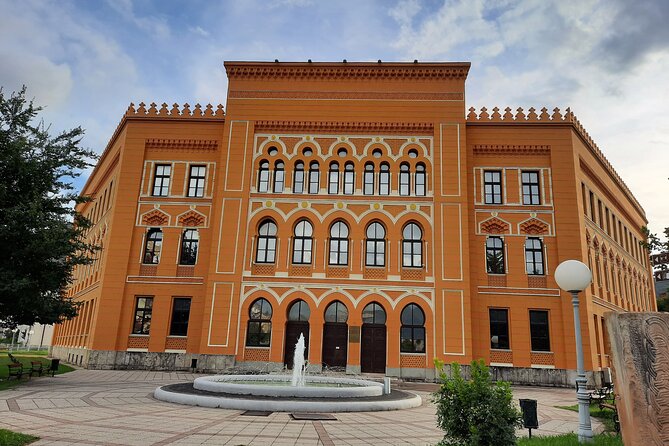
At $58.07 per person, this tour sits above the cost of a basic orientation walk. The admission included is only 5 euros, or less for a larger group, so the price is mainly paying for the guide’s time, the carefully chosen route, and the interpretation of sites you might not visit independently.
I think the price is reasonable for visitors who want Mostar explained rather than simply photographed. It is less attractive if you already have detailed knowledge of the city or only want to see the Old Bridge. In that case, you can visit the bridge and Old Town without paying for a guided experience.
The two-hour length works well for a first introduction. It is long enough to move beyond the central sights but short enough to fit into a busy day. You might combine it with independent time at the Old Bridge afterward, since the walk ends there.
The route requires moderate physical fitness and is not recommended for people with walking problems. The tour is near public transportation, but parking fees and private transportation are not included. Service animals are allowed.
I would choose this for:
- First-time visitors who want context before exploring alone
- People interested in architecture, memorials, art, and local history
- German-speaking visitors who can confirm Mirko or another German-speaking guide
- Anyone who has already seen the Old Bridge and wants a less familiar side of Mostar
- Visitors with a free morning or weekday afternoon that fits the museum hours
I would hesitate if you have limited walking ability, need private transport, or want a relaxed food-focused tour. Lunch is not included, and the experience is built around walking and interpretation.
Booking Details That Affect Your Day
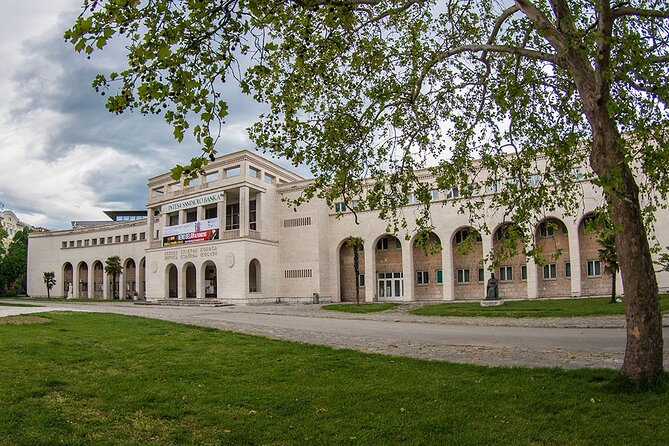
The meeting point is Španski trg, 88000 Mostar. The tour ends at Old Bridge Mostar in the Ottoman Old Town, which is helpful because you finish beside the city’s central attraction rather than needing to return to the starting point.
Confirmation is provided at booking. The maximum group size is 20 people. Free cancellation is available if you cancel at least 24 hours before the start time. Cancellations made less than 24 hours before the start time are not refunded, and changes inside that period are not accepted.
I would check the museum hours before selecting a departure, especially if you are visiting on a Saturday or planning an afternoon walk. Wear shoes suitable for steady city walking, and allow extra time after the tour for the Old Town.
Should You Book the Mostar Stories Walk?
I would book this tour if you want a short but serious introduction to Mostar’s different identities. The Partisan Cemetery is the strongest reason to go, while the Diocese Museum adds art and architecture that many quick visits miss. The Old Bridge then provides the familiar finish, now backed by more useful context.
At $58.07, it is not a bargain walk. But the route is more thoughtful than a standard bridge-and-bazaar tour, and the guide’s friendliness and language ability can add real value. Book it if you care about the stories behind the buildings, confirm the museum timing, and leave room afterward to explore the Old Town at your own pace.
FAQ
How long does the cultural walking tour last?
The tour lasts approximately two hours.
Where does the tour begin?
The tour begins at Španski trg, 88000 Mostar, Bosnia and Herzegovina.
Where does the tour end?
The tour ends at the Old Bridge in Mostar’s Ottoman Old Town.
Is admission to the Diocese Museum included?
Yes. Museum admission is included in the tour price. The stated fee is 5 euros per person, or 1 euro per person for groups of 10 or more.
What are the museum’s opening hours?
The museum is open from 9 AM to noon and from 4 PM to 7 PM Monday through Friday. On Saturday, it is open from 9 AM to noon.
Is the Old Bridge included in the tour?
Yes. The tour visits the Old Bridge area and the Old City of Mostar. Admission to the bridge area is free.
Is transportation included?
No. Private transportation, parking fees, and other transportation-related costs are not included.
How many people can join the tour?
The maximum group size is 20 people.
Can I cancel for a full refund?
Yes, if you cancel at least 24 hours before the experience start time. Cancellations made less than 24 hours before the start time are not refunded.
More City Tours in Mostar
- Mostar city Tour
★ 5.0 · 34 reviews - Private group city tour of Mostar and the Old Bridge
★ 5.0 · 6 reviews - Pocitelj City Tour
★ 4.5 · 3 reviews - ROSES OF SARAJEVO (Official WAR + CITY tour)- Story of a Survivor
★ 5.0 · 770 reviews
Just added in Mostar
- War Photo Exhibition Tour in Mostar★ 5.0 · 2 reviews
- Walking Tour in Old Town Mostar★ 5.0 · 5 reviews
- The Ottoman Experience Tour in Mostar★ 5.0 · 1 review
- Wine Tour & Tasting (Herzegovina)★ 5.0 · 1 review
- Transfer service from Mostar-Sarajevo★ 5.0 · 1 review
- Pocitelj City Tour★ 4.5 · 3 reviews
- Herzegovina Highlights Tour from Mostar★ 5.0 · 2 reviews
- Private Tour in Croatia★ 5.0 · 1 review
Walking Tours in Mostar, compared.
Browse the lists this tour appears in