REVIEW · MOSTAR TOURS
Mostar Shelters tour in Mostar
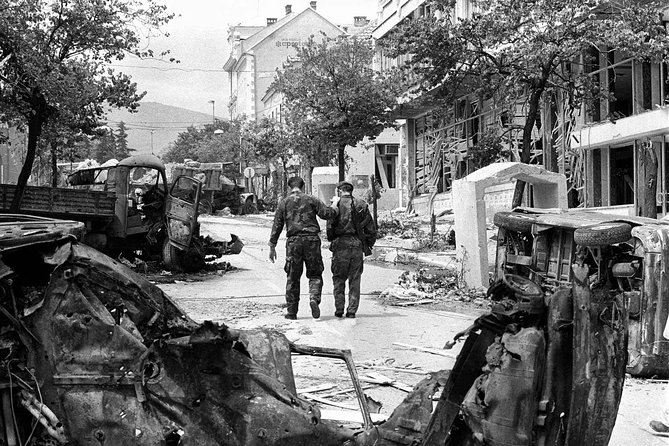
Mostar’s scars still tell a story. This two-hour tour helps you read them, taking you beyond the Old Bridge and souvenir stalls to artillery positions, trench lines, urban front lines, and other places tied to the Bosnian War. I like the mix of short walks and driving, and I like the way guides such as Miran and Dario use photographs, video footage, and personal stories to explain what happened.
The strongest part is the human angle. You are not simply shown damaged buildings and given dates. You hear how people lived through the fighting and what happened afterward. The main drawback is the subject itself: this is a serious, sometimes painful experience, not a light sightseeing outing. The schedule also says about two hours, while the actual experience may run closer to two or three hours.
In This Review
- Key points before you book
- Why Mostar’s wartime story needs a separate tour
- The 5:00 pm start and meeting point
- The driving portion: seeing Mostar beyond the center
- Artillery positions and trench lines
- The urban front line and bullet-scarred buildings
- Shelters, survival, and the civilian story
- The mountain cross viewpoint over Mostar
- Miran and Dario: why the guide matters
- Is $41.20 a fair price?
- Who should book the Mostar Shelters tour?
- Practical details that affect your visit
- Should you book Mostar Shelters?
- FAQ
- Where does the Mostar Shelters tour start?
- What time does the tour begin?
- Where does the tour finish?
- How long does the tour last?
- Is hotel pickup included?
- What language is the tour offered in?
- How many people can join the tour?
- Can children join the tour?
- Is food included in the price?
Key points before you book
- The tour begins at 5:00 pm: This gives you a useful afternoon activity after seeing the Old Town.
- It combines a van ride with walking: Most of the route is by vehicle, with short walks at selected sites.
- You visit several war locations: Expect artillery positions, trench lines, front-line areas, damaged buildings, and views over Mostar.
- Miran and Dario are named guides: Both are praised for explaining difficult material clearly and personally.
- The mountain cross viewpoint is included: One stop offers a broad view over Mostar from above.
- Small groups keep it focused: The maximum group size is 16 people, and hotel pickup is available from selected hotels.
Why Mostar’s wartime story needs a separate tour
Mostar’s Old Bridge is beautiful, but it can also make the city seem simpler than it is. Walk a few minutes beyond the postcard view and you begin to notice bullet holes, burned buildings, and walls still marked by the 1992 to 1995 war.
Those marks raise basic questions. Who was firing from where? How close were the front lines? How did families manage daily life? What happened to the buildings and the people after the fighting ended?
The Mostar Shelters tour is built around those questions. It explains Mostar’s particular experience during the Bosnian War rather than treating the conflict as a quick footnote in a general city tour. That focus matters because the war affected different parts of Bosnia and Herzegovina in different ways.
I appreciate that the tour does not avoid difficult subjects. The description makes clear that no topic is treated as off limits. At the same time, the guides aim to explain rather than provoke. Miran is praised for using real photographs and footage, while Dario is praised for making complicated material understandable without turning three hours of war history into a lecture.
A few more options to weigh up in Mostar
- From Dubrovnik: Mostar and Kravica Waterfall Day Trip
★ 4.7 · 4,709 reviews - Dubrovnik: Kravica Waterfalls, Mostar and Pocitelj Day Trip
★ 4.5 · 3,045 reviews - Discover Herzegovina Day Tour from Mostar: Kravice Waterfalls, Blagaj, Počitelj
★ 5.0 · 742 reviews
The 5:00 pm start and meeting point
The advertised meeting point is Onešćukova 32 in Mostar, with the activity ending back at the same location. The scheduled start is 5:00 pm, so you can spend the morning and early afternoon exploring the Old Town before turning to the city’s recent past.
That timing also changes the mood. You are seeing Mostar later in the day, after you have had time to get your bearings. The tour is not competing with your first look at the bridge or the old bazaar. Instead, it gives you a second way to understand the city.
Hotel pickup is included from selected hotels. I would still check your hotel’s eligibility when booking, since pickup is not stated as universal. If you are not covered, plan to reach Onešćukova 32 yourself.
A mobile ticket is provided, and confirmation arrives at the time of booking. You need at least two people per booking. Children must be accompanied by an adult.
The driving portion: seeing Mostar beyond the center
This is a half-driving, half-walking experience in broad terms, though the driving takes up most of the time according to the detailed descriptions. You travel by car or van between sites, stopping for short walks and explanations.
That format is useful in Mostar. Important wartime positions are not all concentrated around the Old Bridge, and a walking-only tour would limit how much ground you could cover. The vehicle also gives you a break between serious stops, which may be welcome when the subject matter becomes heavy.
The group is capped at 16 people. That is small enough to keep the guide’s commentary within reach, though the exact feel will depend on how many people book that day. A four-person group, for example, will naturally allow more questions than a full van.
The onboard commentary is live, not a recorded soundtrack. That gives you a chance to ask about a building, a position, or something you have noticed from the road. The guides are specifically praised for encouraging questions, including questions about sensitive topics.
Artillery positions and trench lines
The tour visits prominent wartime locations around Mostar, including artillery positions and trench lines. These are not just random stops for photographs. They help you understand the physical shape of the conflict.
At an artillery position, the key question is distance. From a higher point, you can begin to see how the city was exposed and how surrounding ground affected the fighting. At trench lines, the focus shifts from the wider battle to the people who spent time there and the conditions under which they lived.
The supplied details do not give the exact names of every stop, so you should not expect a fixed list of landmarks printed in advance. The guide’s explanation is part of the point. The place alone may look like a slope, a wall, or a damaged patch of ground. The story gives it meaning.
This is also where proper footwear helps. The walk is described as short, but the tour includes outdoor wartime locations and elevated viewpoints. You should be comfortable walking at each stop, even though no long hike is advertised.
A completely different kind of day:
- Herzegovina Day Tour from Mostar: Blagaj, Pocitej, Kravice falls (Join Us! :D)
★ 5.0 · 372 reviews - Mostar and Kravice Waterfalls Full-Day Tour from Split
★ 4.8 · 308 reviews - Break-up of Yugoslavia & The War in Mostar: Life Under Siege
★ 5.0 · 136 reviews - Mostar & Kravice Waterfalls: Guided Day Trip from Dubrovnik
★ 4.3 · 134 reviews
The urban front line and bullet-scarred buildings
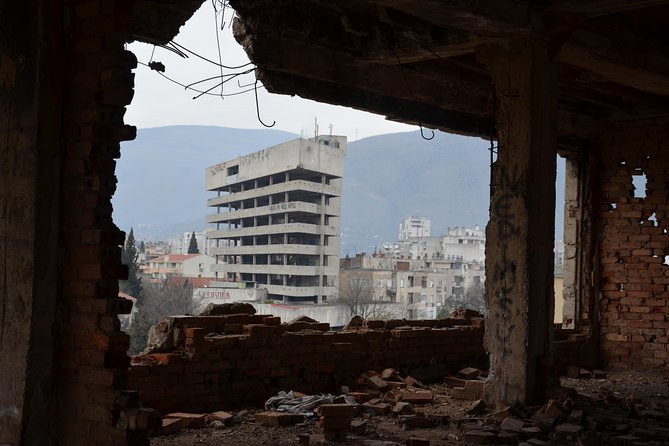
One of the most useful parts of the experience is its explanation of the urban front line. Mostar’s war was not something that happened far beyond the city center. The evidence remains in buildings that were hit, burned, or left pocked with bullets.
A guide can point out details you might otherwise pass without noticing. A damaged facade is not just an old wall. It can show where fighting reached ordinary streets and homes, and it can raise questions about how civilians moved, hid, worked, and survived.
The tour is particularly valuable if you have already walked around Mostar and found yourself asking what happened to the damaged buildings. It connects visible remains with the events behind them. You also hear what happened later, including how people’s lives changed after the war.
Do not expect a polished sightseeing route. Some stops may be visually stark rather than conventionally beautiful. That is the point, but it can be confronting. If you prefer history presented through museums, labels, and quiet exhibits, this tour may feel more direct than comfortable.
Shelters, survival, and the civilian story
The title points toward the shelters used during the war, and the tour’s central concern is how people lived through that period. The experience is not limited to military positions. It also asks what happened to ordinary residents while the city was under fire.
That makes the tour different from a battlefield visit focused only on maps and troop movements. You hear about life under pressure and the human cost of the conflict. The guides use personal stories alongside historical explanation, which helps turn an abstract war into something easier to understand.
Dario is praised for speaking about the war for several hours without making the subject dull. That is a useful distinction. Serious does not have to mean dry, and personal does not have to mean sensational. The best version of this tour seems to balance both.
The exact shelter interiors and conditions are not fully specified in the tour information, so I would not book expecting a particular underground complex or museum-style exhibit. Think of the experience as a guided explanation of Mostar’s wartime shelters and locations, supported by on-site stops and visual material.
The mountain cross viewpoint over Mostar
A stop at the mountain cross offers one of the tour’s clearest visual moments. From above, you get a wide view across Mostar, including the city’s divided spaces and surrounding hills.
The view is useful for more than photographs. It helps you connect the guide’s explanation of artillery positions, front lines, and movement with the geography in front of you. After seeing individual damaged buildings at street level, you can step back and understand how the city fits together.
This stop may also provide a pause in the emotional pace of the tour. You are still discussing the war, but the broad view gives you room to process what you have heard. The scenery is attractive, yet the setting does not erase the subject. It makes the geography clearer.
Since the tour combines driving with short walks, this viewpoint should not be confused with a long mountain trek. Still, you should be ready for some walking at stops and wear shoes that feel secure outdoors.
Miran and Dario: why the guide matters
The guide is the heart of this experience. A list of war sites would be easy to arrange, but the value comes from explaining what you are seeing and answering the questions that naturally follow.
Miran is praised for bringing real footage and photographs into the discussion. That can be especially helpful when the present-day scene looks quiet or rebuilt. You can compare the current view with images from the fighting and see how much has changed.
Dario is praised for his personal connection to Bosnia and Herzegovina and for explaining difficult material in an accessible way. He also led a separate Yugoslavia-related tour for some visitors, and the two experiences were described as complementary rather than repetitive. If you are considering both, the Mostar Shelters tour is the more specific choice for Mostar’s wartime story.
The guides also seem willing to let you ask direct questions. That matters here. The conflict is complicated, and a quick explanation can easily become misleading. A guide who welcomes questions gives you a better chance to understand the parts that do not fit into a simple good-side and bad-side story.
Is $41.20 a fair price?
At $41.20 per person, the price is strong for a roughly two-hour guided tour that includes transportation between sites, a professional guide, live commentary, and selected hotel pickup.
The value is not mainly in the number of stops. It is in the access and interpretation. You could walk past bullet-scarred buildings on your own, but you would not necessarily know what they show or how they fit into Mostar’s wartime story. You might also miss viewpoints and positions outside the usual Old Town route.
The price feels best if you are genuinely interested in recent history and want a local explanation. It may feel less worthwhile if you are looking for a relaxed scenic drive or a broad introduction to all of Mostar’s attractions.
Food and drinks are not included. For a two-hour outing, that is not a major issue, but plan to eat before or after the tour if you need a full meal. The 5:00 pm departure makes an early lunch or late afternoon snack sensible.
Who should book the Mostar Shelters tour?
I would choose this tour if you have noticed the war damage in Mostar and want clear answers. It suits people who prefer local stories, direct explanations, and places that sit outside the standard sightseeing route.
It is also a good fit if you have limited time. The van covers more ground than your own walk, while the short stops keep the experience from becoming a long physical outing. The group limit of 16 helps keep the format manageable.
Families can book, but children must be accompanied by an adult. Since the subject is war and civilian suffering, parents should decide if the content is suitable for their children.
I would skip it if you want only the Old Bridge, old stone streets, and easygoing holiday sights. This tour asks you to pay attention to painful events and to look at Mostar as a living city shaped by recent violence.
Practical details that affect your visit
The tour is offered in English and has several departure times listed in the highlights, with the supplied schedule showing a 5:00 pm start. Confirm your selected departure when booking.
You receive a mobile ticket, and the meeting point is near public transportation. The activity returns to Onešćukova 32. Most people can participate, but the tour includes short walks and outdoor stops, so you should be ready to leave the vehicle at several points.
Free cancellation is available if you cancel at least 24 hours before the start time. Cancellations or changes made less than 24 hours before departure are not accepted for a refund. The cut-off follows Mostar’s local time.
Should you book Mostar Shelters?
Book it if you want to understand Mostar, not just photograph it. The combination of wartime positions, damaged city buildings, personal stories, visual material, and the mountain viewpoint gives you context that a standard Old Town walk cannot provide.
The best reason to go is the guide-led explanation. Miran and Dario are praised for making difficult material clear, personal, and open to questions. At $41.20, the transport and local insight make this a good use of two hours, or possibly closer to three.
Just arrive ready for a serious subject. Mostar Shelters is not a cheerful sightseeing loop. It is a candid look at how war reached the city and the people who lived there.
FAQ
Where does the Mostar Shelters tour start?
The tour starts at Onešćukova 32, Mostar 88000, Bosnia and Herzegovina.
What time does the tour begin?
The listed start time is 5:00 pm.
Where does the tour finish?
The activity ends back at the meeting point on Onešćukova 32.
How long does the tour last?
The stated duration is approximately two hours. The detailed experience can last between two and three hours.
Is hotel pickup included?
Hotel pickup is included from selected hotels only. Check whether your hotel is covered when booking.
What language is the tour offered in?
The tour is offered in English.
How many people can join the tour?
The maximum group size is 16 people.
Can children join the tour?
Yes. Children must be accompanied by an adult.
Is food included in the price?
No. Food and drinks are not included.
Just added in Mostar
- War Photo Exhibition Tour in Mostar★ 5.0 · 2 reviews
- Walking Tour in Old Town Mostar★ 5.0 · 5 reviews
- The Ottoman Experience Tour in Mostar★ 5.0 · 1 review
- Wine Tour & Tasting (Herzegovina)★ 5.0 · 1 review
- Transfer service from Mostar-Sarajevo★ 5.0 · 1 review
- Pocitelj City Tour★ 4.5 · 3 reviews
- Herzegovina Highlights Tour from Mostar★ 5.0 · 2 reviews
- Private Tour in Croatia★ 5.0 · 1 review
Mostar Tours, compared.
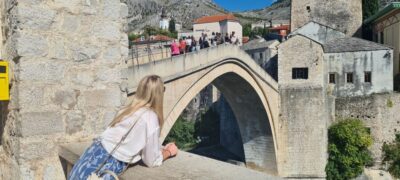
From Dubrovnik: Mostar and Kravica Waterfall Day Trip
Read our review →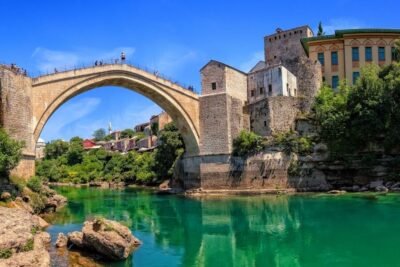
Dubrovnik: Kravica Waterfalls, Mostar and Pocitelj Day Trip
Read our review →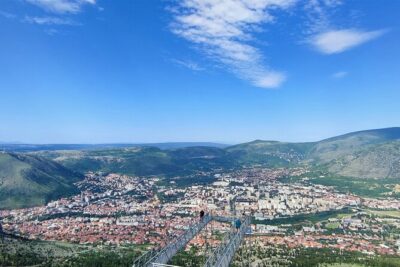
Discover Herzegovina Day Tour from Mostar: Kravice Waterfalls, Blagaj, Počitelj
Read our review →
Herzegovina Day Tour from Mostar: Blagaj, Pocitej, Kravice falls (Join Us! :D)
Read our review →
Mostar and Kravice Waterfalls Full-Day Tour from Split
Read our review →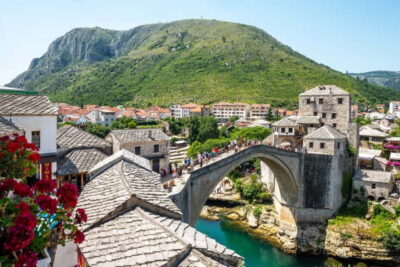
Mostar & Kravice Waterfalls: Guided Day Trip from Dubrovnik
Read our review →