
REVIEW · PRIVATE DRIVERS
Sarajevo to/from Belgrade UNESCO Transfer Day Tour (Fees Incl.)
The road between these cities is the attraction. This 12 to 13-hour transfer links Sarajevo and Belgrade with medieval stećci tombstones, Višegrad’s Ottoman bridge, a Drina River boat ride, and a mountain railway journey. I especially like the door-to-door pickup and drop-off, plus the way the long drive becomes a full day of sightseeing. The main drawback is the winding mountain roads and late arrival, so this is not the right choice if you need a quick, restful transfer.
I also like that the price of $174.99 per person covers the main admission fees, the Drina cruise, the Šargan Eight train, and transport in an air-conditioned vehicle. Guides such as Tarik, Enis, Ajla, Zlata, Ajdin, and Amar have been praised for their warmth, historical knowledge, patience, and careful driving.
You should also know that the route is ambitious. You will cross the Bosnia and Herzegovina to Serbia border, walk through a forest to a medieval cemetery, visit religious sites, ride a train, and reach Belgrade in the evening. Food and drinks cost extra, and the border requires a current valid passport.
In This Review
- Key points to know before booking
- Why this transfer is worth considering
- Early morning departure and the road to Rogatica
- The Borak stećci and its short forest hike
- Višegrad, the Drina, and a bridge made famous by a novel
- Andrićgrad, an unusual modern stone town
- Dobrun Monastery and the Bosnia to Serbia border
- Drvengrad, lunch, and Emir Kusturica’s film village
- The Šargan Eight train ride
- Tara National Park and Banjska Stena
- The House on the Drina and the final drive to Belgrade
- Comfort, group size, and guide quality
- Who should book this Sarajevo to Belgrade transfer?
- Should you book it?
- FAQ
- How long does the Sarajevo to Belgrade transfer tour take?
- Is hotel pickup and drop-off included?
- Can I take the tour from Belgrade to Sarajevo?
- Do I need a passport?
- Are the train and boat rides included in the price?
- Is food included?
- How large is the tour group?
- Is there walking on the tour?
Key points to know before booking
- A sightseeing transfer, not a simple drive: You see major cultural and natural sights between Sarajevo and Belgrade instead of spending the day on a direct road journey.
- The Drina River is the visual star: Višegrad, the river cruise, Perućac Lake, and the House on the Drina create several memorable river views.
- The Borak stećci site requires a forest walk: Expect a short hike through dense woodland, described as roughly 20 minutes in one account.
- The train ride may not use a steam locomotive: The Šargan Eight experience is included, but one detailed account found a modern diesel-electric engine instead.
- The trip crosses a real international border: Keep your passport ready and allow extra time for border procedures.
- Small-group comfort matters: The vehicle carries no more than 15 people, with hotel pickup and drop-off at your chosen address.
Why this transfer is worth considering
A direct road transfer between Sarajevo and Belgrade gets you from one capital to the other. This tour gives you a full day of Bosnia and Serbia between those capitals. That difference is the whole point.
For $174.99, you are paying for transport, a professional English-speaking guide and driver, admission to the listed attractions, and several experiences that would be awkward to arrange alone in one day. The included items have real value: the Šargan Eight train costs 11 euros per person, the Drina boat cruise costs 5.50 euros, and Drvengrad admission costs 2.50 euros. The nature-park eco tax is also covered.
I would not call the tour cheap, especially once you add lunch and drinks. Still, the price compares well with booking a private driver, arranging separate attraction tickets, and finding the train and boat schedules yourself. The benefit is not only convenience. Your guide connects the Ottoman, medieval Bosnian, Orthodox Christian, Yugoslav, and modern Serbian parts of the route.
The service is offered in both directions. You can begin in Sarajevo and finish at a chosen address in Belgrade, or reverse the journey. Pickup is included in either city, which is helpful when you have luggage and do not want to find a bus station before sunrise.
More private transfers in Sarajevo:
- Sarajevo to/from Dubrovnik Transfer Tour via Mostar & Herzegovina
★ 5.0 · 115 reviews - Sarajevo to Belgrade: Transfer With East Bosnia Tour
★ 5.0 · 63 reviews - Sarajevo to Split (or opposite): Transfer With Herzegovina Tour
★ 5.0 · 28 reviews
Early morning departure and the road to Rogatica
The day begins at 7:00 am. Pickup is available from your selected location, or you can meet at Funky Tours, Besarina čikma 5 in Sarajevo. The exact driving conditions can affect the arrival time, but the planned day lasts about 12 to 13 hours.
The first portion heads through eastern Bosnia toward Rogatica. This is mountain country, with winding roads rather than fast motorway stretches. The scenery is a major part of the day, but the road may be tiring if you suffer from motion sickness. One detailed account specifically recommended carrying motion-sickness medicine for the twisty two-lane roads.
At Rogatica, you stop near a medieval stećci necropolis for about 45 minutes. Stećci are distinctive medieval tombstones found across Bosnia and Herzegovina and nearby parts of the Balkans. They can be plain stone blocks or decorated with carved symbols, figures, and geometric patterns.
The stop gives you a useful introduction to the medieval Bosnian Kingdom. These stones are not displayed in a formal museum setting. Their open rural setting helps you understand how widespread and connected to the countryside they are.
The Borak stećci and its short forest hike
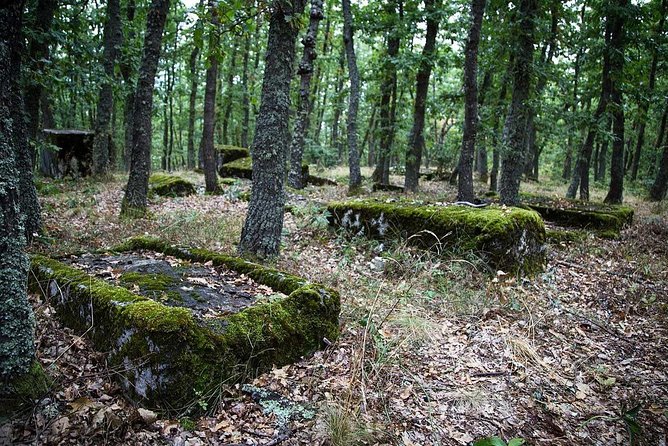
About 20 minutes beyond Rogatica, the route reaches the Borak stećci necropolis near Burati village, accessed via Stjenice. This site is reached by a short walk through dense forest. The walk has been described as a mild hike of around 20 minutes, while the stop itself lasts about 30 minutes.
This is one of the more unusual parts of the day. The cemetery is quiet and lightly developed, with limestone medieval tombstones set among trees rather than arranged behind a grand entrance. You get a sense of how easily old sites can fade from public view.
The forest path means you should wear firm walking shoes. This is not a demanding trek, but it is still more than a quick roadside photo stop. If your legs are tired or walking on uneven ground is difficult, tell the guide early. The tour has received praise for adapting when a passenger had a medical condition, but the basic route still includes this walk.
Višegrad, the Drina, and a bridge made famous by a novel
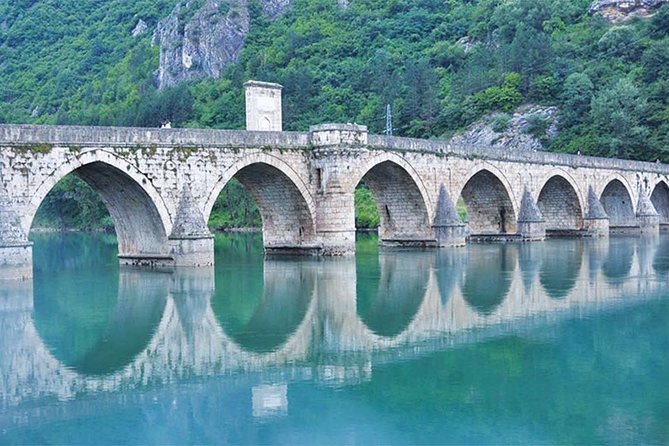
After about an hour through the mountains, you reach Višegrad and the turquoise Drina River. The town’s major sight is the Mehmed Paša Sokolović Bridge, built in 1577 during the Ottoman period by Grand Vizier Mehmed Paša Sokolović.
The bridge is a UNESCO World Heritage site, and its graceful arches are best appreciated from more than one angle. You can walk across it, then see it again from the water during the included boat cruise. That change of viewpoint makes the visit more than a quick photo stop.
The bridge is also central to Ivo Andrić’s novel The Bridge on the Drina. Andrić was born in Travnik and won the Nobel Prize in Literature. Reading the novel before the tour is not required, but it can give the bridge and town a stronger human and historical context.
The bridge stop lasts about 45 minutes, followed by the river cruise. The boat trip is short, but it offers a calm break after the morning drive and a clear view of the Drina canyon. The water and steep green slopes around Višegrad are among the day’s finest sights.
A few more options to weigh up in Sarajevo
- Sarajevo: Mostar, Konjic, Blagaj Tekke, Pocitelj & Waterfall
★ 4.9 · 1,335 reviews - Fall of Yugoslavia, Sarajevo War Tour with Tunnel of Hope Museum and Frontlines
★ 5.0 · 1,314 reviews - Sarajevo: Mostar, Konjic, Sufi House, Pocitelj & Kravice Falls
★ 5.0 · 1,179 reviews - ROSES OF SARAJEVO (Official WAR + CITY tour)- Story of a Survivor
★ 5.0 · 770 reviews
Andrićgrad, an unusual modern stone town
After the boat ride, you visit Andrićgrad, also called Andrić Town. It was created in honor of Ivo Andrić and designed by film director Emir Kusturica. The stone-built complex presents a version of Balkan history and culture through architecture, shops, cafes, and film-related displays.
Give yourself realistic expectations. Andrićgrad is not an untouched medieval town. It is a recently built interpretation of one, with a deliberately theatrical appearance. One detailed account compared its feel to an outdoor shopping and entertainment complex, while still finding it interesting.
That contrast is worth understanding before you go. If you want only original historic buildings, this may feel artificial. If you enjoy film, architecture, and the way modern Serbia and Bosnia interpret their past, it is an engaging stop. The visit takes about 15 minutes, so you will not have much time for a long meal or extensive browsing.
Dobrun Monastery and the Bosnia to Serbia border
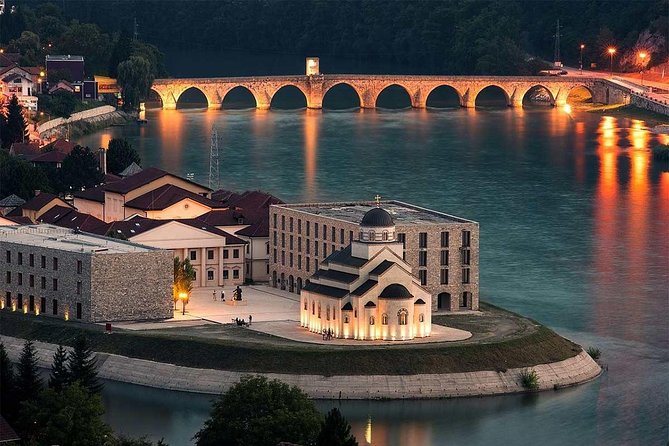
The next stop is Dobrun Monastery, an important Serbian Orthodox site first built in 1343. Its preserved frescoes provide a close look at the religious art and traditions of the region.
The monastery also gives the day a different tone. You have already seen medieval tombstones, Ottoman engineering, and a modern film town. Here, the focus shifts to Orthodox Christianity and a working sacred site surrounded by wooded hills.
The visit lasts about 20 minutes. Dress and behave respectfully, and follow any instructions given at the monastery. The supplied information describes the frescoes as preserved to the present day, but it does not promise a guided interior visit every time, so the exact access may depend on local conditions.
Soon after Dobrun, you cross from Bosnia and Herzegovina into Serbia. Your current valid passport is required on the day of the tour. Border delays can affect the schedule, so keep your passport accessible rather than buried inside your luggage.
Drvengrad, lunch, and Emir Kusturica’s film village
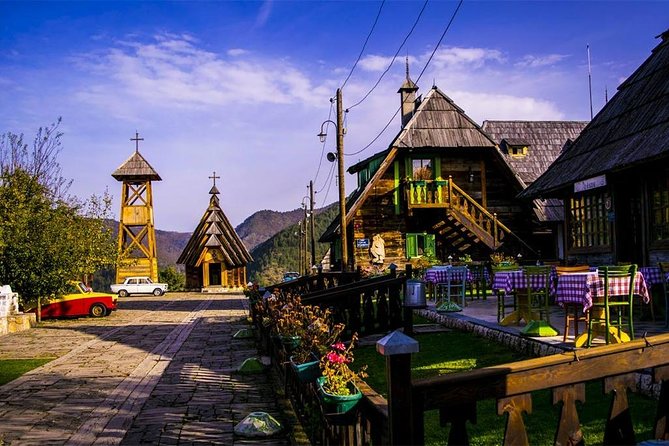
Once in Serbia, you enter the Šargan-Mokra Gora Nature Park and stop at Drvengrad, also known as Timber Town, Küstendorf, or Mećavnik. Emir Kusturica designed the village for his film Life Is a Miracle. Its architecture later received the Philippe Rotthier European Architecture Award from the Brussels Foundation for Architecture.
Drvengrad is made of timber and designed as a compact village-town. It feels intentionally storybook-like, with strong visual details and a clear connection to cinema. The setting also makes it a practical lunch stop, although food is not included in the tour price.
Plan for about one hour here. That sounds generous, but it can pass quickly if you want to eat, walk around, take photographs, and look at the film displays. One passenger found the time short enough to barely finish a beer before leaving.
I would treat lunch as a quick, useful pause rather than a leisurely restaurant meal. Serbian-style ćevapčići, a popular Balkan grilled meat dish, were singled out as a memorable meal choice. Since drinks and food are extra, carry some cash or a payment method suitable for the stop.
The Šargan Eight train ride
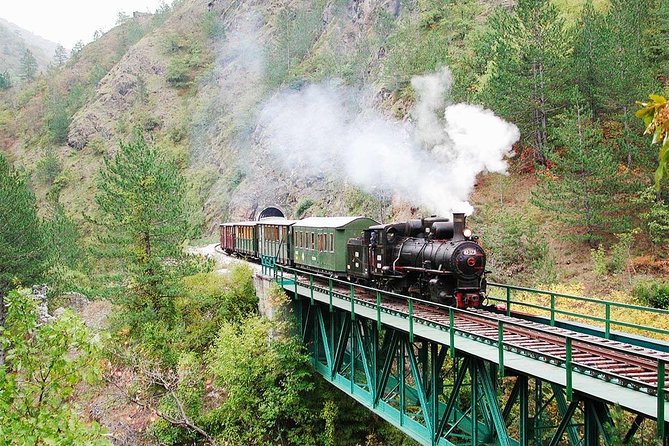
After lunch comes the included Šargan Eight railway journey. The narrow-gauge railway was built in 1925, using a 760-millimeter gauge. Its route takes the shape of a figure eight when viewed from above, allowing the line to climb about 300 meters over a short distance.
The railway includes 22 tunnels and five bridges along its full route, which measures about 15.44 kilometers. It once connected Sarajevo and Belgrade and closed in 1974 before being reopened for tourism.
The ride lasts around 45 minutes. It is an enjoyable historical experience, especially if you like old railways and engineering. You pass through wooded mountain country, and the train gives your legs a break after the earlier walking.
One point needs a clear warning. Promotional descriptions may make you picture a steam locomotive, but at least one passenger found the train was pulled by a modern diesel-electric engine. Much of the ride also passes through trees, so the views may not be as open or dramatic as you expect. I would book it for the railway story and route, not solely for a steam-train spectacle.
Tara National Park and Banjska Stena
After the train, the road continues through Tara National Park. The park was declared in 1981 and is known for its plant and animal life, hiking possibilities, and the rare Picea omorika spruce.
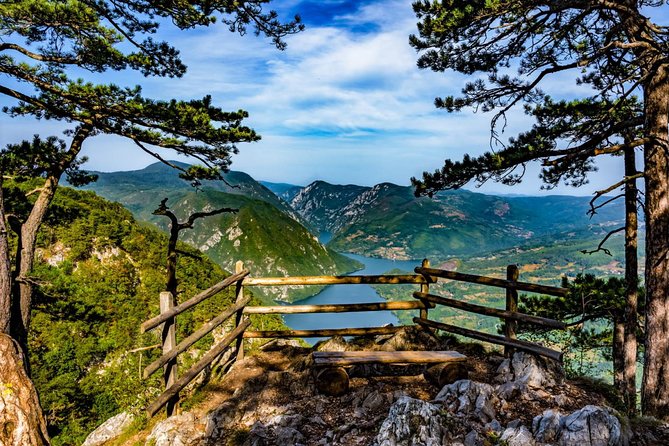
The main stop is Banjska Stena, a viewpoint above Perućac Lake. The panorama reaches across the lake and the Drina River, which forms part of the natural boundary between Bosnia and Herzegovina and Serbia.
The stop lasts about 30 minutes. It is one of the best places for photographs, but getting there involves a short walk to the viewpoint. One passenger with leg trouble chose to skip this section to reach Belgrade sooner. The guide may be able to adjust the day, but you should not assume every stop can be removed without affecting the schedule.
The drive along Perućac Lake adds another scenic stretch. The lake was formed by a dam on the Drina, and the road beside it is a pleasant contrast to the earlier mountain passes. At this stage, the day is long, so the view is welcome even if you are ready to sit quietly.
The House on the Drina and the final drive to Belgrade
The last sightseeing stop is the House on the Drina near Bajina Bašta. This small structure sits on a rock in the river and has become one of the region’s best-known oddities.
You have about 15 minutes here. It is a quick stop, but that is enough for photographs and a final look at the Drina before the long ride to Belgrade.
From the House on the Drina, the remaining drive takes roughly three hours. The tour aims to arrive in Belgrade by 8:00 pm, though traffic near the city can push the arrival later. Drop-off is provided at your chosen address, which is especially useful after such a full day.
Comfort, group size, and guide quality
The vehicle is air-conditioned, and the maximum group size is 15 people. That is a useful limit on narrow roads and at small sites, although the exact feel of the ride depends on how full the vehicle is and how much luggage everyone brings.
The strongest part of the service is the guide and driver team. Guides named in individual accounts include Tarik, Enis, Annis, Ajla, Zlata, Ajdin, and Amar. They were praised for clear storytelling, calm driving, patience, punctuality, and a willingness to answer questions about Ottoman rule, Yugoslavia, local religion, cinema, and regional culture.
Some accounts describe a guide and separate driver, while others refer to a guide-driver. Either way, the human side of the trip matters. You spend many hours on mountain roads, so a friendly and careful team can make the difference between a hard slog and an enjoyable day.
The vehicle can stop for basic breaks when needed. One account described a gas-station stop for water and the restroom after the group asked for a pause. Still, you should use facilities when available and carry water because the schedule is packed.
Who should book this Sarajevo to Belgrade transfer?
You should consider this tour if you want to connect the two cities and see eastern Bosnia and western Serbia along the way. It works especially well for first-time visitors to the region, history fans, railway enthusiasts, film lovers, and anyone who prefers seeing several places with a guide rather than arranging a complicated route alone.
It is also a strong choice if you value door-to-door service. You do not need to move your luggage between buses, taxis, and local trains. The guide handles the route while you watch the Drina valley, mountain villages, and wooded roads pass by.
I would think twice if you dislike long drives, winding roads, early starts, or tightly timed sightseeing. This is not a slow holiday day. The stops break up the drive, but you still spend many hours in the vehicle.
Free cancellation is available up to 24 hours before the start time. Changes or cancellations made inside that window are not accepted for a refund. Confirmation is sent within 48 hours, subject to availability.
Should you book it?
Book this tour if you need to travel between Sarajevo and Belgrade and want the journey itself to be a major part of your trip. The bridge at Višegrad, the Drina cruise, Dobrun Monastery, Drvengrad, Tara National Park, and the House on the Drina give you a broad look at the region in one demanding day.
The best reason to book is the combination of transportation and interpretation. You get practical door-to-door service, included attraction fees, and guides who can explain the complicated links among Bosnia, Serbia, the Ottoman period, Orthodox Christianity, Yugoslavia, and modern film culture.
Skip it if your priority is arriving early, traveling by motorway, or resting between cities. For everyone else, this is one of the more useful ways to turn a necessary transfer into a substantial day of sightseeing.
FAQ
How long does the Sarajevo to Belgrade transfer tour take?
The tour lasts approximately 12 to 13 hours. It begins at 7:00 am and aims to arrive in Belgrade by about 8:00 pm, although traffic and border conditions can affect the timing.
Is hotel pickup and drop-off included?
Yes. Complimentary pickup and drop-off are offered at your chosen addresses in Sarajevo or Belgrade, depending on the direction of your journey.
Can I take the tour from Belgrade to Sarajevo?
Yes. The experience operates in both directions, from Sarajevo to Belgrade and from Belgrade to Sarajevo.
Do I need a passport?
Yes. A current valid passport is required on the day of the tour because the route crosses the Bosnia and Herzegovina to Serbia border.
Are the train and boat rides included in the price?
Yes. The Šargan Eight train ride and the Drina River boat cruise are included, along with the listed attraction fees and taxes.
Is food included?
No. Drinks and food are not included. You may have the opportunity to eat lunch at Drvengrad.
How large is the tour group?
The tour has a maximum of 15 participants. Transport is provided in an air-conditioned vehicle.
Is there walking on the tour?
Yes. The Borak stećci necropolis involves a short hike through dense forest, and the Banjska Stena viewpoint also requires walking. Most participants can take part, but you should mention any medical or mobility concern when arranging the tour.
Just added in Sarajevo
- Sarajevo Under Siege: A War History Tour★ 5.0 · 10 reviews
- Walking Tour in Sarajevo★ 5.0 · 3 reviews
- Private Full Day Safari Tour★ 5.0 · 8 reviews
- Bosnian Pyramid: The World’s Largest Pyramid (From Sarajevo)★ 5.0 · 1 review
- Ultimate adventure★ 5.0 · 2 reviews
- Mysterious Visoko Pyramids Driving and Walking Tour★ 5.0 · 7 reviews
- Travnik, Jajce, Pliva Lakes & Mills –Medieval & Ottoman Bosnia Full Day Tour★ 5.0 · 3 reviews
- Sarajevo to/from Zagreb Transfer Day Tour (North-central Bosnia)★ 5.0 · 4 reviews
Private Drivers, compared.
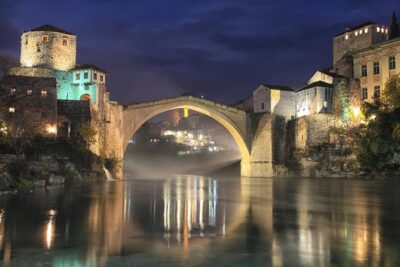
Sarajevo to/from Dubrovnik Transfer Tour via Mostar & Herzegovina
Read our review →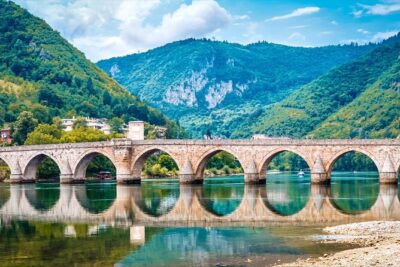
Sarajevo to Belgrade: Transfer With East Bosnia Tour
Read our review →
Sarajevo to Split (or opposite): Transfer With Herzegovina Tour
Read our review →
Transfer Mostar to Dubrovnik with Kravice Waterfalls, Blagaj and Počitelj tour
Read our review →
Private Transfer between Trebinje and Dubrovnik
Read our review →
Sarajevo to Dubrovnik: Transfer With Herzegovina Tour
Read our review →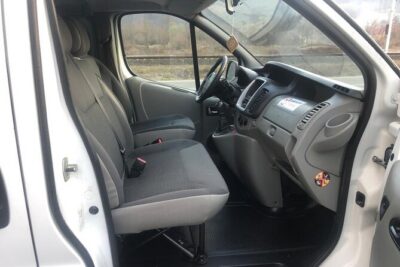
Sarajevo: Private Transfer to and from Sarajevo Airport
Read our review →Browse the lists this tour appears in