
REVIEW · JAJCE AND TRAVNIK TOURS
Travnik, Jajce, Pliva Lakes & Mills –Medieval & Ottoman Bosnia Full Day Tour
Central Bosnia packs a lot into one day. This tour links Travnik’s Ottoman-era streets with Jajce’s medieval fortress, catacombs, waterfall, mills, and lakes, giving you a useful sweep of Bosnia’s past without changing hotels. I especially like the small maximum of eight people and the chance to try Travnik ćevapi and local cheese. The main drawback is the long return drive, which takes about two and a half to three hours from Jajce to Sarajevo.
I also like the mix of major sights and quieter stops. The 22-meter Pliva Waterfall is the obvious showpiece, but the wooden mills at Mlincici and the underground catacombs add texture to the day. Guide Damir is singled out for his patience, passion, and strong command of local stories, including on a departure that went ahead for just one person.
In This Review
- Key points to know before booking
- Why this central Bosnia day trip works
- A roadside look at the Bosnian Pyramid of the Sun
- Travnik, where Ottoman Bosnia feels close at hand
- Travnik Fortress and the old town
- The Colorful Mosque and Plava Voda
- Jajce Fortress and the last Bosnian royal capital
- The Jajce Catacombs and Bear Tower
- Pliva Waterfall, Jajce’s great visual moment
- Mlincici mills and the Pliva Lakes
- The long ride home and what the timing means
- Who should book this $88 tour?
- Should you book it?
- FAQ
- Where does the tour start?
- How long does the full tour take?
- How many people can join the tour?
- Is lunch included?
- Is the Pliva Waterfall entrance included?
- Which admissions are included?
- Can most people participate?
- Can I cancel for a full refund?
Key points to know before booking
- Travnik gives you Ottoman Bosnia in one compact old town, with a fortress, the Colorful Mosque, Plava Voda, ćevapi, and famous cheese.
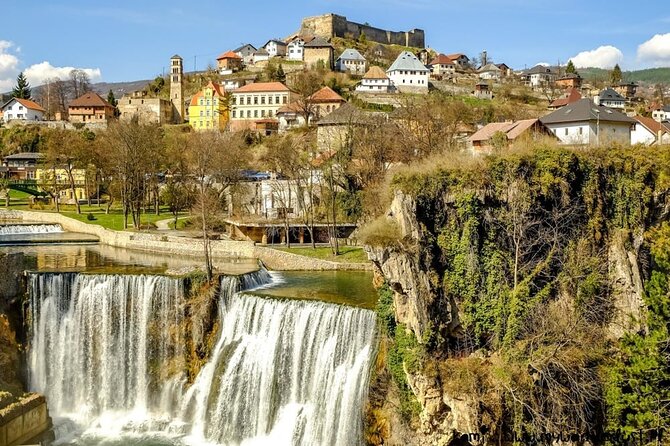
- Jajce combines royal medieval history with striking scenery, including a fortress above town and a waterfall in the city center.
- The Pliva Lakes and Mlincici mills slow the pace, offering time for a walk and photographs after the historical visits.
- The Bosnian Pyramid of the Sun is a roadside discussion stop, not a full archaeological excursion.
- The day lasts 10 to 11 hours, with roughly 2.5 to 3 hours required for the return from Jajce.
- The $88 price includes several admissions and transport costs, but lunch and the Pliva Waterfall entrance fee are extra.
Why this central Bosnia day trip works
Sarajevo is a rewarding base, but staying in the capital alone leaves out two of Bosnia and Herzegovina’s most characterful inland towns. Travnik and Jajce sit well beyond the usual Sarajevo walking circuit, and reaching both independently in one day requires careful transport planning.
This tour makes the geography manageable. You leave Sarajevo at 8:00 a.m., travel through green scenery along the Bosnia River valley, and return after visiting sites that cover Ottoman, medieval, Austro-Hungarian, and Yugoslav-era chapters. The route is busy, but it has a clear purpose rather than a string of unrelated photo stops.
The small group matters here. A maximum of eight people allows more room for questions and gives the guide a better chance to adjust explanations to the group. That personal scale is especially useful in places such as the catacombs, where a short historical explanation can make the bare stone chambers much easier to understand.
At $88 per person, the value is solid if you want transport, a licensed guide, motorway and parking fees, and entry to Travnik Fortress, Jajce Fortress, and the Jajce Catacombs. You still pay for lunch and the Pliva Waterfall entrance, so budget a little extra. Even with those additions, the price compares well with the time and planning needed to link these sights yourself.
More of Jajce and Travnik:
- Jajce, Travnik and Pliva watermills – Day Tour from Sarajevo
★ 5.0 · 295 reviews - From Sarajevo: Travnik, Jajce, Pliva Lakes & Watermills Tour
★ 5.0 · 213 reviews - Jajce, Travnik, Pliva lake and Watermills Tour
★ 5.0 · 104 reviews
A roadside look at the Bosnian Pyramid of the Sun
The first notable point comes near Visoko, about 20 minutes through the Bosnia River valley after leaving Sarajevo. From the route, you pass near the Bosnian Pyramid of the Sun and hear about the claim that it may be the largest pyramid in the world.
This is best understood as a conversation stop rather than a major visit. You are not given a full pyramid site program in the information provided, so keep your expectations modest. The value is in hearing how the theory has drawn interest from scientists and curious visitors, adding a modern mystery to a day otherwise centered on established historical places.
The green valley scenery also helps ease you into the long day. You get a quick change from Sarajevo’s urban setting before reaching Travnik.
Travnik, where Ottoman Bosnia feels close at hand
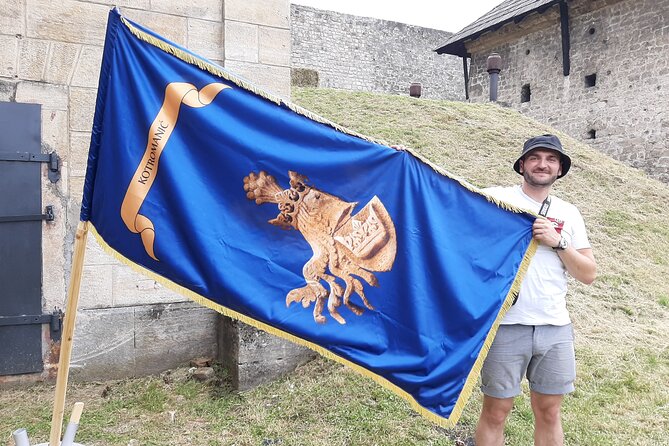
Travnik was the main city of Ottoman governors and served as the capital of Ottoman Bosnia for more than 150 years. That role gives the town a strong sense of place, and the visit is the first major historical chapter of the tour.
The old town is compact enough to explore on foot, with the fortress rising above it and the Colorful Mosque anchoring the traditional market quarter, or čaršija. I like this part of the day because the history is not kept behind one museum door. You see it in the street plan, religious buildings, food, and hilltop defenses.
Travnik is also the birthplace of Nobel Prize-winning author Ivo Andrić. His writing is closely linked with the town, and the guide uses his literary work to help explain what life and atmosphere were like in earlier Travnik. That literary connection gives the stop more depth than a simple fortress visit.
Travnik Fortress and the old town
Entry to Travnik Fortress is included. The fortress is the main place to get a sense of Travnik’s defensive position and the town’s importance through several periods. Allow about 1 hour and 30 minutes for the broader Travnik visit, including the old town, food, and surrounding sights.
You should expect some walking and uneven historic surfaces. The reward is a more complete picture of the town: Ottoman administration below, medieval defenses above, and a living town connecting the two.
Food is part of the Travnik experience. You have the chance to try ćevapi, the small grilled meat pieces served in bread, along with local cheese. Lunch is not included, and the meal is described as a local lunch on the go, so this is not a long restaurant break. That suits the schedule, but people who prefer a relaxed midday meal should plan their expectations.
A few more options to weigh up in Sarajevo
- Sarajevo: Mostar, Konjic, Blagaj Tekke, Pocitelj & Waterfall
★ 4.9 · 1,335 reviews - Fall of Yugoslavia, Sarajevo War Tour with Tunnel of Hope Museum and Frontlines
★ 5.0 · 1,314 reviews - Sarajevo: Mostar, Konjic, Sufi House, Pocitelj & Kravice Falls
★ 5.0 · 1,179 reviews - ROSES OF SARAJEVO (Official WAR + CITY tour)- Story of a Survivor
★ 5.0 · 770 reviews
The Colorful Mosque and Plava Voda
The Colorful Mosque, or Šarena Džamija, takes about 20 minutes. Its painted exterior and interior decoration make it one of the most visually distinctive mosques in Bosnia and Herzegovina.
Because it sits in the heart of the old čaršija, the mosque works well as part of the town visit rather than as an isolated monument. The stop is short, so listen closely to the guide’s explanation and take time to look at the decorative details.
The nearby Plava Voda area adds a pleasant pause after the old town. Its name means Blue Water, and the setting is described as an atmospheric part of Travnik. Together, the mosque, old market area, water, fortress, and local food create a well-rounded first half.
Jajce Fortress and the last Bosnian royal capital
Jajce shifts the story from Ottoman administration to medieval Bosnia. The fortress began as the stronghold of Hrvoje Vukčić Hrvatinić, a powerful 14th-century feudal lord who held the title Grand Duke of Bosnia.
In 1421, King Stjepan Tomašević moved his royal court to Jajce, making it the capital of the Kingdom of Bosnia. That detail explains why the fortress matters beyond its walls. Jajce was tied to the defense of Bosnia’s independence and stood near the political pressures of the Kingdom of Hungary and the Ottoman Empire.
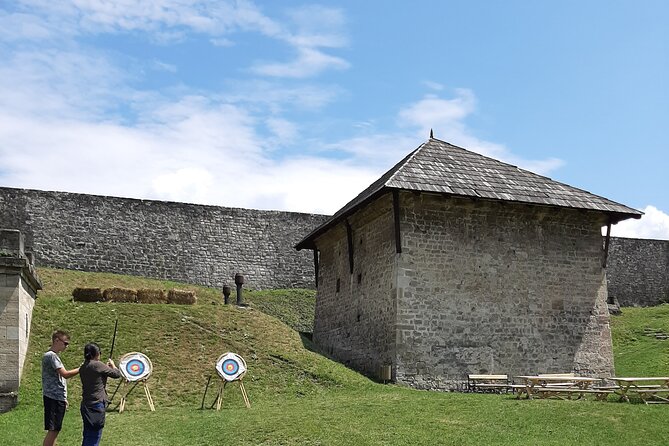
You get about 40 minutes at Jajce Fortress, with admission included. The main pleasure is the elevated view over the town and surrounding countryside. This is a place where the setting helps explain the history: a fortified royal center needs height, sightlines, and control.
The stop is not long enough for an exhaustive exploration, but it is enough to see the principal defensive setting and hear the basic story of Jajce’s medieval rulers. If you enjoy military history, you may wish for more time. The tight schedule is the trade-off for also reaching the waterfall, catacombs, mills, and lakes.
The Jajce Catacombs and Bear Tower
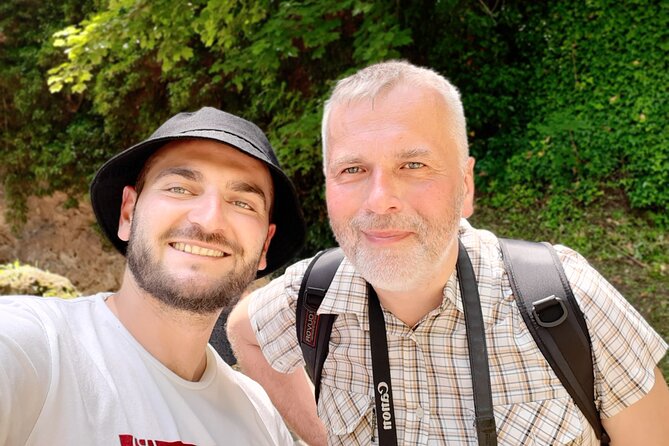
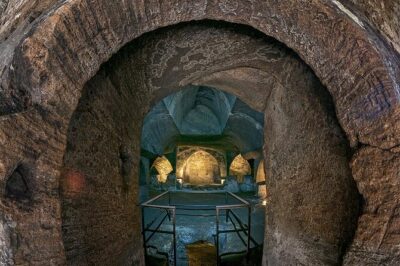
The Catacombs of Jajce are among the more unusual visits on the route. This underground church was intended by Hrvoje Vukčić Hrvatinić as a family tomb. Its dark, enclosed setting feels very different from the open fortress above.
The catacombs passed through several periods and religious traditions. During Ottoman rule, local legends say a dervish was imprisoned there for 40 days. The site was considered sacred, and the story connects the underground chambers with spiritual purification.
You spend about 20 minutes inside, with admission included. That is enough for a focused visit, though anyone uncomfortable in enclosed spaces should keep the setting in mind. The guide’s explanation is important here because the plain stone rooms do not tell their story on their own.
The nearby Medvjed Kula, or Bear Tower, takes another 20 minutes and is also included. Its name comes from the tower’s heavy, massive appearance, which recalls a Bosnian black bear. One legend says a bear was kept inside while captives were thrown to it, though the more practical point is that this was an early defensive structure from the mid-15th century.
The catacombs and Bear Tower add variety to the Jajce visit. You are not only looking at a postcard waterfall. You are seeing the town’s religious, royal, military, and legendary sides.
Pliva Waterfall, Jajce’s great visual moment
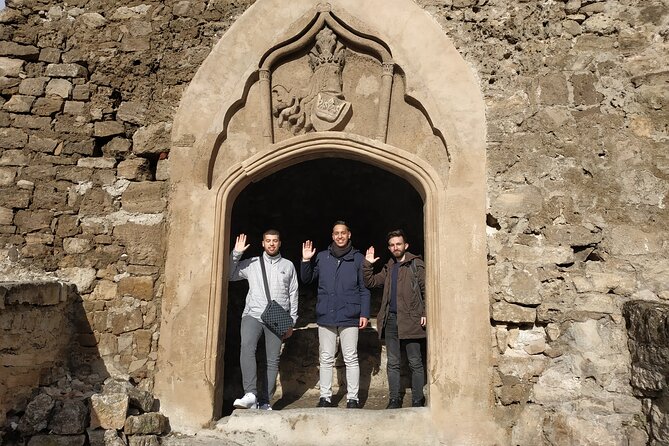
The Pliva Waterfall is 22 meters high and sits in the center of Jajce. That city-center location is its special feature. The Pliva River flows into the Vrbas River here, forming an unusual urban meeting point of two rivers.
The waterfall is on Bosnia and Herzegovina’s tentative UNESCO list. It is also described as having formed about 50,000 years ago. You have about 30 minutes at the falls, and the entrance fee is not included. The charge is listed as 4 euros in high season and 2 euros in the off season.
I would treat this as one of the day’s essential stops. The view is immediate and dramatic, and you do not need a long visit to appreciate it. Still, the short time means you may need to choose between photographs, looking from several viewpoints, and simply enjoying the sound and force of the water.
The falls can be busier than the quieter sites, but the tour does not promise a private viewing area or extended free time. Bring the small entrance fee and be ready to move on when the group does.
Mlincici mills and the Pliva Lakes
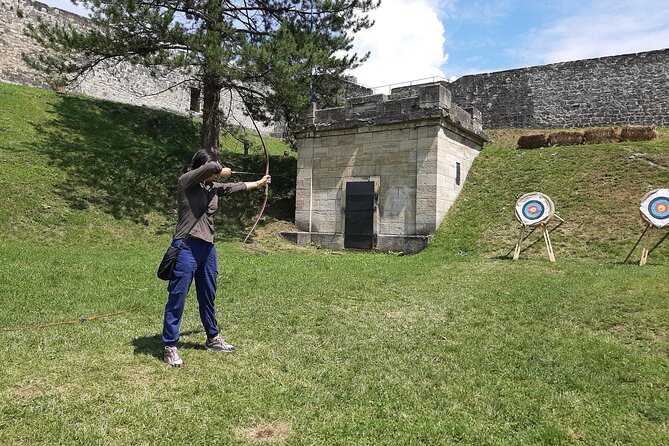
After Jajce’s stone monuments, Mlincici provides a welcome change of mood. The site is a collection of small wooden mill huts built over running water. They sit on narrow stilts, and the spread-out flow powers a series of small mills instead of one large wheel.
Many of the huts date from the Austro-Hungarian period, roughly 1867 to 1918. They once ground local farmers’ wheat into flour. The arrangement is simple but clever, using the available water flow across several small structures.
You get about 20 minutes here. That is enough to understand how the mills worked and to take in the storybook appearance of the wooden huts. This is not a major indoor museum visit, so the appeal comes from the setting and the old rural technology.
The Pliva Lakes are the final scenic stop. Veliko Plivsko, the larger lake, and Malo Plivsko, the smaller one, form where the Pliva widens before reaching Jajce. The lakes are known for walking, kayaking, and fishing, and they have hosted World and European Cup events in those sports.
The tour allows about 30 minutes around the lakes. You should see this as a calm finish rather than a full recreation session. There is no stated time for kayaking or fishing, and those activities are not included. Instead, you get a chance to stretch your legs, look across the water, and let the day’s history settle before the drive back.
The long ride home and what the timing means

The return from Jajce to Sarajevo takes about two and a half to three hours. Added to the morning travel and the stops, the full outing runs approximately 10 to 11 hours.
That length is the chief consideration. You see a lot, but the day will feel full. The schedule works best for someone who prefers one ambitious excursion over several separate day trips. It is less suitable if you want long meals, unhurried museum visits, or extended time beside the lakes.
Pickup is offered, the tour begins at 8:00 a.m., and the activity ends back at the meeting point. A mobile ticket is available, and confirmation is provided within 48 hours, subject to availability. Most people can participate, and service animals are allowed.
Guide Damir is a particularly useful detail when choosing this experience. The available comments describe him as patient and passionate, and one departure continued even though only one person had booked after other agencies canceled. That suggests a flexible, personal approach, though you should still understand that the advertised maximum is eight, not a guarantee of a private tour.
Who should book this $88 tour?
I would recommend it to you if you have limited time in Bosnia and Herzegovina and want to connect several important places from Sarajevo. It suits people who enjoy history, dramatic scenery, short walks, local food, and a guide who can explain how Ottoman, medieval, Austro-Hungarian, and Yugoslav periods fit together.
It is also a good choice if you do not want to rent a car or organize several regional bus connections. The included parking, motorway fees, guide service, and three major admission fees make the price easier to justify.
I would hesitate if you dislike long drives or prefer to explore one town slowly. Jajce deserves more than a quick look, and the return journey takes a significant part of the day. Lunch and the waterfall fee are extra, so the final cost will be slightly above the advertised $88.
Book at least 24 hours before the 8:00 a.m. start if you need the free cancellation option. Cancellations made less than 24 hours before departure are not refundable, and late changes are not accepted.
Should you book it?
Book this tour if you want a high-value overview of central Bosnia and accept a packed schedule. The strongest combination is Travnik’s Ottoman atmosphere, Jajce’s royal fortress and waterfall, and the quieter Pliva mills and lakes.
Skip it if your ideal day means lingering over lunch or spending half a day at one lake. For most first-time visitors based in Sarajevo, though, the route offers a practical way to see far more of Bosnia than the capital alone, with enough local detail to make the long drive worthwhile.
FAQ
Where does the tour start?
The tour starts at 8:00 a.m. in Sarajevo, with pickup offered. It ends back at the meeting point.
How long does the full tour take?
The experience lasts approximately 10 to 11 hours. The return journey from Jajce to Sarajevo takes about 2.5 to 3 hours.
How many people can join the tour?
The tour has a maximum of eight people, allowing for a smaller group and more personal guide interaction.
Is lunch included?
No. Lunch is not included, but the Travnik portion includes an opportunity to try ćevapi and local cheese.
Is the Pliva Waterfall entrance included?
No. The entrance fee is listed as 4 euros in high season and 2 euros in the off season.
Which admissions are included?
Admission to Travnik Fortress, Jajce Fortress, and the Catacombs of Jajce is included. Parking and motorway fees are also covered.
Can most people participate?
Yes. The tour information says most people can participate, and service animals are allowed. It also notes that the experience is near public transportation.
Can I cancel for a full refund?
Yes, if you cancel at least 24 hours before the experience start time. Cancellations or changes made less than 24 hours before departure are not accepted for a refund.
Just added in Sarajevo
- Sarajevo Under Siege: A War History Tour★ 5.0 · 10 reviews
- Walking Tour in Sarajevo★ 5.0 · 3 reviews
- Private Full Day Safari Tour★ 5.0 · 8 reviews
- Bosnian Pyramid: The World’s Largest Pyramid (From Sarajevo)★ 5.0 · 1 review
- Mysterious Visoko Pyramids Driving and Walking Tour★ 5.0 · 7 reviews
- Ultimate adventure★ 5.0 · 2 reviews
- Sarajevo to/from Zagreb Transfer Day Tour (North-central Bosnia)★ 5.0 · 4 reviews
- Tour of Herzegovina – From Sarajevo★ 5.0 · 3 reviews
Jajce and Travnik Tours, compared.
Jajce, Travnik and Pliva watermills – Day Tour from Sarajevo
Read our review →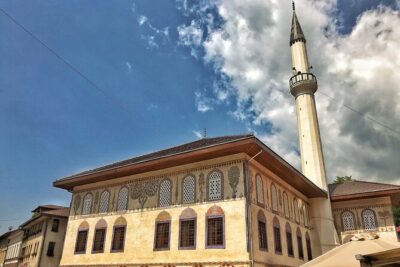
From Sarajevo: Travnik, Jajce, Pliva Lakes & Watermills Tour
Read our review →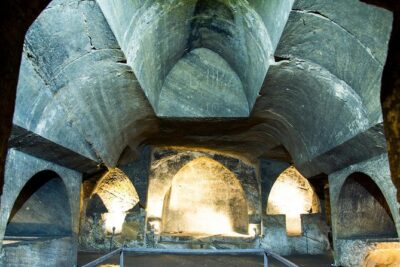
Travnik, Jajce & Pliva Lakes Day Tour From Sarajevo (fees Incl.)
Read our review →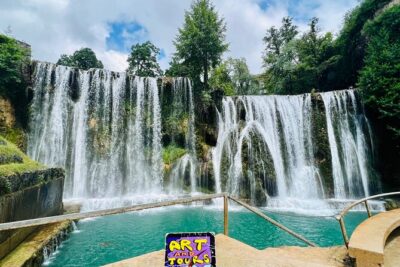
CENTRAL BOSNIA | A medieval tour (Jajce + Travnik + Pliva lakes)
Read our review →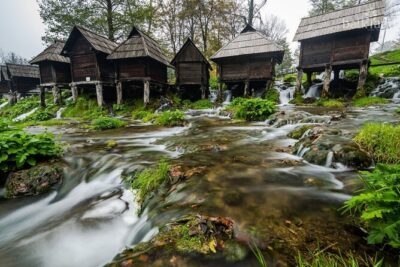
Bosnian Kingdom Capitals: Travnik & Jajce Tour from Sarajevo
Read our review →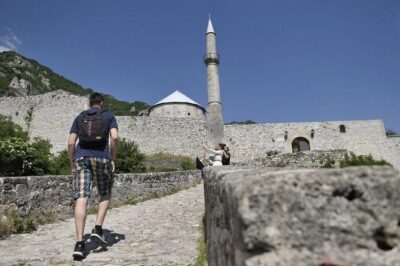
Sarajevo to Zagreb: One-Way Tour via Jajce, Travnik, Pliva Lake and Watermills
Read our review →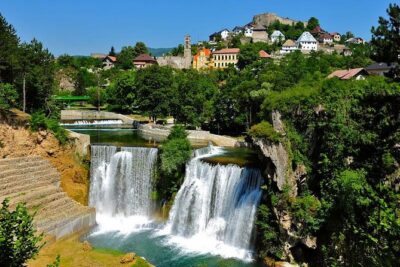
Jajce and Travnik Historical Tour – Day Tour from Sarajevo
Read our review →Browse the lists this tour appears in