
REVIEW · SARAJEVO WAR HISTORY TOURS
Sarajevo Under Siege: A War History Tour
Sarajevo’s past is impossible to miss. This private three-hour tour connects the city’s best viewpoints with the places that explain daily life during the Siege of Sarajevo, from the White Fortress and Sniper Alley to the Tunnel of Salvation. I especially like the personal wartime stories and the chance to see both sides of today’s divided city. I also like that private transportation keeps the route practical and focused.
The main drawback is the subject matter. This is not a light sightseeing outing, and stories about shelling, burial, hunger, sniper fire, and destroyed cultural sites can be painful. You should also budget an extra €10.25 for the adult entrance fee, or €5.25 for students.
In This Review
- Key points to know before booking
- Why this Sarajevo tour matters
- The White Fortress gives Sarajevo its historical setting
- Zetra and the personal side of the Siege
- Sniper Alley makes an ordinary road hard to forget
- The Tunnel of Salvation is the tour’s central stop
- Lukavica shows how the war still shapes the city
- Sarajevo City Hall connects war with culture
- What the private format adds
- Who will get the most from this tour
- Practical details that affect your day
- Should you book Sarajevo Under Siege?
- FAQ
- How long is Sarajevo Under Siege: A War History Tour?
- What time does the tour start?
- Where does the tour begin and end?
- Is hotel pickup available?
- Is this a private tour?
- What is included in the price?
- Are entrance fees included?
- Can I cancel for a full refund?
Key points to know before booking
- Personal stories shape the tour: The guide connects the war to childhood memories, family loss, and ordinary streets.
- The Tunnel of Salvation gets the most time: You spend about 1 hour and 20 minutes at Sarajevo’s best-known wartime site.
- Sniper Alley is seen from the vehicle: The guide explains the danger of the road while you pass through the modern city.
- The route crosses today’s political divide: Lukavica introduces the separation between the Federation of Bosnia and Herzegovina and Republika Srpska.
- It is a private tour: Your group travels alone in an air-conditioned vehicle with WiFi.
- Pickup is available in central Sarajevo: The tour begins at 1:30 pm and returns to the starting point.
Why this Sarajevo tour matters
Sarajevo is a city where the 1990s are still close to the surface. Modern cafés, apartment blocks, restored buildings, and busy streets can make the Siege seem distant. Then a guide points to a cemetery, a former front line, or a road once watched by snipers, and the past comes sharply back.
This tour works because it does not treat the Bosnian War as a list of dates. It links major events to real places and personal memories. You hear how people found water, food, medicine, and shelter while living under constant shelling. You also learn how the city changed after the Dayton Peace Agreement and why political divisions remain visible.
I find that personal connection especially valuable. Guides associated with this experience include Suvad and Evan, and the strongest parts of the tour come through their ability to explain what the war meant at street level. One guide shares memories of growing up in Sarajevo during the conflict, including the street where he played and the place where his father was buried.
That detail changes the tone. You are not simply looking at a former war zone. You are standing in someone’s neighborhood.
Other tours covering the siege of Sarajevo:
- Fall of Yugoslavia, Sarajevo War Tour with Tunnel of Hope Museum and Frontlines
★ 5.0 · 1,314 reviews - ROSES OF SARAJEVO (Official WAR + CITY tour)- Story of a Survivor
★ 5.0 · 770 reviews - Tunnel Museum: Bosnian & Yugoslav Wars Tour with War Veteran
★ 5.0 · 551 reviews
The White Fortress gives Sarajevo its historical setting
The tour begins at Bijela Tabija, the White Fortress, one of Sarajevo’s finest viewpoints. The fortress dates from the 16th century and looks across the city and surrounding hills.
Give yourself a moment here before the explanation begins. From this high position, Sarajevo’s narrow valley and dense urban shape become clear. The view helps explain why the city’s location has always mattered. It also lets the guide place the Siege within Sarajevo’s longer story, from the Ottoman period through Austro-Hungarian rule and into the 20th century.
The stop lasts about 30 minutes, and there is no separate admission charge listed for it. It is a good opening because you first understand the city as a whole before moving into specific wartime sites.
The viewpoint is also a useful reminder that Sarajevo’s beauty and danger are tied to the same geography. The hills that frame the city are visually striking, but during the Siege they also gave forces above the city positions from which to fire.
Zetra and the personal side of the Siege
Near Zetra Olympic Hall, the tour shifts from broad history to one family’s experience. This is the neighborhood where the guide lived during the war, close to the former maternity hospital that was heavily bombed.
The stop is short, about 15 minutes, but it can carry more emotional weight than a longer museum visit. You hear about childhood during the Siege, daily survival, and life under repeated shelling. The guide points out the street where he grew up and played, along with the place where his father was buried.
This is where the tour feels most intimate. You are not being asked to imagine an abstract civilian population. You are shown the ordinary spaces where a child lived, played, and lost a parent.
The timing is worth noting. Fifteen minutes may sound brief, but the power of the stop comes from the guide’s account rather than from a large display or long walk. If you prefer a tour built around formal museums and objects, this section may feel less structured. If you want to understand how war affects a family, it may be one of the most important stops.
Sniper Alley makes an ordinary road hard to forget
The route then passes along the avenue known during the war as Sniper Alley. It was one of Sarajevo’s most dangerous roads, exposed to sniper fire and used by residents who had no choice but to cross it.
You hear how people risked their lives to reach food, water, medical care, or safer areas. The road itself is now surrounded by modern buildings and everyday traffic. That contrast is the point. Nothing about the present-day avenue automatically reveals what happened there.
Because this is a drive-by section, you should not expect a long walking visit or a preserved wartime scene. Its value comes from the guide’s explanation and from seeing how an ordinary city route became a place of constant fear.
I like this part because it corrects a common mistake in war tourism. The Siege did not happen only at dramatic landmarks. It happened on streets people needed to use every day. A trip to fetch water could become a life-threatening journey.
More history tours in Sarajevo:
- Sarajevo Full Day Tour: History, Culture, Nature, War & Olympics
★ 5.0 · 27 reviews - Sarajevo genuine walking tour: Steps through history
★ 5.0 · 22 reviews - SARAJEVO STREET ART TOUR (art, history & mystery) – sARTajevo!
★ 5.0 · 18 reviews - BOSNIAN PYRAMIDS TOUR (nature, history & archeology)
★ 5.0 · 17 reviews
The Tunnel of Salvation is the tour’s central stop
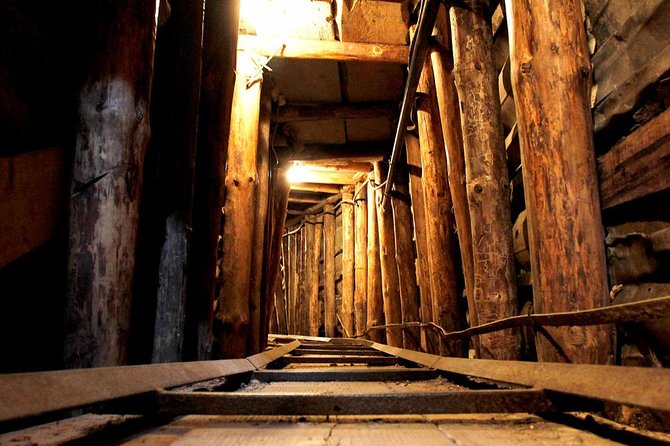
The Tunnel of Salvation, also called the Tunnel of Hope, receives about 1 hour and 20 minutes. This is the longest and most substantial stop on the route.
The tunnel was dug secretly beneath the airport runway in 1993. It linked besieged Sarajevo with the outside world and carried food, medicine, and other supplies into the city. It also offered a route for people and information when the normal roads were blocked or dangerous.
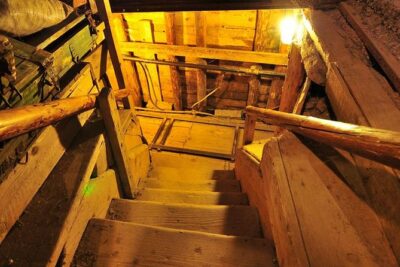
You walk through part of the original tunnel, see wartime objects, and watch a short documentary about the Siege. The passage is narrow, so this is not a grand monument. Its impact comes from the cramped conditions and the practical purpose it served.
The tunnel helps you understand survival in concrete terms. Instead of hearing only about shortages, you see the passage used to keep a city alive. Instead of hearing only that Sarajevo was cut off, you see the small underground connection that broke the isolation.
This stop is also where a good guide matters most. The facts are important, but the explanation should connect the tunnel to the people who carried supplies, sought medical help, or moved through it under wartime pressure. The strongest responses to this tour have singled out the tunnel as essential for understanding what happened.
Your entrance fee is separate from the tour price. Adults pay €10.25, while students pay €5.25. Confirm the current amount when booking, since admission charges can change.
Lukavica shows how the war still shapes the city
The final drive through Lukavica adds a layer that many short war tours leave out. During the Siege, this area was part of the front line. Today it belongs to Republika Srpska, one of Bosnia and Herzegovina’s two entities.
The guide explains the post-war division between the Federation of Bosnia and Herzegovina and Republika Srpska. You also see former front-line areas and graffiti or murals that glorify wartime figures such as Ratko Mladić.
This section is not simply about what happened between 1992 and 1995. It is about how the conflict is remembered now. Different political identities, public symbols, and versions of the past remain close together, sometimes within the same city area.
That makes the stop useful, but also demanding. You need to listen carefully and avoid expecting a simple good-versus-bad explanation of post-war Bosnia. The route encourages you to think about reconciliation, identity, and the difficulty of building peace after violence.
Since this part is viewed from the vehicle, the guide’s words carry much of the weight. You may find the modern division easier to understand after seeing the geography in person.
Sarajevo City Hall connects war with culture
The tour returns to Sarajevo City Hall, or Vijećnica, an ornate building from the Austro-Hungarian period. It was completed in 1896 and later served as the National Library.
In August 1992, Serbian forces shelled the building. The fire destroyed almost two million books and manuscripts. That loss was not only architectural. It erased part of Sarajevo’s written memory and damaged a place meant to serve the whole city.
Today, the restored building offers a different ending. You see a landmark that survived destruction and was rebuilt, while the guide explains what it represents for Sarajevo’s cultural identity.
I like ending here because the tour moves beyond military events. The story becomes one of libraries, manuscripts, architecture, and memory. War damages more than roads and buildings. It also attacks the records that help people understand who they are.
The tour ends back at the meeting point near Vijećnica, so you can continue exploring the city center afterward.
What the private format adds
At $30.10 per person, the price is strong for a private tour that lasts about three hours and includes an air-conditioned vehicle, private transportation, and WiFi onboard. The extra entrance fee raises the total, but the Tunnel of Salvation is the key paid site and gives the tour its most direct physical connection to the Siege.
Private touring matters here. You can ask questions about a specific street, event, or family story without waiting for a large group to catch up. The guide can also adjust the pace of the conversation, which is helpful when the subject turns difficult.
Pickup is offered from hotels or other locations in central Sarajevo. Pickup begins 15 minutes before the 1:30 pm start time. If you are staying outside the city center, arrangements may be possible in advance, but you should contact the provider before booking.
The tour is offered in English. Confirmation arrives at booking, and the activity is described as suitable for most people. It is also near public transportation, though the included private vehicle handles the main route.
Who will get the most from this tour
I would recommend it to you if you want a clear introduction to the Siege of Sarajevo and prefer local explanation over a self-guided museum visit. It is especially useful early in your stay, because the White Fortress gives you the city’s layout and the later stops help you recognize what you are seeing in Sarajevo’s streets.
It also suits anyone interested in modern European history, civilian survival, post-war politics, or the ways cities remember violence. The guide’s personal connection makes the tour more direct than a standard historical overview.
You should think twice if you want a cheerful sightseeing trip. The stories involve death, shelling, destroyed homes, burial, and cultural loss. The tour is respectful, but respectful does not mean easy.
The route may also feel rushed if you want extended time at every site. The White Fortress gets 30 minutes, the Zetra neighborhood about 15 minutes, and the Tunnel of Salvation about 80 minutes. The remaining places are covered while driving or during shorter visits.
Practical details that affect your day
The tour begins at 1:30 pm and ends back at Vijećnica. The stated duration is approximately three hours, though traffic and the length of discussion can affect the timing.
Wear practical shoes for the fortress and tunnel. The information provided does not specify accessibility details, so ask the provider before booking if you have mobility concerns.
Free cancellation is available up to 24 hours before the start time for a full refund. Changes made less than 24 hours in advance are not accepted, and late cancellations are not refunded. The tour requires good weather and a minimum number of participants. If poor weather or low numbers cause cancellation, you are offered another date, another experience, or a full refund.
The tour has a five-star rating from 10 reviews, with 100 percent recommending it. That is encouraging, though the sample is still small. The praise centers on clear explanations, strong personal stories, comfortable transport, careful handling of painful subjects, and the Tunnel of Salvation.
Should you book Sarajevo Under Siege?
Book this tour if you want Sarajevo explained through real places and personal memory, not just dates and military terms. The White Fortress, Sniper Alley, the Tunnel of Salvation, Lukavica, and Vijećnica form a well-chosen route, and private transportation keeps the three-hour schedule workable.
The best reason to choose it is the human scale. You hear about a child’s neighborhood, a father’s burial place, people crossing exposed roads, and a tunnel that carried supplies into a trapped city. Add the €10.25 adult entrance fee to the $30.10 tour price, and you get a focused, emotionally serious introduction to Sarajevo’s wartime past.
Skip it only if you are not ready for difficult material or if you want a slow museum day. For everyone else, this is a thoughtful and highly recommended way to understand the city beneath its restored buildings and modern streets.
FAQ
How long is Sarajevo Under Siege: A War History Tour?
The tour lasts approximately three hours.
What time does the tour start?
It starts at 1:30 pm.
Where does the tour begin and end?
The listed meeting point is Vijećnica, at Hafiza Ibrahima Trebinjca 10 in Sarajevo. The tour ends back at the meeting point.
Is hotel pickup available?
Yes. Pickup is offered from hotels or other locations within Sarajevo city center. Pickup begins 15 minutes before the tour starts. Additional arrangements may be possible for locations outside the city center if you ask in advance.
Is this a private tour?
Yes. Only your group participates in the activity.
What is included in the price?
The tour includes an air-conditioned vehicle, private transportation, and WiFi onboard.
Are entrance fees included?
No. The adult entrance fee for the war tour is listed as €10.25 per person. Students pay €5.25 per person.
Can I cancel for a full refund?
Yes, if you cancel at least 24 hours before the experience start time. Poor weather or failure to meet the minimum number of participants may also lead to a different date, another experience, or a full refund.
Just added in Sarajevo
- Walking Tour in Sarajevo★ 5.0 · 3 reviews
- Private Full Day Safari Tour★ 5.0 · 8 reviews
- Bosnian Pyramid: The World’s Largest Pyramid (From Sarajevo)★ 5.0 · 1 review
- Mysterious Visoko Pyramids Driving and Walking Tour★ 5.0 · 7 reviews
- Ultimate adventure★ 5.0 · 2 reviews
- Travnik, Jajce, Pliva Lakes & Mills –Medieval & Ottoman Bosnia Full Day Tour★ 5.0 · 3 reviews
- Sarajevo to/from Zagreb Transfer Day Tour (North-central Bosnia)★ 5.0 · 4 reviews
- Tour of Herzegovina – From Sarajevo★ 5.0 · 3 reviews
Sarajevo War History Tours, compared.
Fall of Yugoslavia, Sarajevo War Tour with Tunnel of Hope Museum and Frontlines
Read our review →
ROSES OF SARAJEVO (Official WAR + CITY tour)- Story of a Survivor
Read our review →
Tunnel Museum: Bosnian & Yugoslav Wars Tour with War Veteran
Read our review →
Sarajevo War Tour: A Veteran’s Story of the Siege (fees included)
Read our review →
Break-up of Yugoslavia & The War in Mostar: Life Under Siege
Read our review →
Sarajevo to Srebrenica: Genocide Study Tour with War Veteran
Read our review →
Sarajevo Grand Tour: Old Town, War Tunnel, Olympic Sites & More
Read our review →Browse the lists this tour appears in