
REVIEW · SARAJEVO WAR HISTORY TOURS
Fall of Yugoslavia, Sarajevo War Tour with Tunnel of Hope Museum and Frontlines
Sarajevo keeps its wartime story close. I like the way this four-hour tour connects the Tunnel of Hope with Sniper Alley, cemeteries, Olympic sites, and the mountain above the city. I also like the strong local guiding, often praised for clear explanations and personal memories. The main drawback is that the Tunnel Museum entrance costs extra, and the subject matter can be emotionally heavy.
This is a good first tour for you if Sarajevo’s recent past feels hard to understand from plaques and guidebooks alone. Guides such as Ayoub, Almir, Ago, Tarik, Emin, Kristian, and Zahmet have all been singled out for their clear delivery, warm manner, and willingness to answer questions. The exact guide varies by departure.
The tour uses an air-conditioned vehicle, includes hotel pickup, bottled water, fuel, and a professional local guide. It does not include hotel drop-off, food, or the Tunnel Museum admission fee. At about $36.28 per person, I consider it a strong value for the number of places covered, provided you are ready for a serious afternoon rather than a light sightseeing outing.
In This Review
- Key points to know before booking
- Why this four-hour route works
- Yellow Fortress and Sarajevo from above
- Olympic Sarajevo, damaged hospitals, and a tragic love story
- The Tunnel of Hope Museum
- Sniper Alley and the former Holiday Inn
- Gavrilo Princip and the road into earlier history
- Trebević Vidikovac and the defenders’ cemetery
- Walking the 1984 Olympic bobsleigh track
- Guides, group size, and the human side of the tour
- Price, inclusions, and practical value
- Who should book this Sarajevo war tour?
- Should you book it?
- FAQ
- How long does the Sarajevo War Tour last?
- What is included in the tour price?
- Is admission to the Tunnel Museum included?
- Where does the tour begin and end?
- Is hotel drop-off included?
- Is the tour offered in English?
Key points to know before booking
- The Tunnel of Hope gives the tour its emotional center: The 800-meter passage was Sarajevo’s only connection with the outside world during the four-year siege and now operates as a museum.
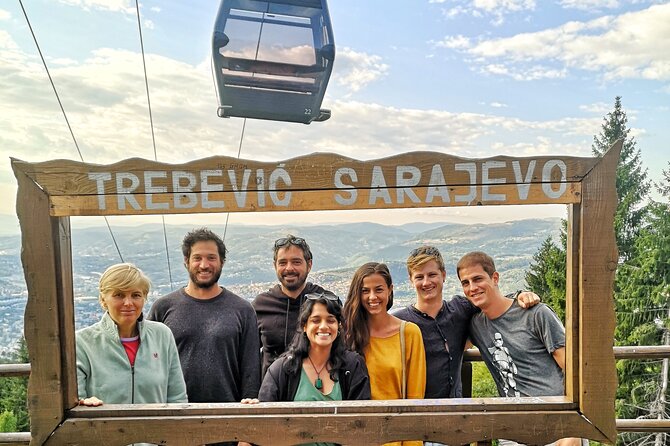
- Yellow Fortress and Trebević offer two excellent city views: You see Sarajevo from above early in the tour and again near the end, with defenders’ graves visible from the heights.
- The Olympic sites reveal two very different chapters: The bobsleigh track recalls the 1984 Winter Olympics, while damaged buildings and cemeteries show what followed.
- Sniper Alley is seen from the vehicle: You pass the former Holiday Inn and other buildings still marked by the war, but this is not mainly a walking tour of the street.
- Personal storytelling is a major strength: The best guides explain causes, events, and aftermath in plain English, sometimes adding family memories or wartime experience.
- Plan for a moving experience: The tour deals with civilian suffering, deaths, destroyed buildings, and the breakup of Yugoslavia. It is important, but not easy entertainment.
Why this four-hour route works
Sarajevo’s siege can be confusing if you only see isolated sites. The city is compact, but its story is not. A cemetery, a damaged hotel, an Olympic venue, and a mountain viewpoint each reveal only one part of what happened.
This route gives you a working outline. You begin with the city below you, move through places connected with the siege, visit the tunnel that kept Sarajevo supplied, then climb Trebević for the Olympic bobsleigh track and another broad view.
I like this order because it gives the history a physical shape. From the Yellow Fortress, you can see the city’s tight valley and the hills surrounding it. Later, from Trebević, you look back at Sarajevo from a different angle and understand why the high ground mattered so much.
The experience is not just a drive between attractions. The guide explains the fall of Yugoslavia, the events that led to the Sarajevo siege, and the conflict’s continuing effects. Several guides are praised for keeping a difficult subject understandable without rushing through it.
The pace also seems well judged for a four-hour outing. You get about 25 minutes at the Yellow Fortress, one hour connected with the Tunnel Museum, 15 minutes at Trebević Vidikovac, and 20 minutes at the bobsleigh track. Other points are seen during the drive or as brief stops.
Other tours covering the siege of Sarajevo:
- ROSES OF SARAJEVO (Official WAR + CITY tour)- Story of a Survivor
★ 5.0 · 770 reviews - Tunnel Museum: Bosnian & Yugoslav Wars Tour with War Veteran
★ 5.0 · 551 reviews - Sarajevo War Tour: A Veteran’s Story of the Siege (fees included)
★ 5.0 · 326 reviews
Yellow Fortress and Sarajevo from above
The Yellow Fortress is the opening viewpoint and one of the best places to orient yourself. The guide introduces the tour here while you look across Sarajevo, with a defenders’ cemetery visible from the fortress.
That opening matters. Before hearing about streets, buildings, or military positions, you first see the whole city. The hills close around the urban center, making the geography of the siege easier to grasp. The view is also simply beautiful, which gives the tour a calm beginning before the heavier material starts.
You have about 25 minutes here, enough for photographs and an introduction without turning the stop into a long lecture. I would listen carefully at this point, since the guide’s explanation of the siege helps put every later stop into context.
The cemetery visible from the fortress is a quiet reminder that this is not a distant historical story. Sarajevo’s war ended in the 1990s, and the sites you see are part of the modern city rather than preserved ruins somewhere far away.
Olympic Sarajevo, damaged hospitals, and a tragic love story
The vehicle then circles parts of the Olympic complex. Sarajevo hosted the 1984 Winter Olympics, a source of great local pride, but the same city later became known worldwide for war and siege.
The tour passes the destroyed children’s hospital and the grave of Sarajevo Romeo and Juliet. That grave refers to Admira Ismić and Boško Brkić, a young couple whose deaths became one of the most painful symbols of the siege.
This section is handled from the vehicle, so you should not expect a long independent visit at every location. Its value comes from the guide’s explanation and from seeing how ordinary urban sites fit into the wider story.
The Olympic Stadium Cemetery follows. A sports venue and a cemetery carry very different meanings, yet in Sarajevo they sit within the same wartime geography. This contrast is one of the tour’s strongest features: you are not being shown a single museum room, but a city where public life, sport, death, and survival overlap.
The guide may also point out details between formal stops. A review of the experience praised the comfortable minivan and the extra information given while driving. That matters because the short stops alone could never explain the full story.
The Tunnel of Hope Museum
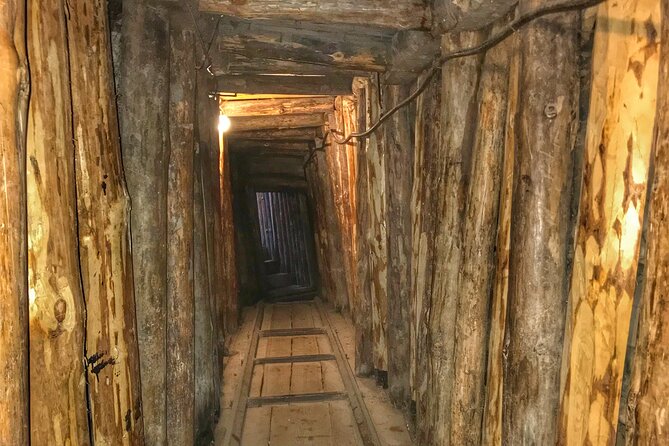
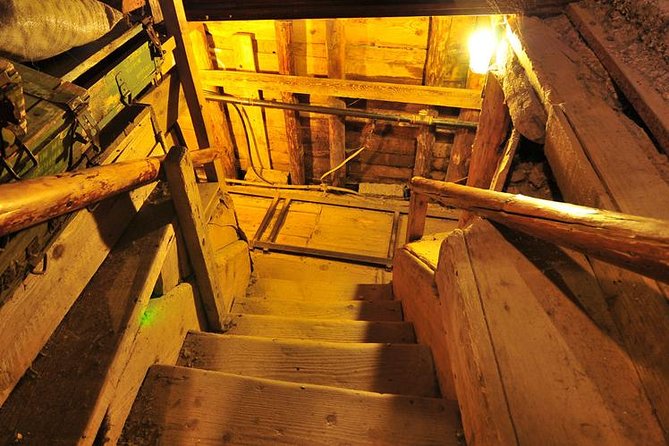
The Tunnel of Hope is the central stop. During the four-year siege, the tunnel served as the only entrance into Sarajevo and the only connection between the surrounded city and the rest of the world.
The passage was about 800 meters long. Today, part of it functions as a museum, allowing you to see the cramped route that became a lifeline for food, supplies, and people.
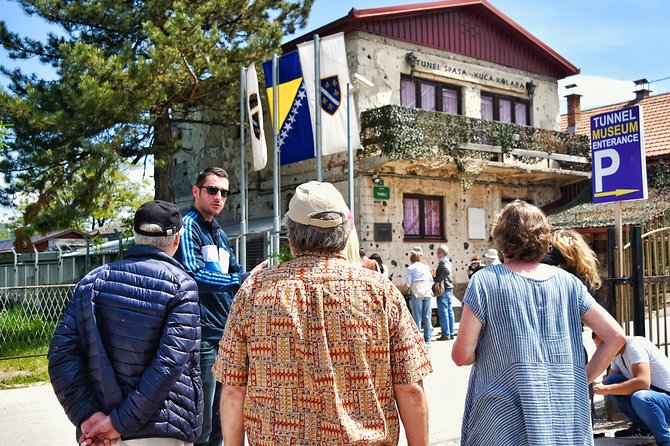
You have about one hour for this part of the tour, including the museum visit. The admission fee is not included. Adults pay 15 BAM, while students pay 5 BAM with an identification card. Bring the correct amount of time and budget for this separate charge.
The museum is not a polished attraction built for easy entertainment. Its power comes from the basic idea of the tunnel itself. A city was surrounded, roads were dangerous or blocked, and this narrow underground route became essential. Even a short walk through the preserved section helps you understand the scale of the problem better than a sentence in a book.
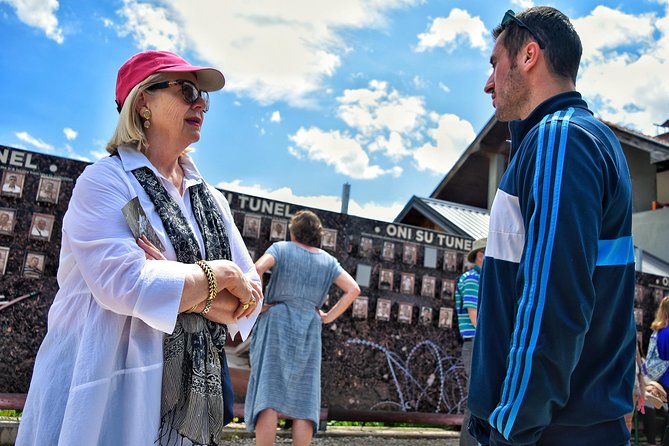
I recommend treating this as the one stop where you should slow down and listen. Ask questions if you need help with the sequence of events. The strongest guides, including Ayoub, Tarik, and Almir according to the feedback shared about their tours, explain the background clearly and leave room for questions.
There is also an important distinction here. You are visiting a museum about the tunnel, not walking the complete 800-meter route. The available information says the tunnel now functions as a museum, so expectations should remain realistic.
More museums in Sarajevo:
- Tunnel of Hope Museum Tour
★ 5.0 · 38 reviews - Cable Car Olympic Tour With Museum
★ 5.0 · 17 reviews - SARAJEVO CONCEPTUAL ART TOUR (galleries, art and arhitecture)
★ 5.0 · 7 reviews - Sarajevo: A City Under Siege – War Tour With Tunnel Museum
★ 5.0 · 4 reviews
Sniper Alley and the former Holiday Inn
After the tunnel, the route passes through Sniper Alley, described as the most dangerous street in Sarajevo during the siege. The four-kilometer street was a major route through the city, and snipers fired there regularly.
The tour also passes the building formerly known as the Hotel Holiday Inn. During the siege, it served as a main base for journalists and visiting United Nations peacekeepers. That detail gives Sniper Alley another layer. This was not only a place where civilians faced danger. It was also where the outside world watched, reported, and tried to respond.
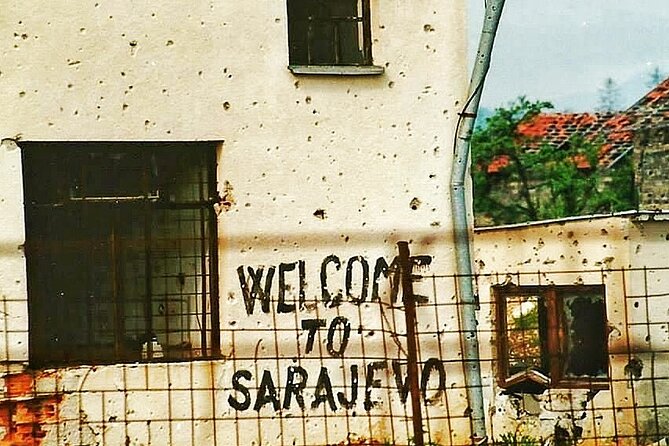
You see many Yugoslav-era buildings that still show the effects of the war. Some damage may be easy to miss from a moving vehicle, so keep your eyes open and listen to the guide’s directions.
This is a drive-by section, not a long walk along the street. That is sensible from a four-hour schedule, but it means the quality of the explanation matters. A guide who can point out buildings while giving the larger story will make much more of this part than a guide who simply names the road.
I find this stop especially useful after the tunnel. The tunnel shows how people tried to get supplies into the city. Sniper Alley shows why normal movement above ground was so dangerous.
Gavrilo Princip and the road into earlier history
The tour passes the chapel connected with Gavrilo Princip, the person who assassinated Archduke Franz Ferdinand. That event in 1914 helped trigger the First World War, and it remains one of the most discussed moments in Sarajevo’s past.
This is not the main focus of the excursion, which centers on the fall of Yugoslavia and the 1990s war. Still, the stop gives you a brief link to the city’s earlier political history.
You should not expect a full visit or a long museum session here. It is a passing point, useful mainly because the guide can connect Sarajevo’s twentieth-century conflicts with the city’s longer role at the meeting point of empires, religions, and political movements.
Trebević Vidikovac and the defenders’ cemetery
Near the end, the vehicle climbs Trebević Mountain to a viewpoint known as Trebević Vidikovac. You get about 15 minutes here, with another broad panorama of Sarajevo.
Several aspects come together at this stop. The city view is striking, the hills become easier to read from above, and the defenders’ cemetery gives the panorama a serious edge. You are looking at a beautiful city while being reminded of the people who died defending it.
Some descriptions of the tour refer to the final mountain stop as a peaceful walk, and that sounds like a useful change of pace after the museum and wartime sites. Do not confuse this with a long mountain hike. The scheduled viewpoint time is short, and the main purpose is the view and the historical setting.
This is also a good place to think about what the guide has explained. The tour begins with a city panorama and ends with another. That framing helps you remember Sarajevo as a living place, not just as a collection of war memorials.
Walking the 1984 Olympic bobsleigh track

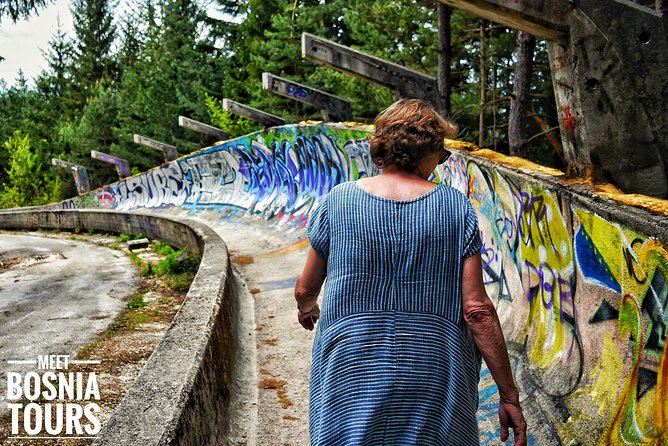
The Sarajevo Olympic Bobsleigh and Luge Track is the final major attraction. Built for the 1984 Winter Olympics, it is one of Trebević’s best-known sights.
The track also carries the marks of the later conflict. Its location makes it an unusual place to discuss both Olympic celebration and wartime damage in the same visit. You have about 20 minutes here, enough to walk a section, take photographs, and hear the guide’s explanation.
I like this stop because it prevents the tour from becoming one-note. The war is the focus, but Sarajevo is not defined only by suffering. The bobsleigh track recalls a period when the city hosted an international sporting event and presented itself to the world in a completely different way.
One useful tip comes from the tour experience: some people have enjoyed finishing here and then taking the cable car down to the old village. That is not listed as part of the included service, so you should treat it as a possible onward plan rather than an included feature. The scheduled tour itself ends back at the meeting point.
Guides, group size, and the human side of the tour
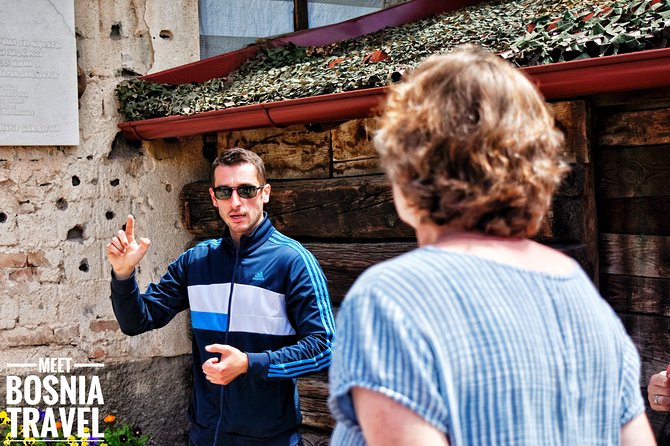
The guide can make or break a history tour, especially one covering a complicated and painful subject. The strongest feedback centers on guides who speak clearly, explain the lead-up to the siege, welcome questions, and share personal or family connections with care.
Ayoub is praised for a calm pace and thoughtful delivery. Almir is remembered for sharing his own stories and memories. Tarik has been praised for clear English and for relating memories connected with his father, who was a commander during the war.
Other guides named in positive feedback include Ago, Emin, Ejub, Kristian, and Zahmet. Ago is described as bringing the places to life, while Emin is praised for making the siege easier to understand. These comments do not mean you can select a particular guide, but they do show the company’s guiding style.
The stated maximum is 50 people. That is the one logistical point I would check before booking if you strongly prefer a small group. Several accounts describe small groups and comfortable vans, but the official maximum allows for a much larger departure.
A personal story can add meaning, but it can also make the tour more emotional. One account describes a driver who had fought in the war at age 16. That is a powerful perspective, but you should not assume every driver will share the same experience.
Price, inclusions, and practical value
At $36.28 per person, this is good value for a four-hour guided tour that includes hotel pickup, an air-conditioned vehicle, fuel, bottled water, and a local guide.
The price becomes more attractive when you consider the geography. Yellow Fortress, the Olympic complex, the Tunnel Museum, Sniper Alley, Trebević, and the bobsleigh track are spread across different parts of Sarajevo. Doing them independently would require more planning and transport.
Add 15 BAM for adult admission to the Tunnel Museum, or 5 BAM for a student with ID. Food and drinks are not included, although bottled water is provided. Hotel drop-off is also not included, and the activity ends back at the central meeting point at Gazi Husrev begova 75, near the crossroads of Mula Mustafe Bašeskije.
The tour is offered in English and uses a mobile ticket. Confirmation is provided at booking, and the meeting point is near public transport. Free cancellation is available up to 24 hours before the start time, while later cancellations and changes are not accepted.
I would book it early in your stay. You see a wide spread of Sarajevo from the vehicle, so the route can help you decide which parts of the city deserve a second look. The tour is commonly booked about three weeks ahead, so booking 21 days in advance is a sensible guide during busy periods.
Who should book this Sarajevo war tour?
I recommend it most strongly if you want context, not just photographs. It suits first-time visitors, history-minded people, and anyone who wants a clearer understanding of the fall of Yugoslavia and the siege of Sarajevo.
It also works well for solo visitors and groups. The air-conditioned vehicle reduces the effort of reaching the tunnel and Trebević, while the guide fills in the gaps between stops.
You should think twice if you want a cheerful sightseeing trip or if you prefer to explore museums quietly on your own. The tour includes graves, destroyed buildings, sniper fire, civilian danger, and personal memories of war. It is respectful and informative, but the subject is difficult.
The four-hour length is another advantage. You get enough time to build a serious picture without spending an entire day on one theme. Still, the schedule is active, and some stops are brief. If you want long visits at every cemetery, building, or viewpoint, this route may feel fast.
Should you book it?
Yes, if you want one efficient and meaningful introduction to Sarajevo’s recent past. The Tunnel of Hope, Sniper Alley, Olympic sites, mountain views, and defenders’ cemeteries create a well-rounded route for the price.
I would add it early in your Sarajevo stay, budget for the separate 15 BAM museum fee, and come prepared for an emotional afternoon. If you are willing to listen carefully, ask questions, and accept that some locations are viewed from the vehicle, this tour offers a useful and human way to understand the city.
FAQ
How long does the Sarajevo War Tour last?
The tour lasts approximately four hours.
What is included in the tour price?
The price includes a professional local guide, hotel pickup, car transport, fuel surcharge, bottled water, and an air-conditioned vehicle.
Is admission to the Tunnel Museum included?
No. Adults pay 15 BAM, while students pay 5 BAM with a valid student ID.
Where does the tour begin and end?
It begins at Meet Bosnia Tours, Gazi Husrev begova 75, near the crossroads of Mula Mustafe Bašeskije in Sarajevo. The activity ends back at the meeting point.
Is hotel drop-off included?
No. Hotel pickup is included, but hotel drop-off is not.
Is the tour offered in English?
Yes. The tour is offered in English and uses a mobile ticket.
Just added in Sarajevo
- Sarajevo Under Siege: A War History Tour★ 5.0 · 10 reviews
- Walking Tour in Sarajevo★ 5.0 · 3 reviews
- Private Full Day Safari Tour★ 5.0 · 8 reviews
- Bosnian Pyramid: The World’s Largest Pyramid (From Sarajevo)★ 5.0 · 1 review
- Ultimate adventure★ 5.0 · 2 reviews
- Mysterious Visoko Pyramids Driving and Walking Tour★ 5.0 · 7 reviews
- Travnik, Jajce, Pliva Lakes & Mills –Medieval & Ottoman Bosnia Full Day Tour★ 5.0 · 3 reviews
- Sarajevo to/from Zagreb Transfer Day Tour (North-central Bosnia)★ 5.0 · 4 reviews
Sarajevo War History Tours, compared.
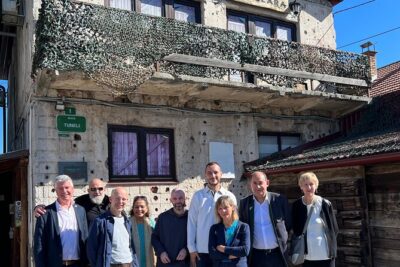
ROSES OF SARAJEVO (Official WAR + CITY tour)- Story of a Survivor
Read our review →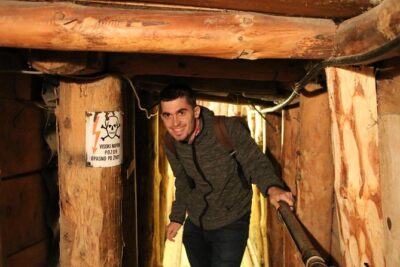
Tunnel Museum: Bosnian & Yugoslav Wars Tour with War Veteran
Read our review →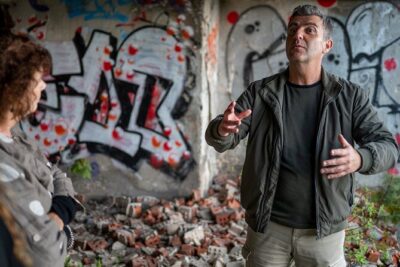
Sarajevo War Tour: A Veteran’s Story of the Siege (fees included)
Read our review →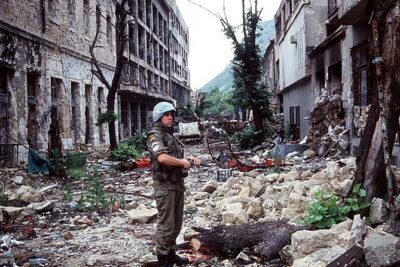
Break-up of Yugoslavia & The War in Mostar: Life Under Siege
Read our review →
Sarajevo to Srebrenica: Genocide Study Tour with War Veteran
Read our review →
Sarajevo Grand Tour: Old Town, War Tunnel, Olympic Sites & More
Read our review →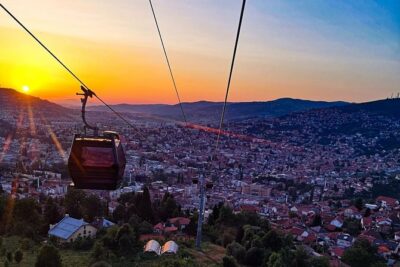
War Times Experience in Sarajevo – Half Day Tour
Read our review →Browse the lists this tour appears in