
REVIEW · WORKSHOPS
Bosnian Cooking Lessons
Come hungry, leave with recipes. This four-hour Sarajevo cooking class brings you into the home of chef guide Mersiha and her family for a hands-on lesson in classic Bosnian food. I especially like the warm, personal setting and the chance to make several dishes rather than simply watch a demonstration. The wide city view, welcome coffee or tea, and Herzegovina wine add to the relaxed mood.
I also like that the class teaches food you can actually make at home, including stuffed onions, peppers, leafy greens, and burek. Mersiha is praised for patient instruction, clear English, local tips, and sending recipes and step-by-step videos afterward. The main thing to consider is transportation: private transport is not included, and the home can be about a 40-minute walk from central Sarajevo.
In This Review
- Key points to know before booking
- A four-hour afternoon built around food and conversation
- Stuffed onions, peppers, and leafy greens
- Learning the art of stretching burek dough
- Dinner tastes better when you made it yourself
- The hosts are a major part of the appeal
- What the price includes at $96.79
- Getting there from central Sarajevo
- Who will enjoy this class most
- Practical booking details
- Should you book Bosnian Cooking Lessons?
- FAQ
- Where does the Bosnian cooking class start?
- What time does the class begin?
- How long does Bosnian Cooking Lessons last?
- What dishes will I learn to make?
- Are drinks and dinner included?
- Are vegan and vegetarian options available?
- Is transportation included?
- What is the cancellation policy?
Key points to know before booking
- Burek is the star practical lesson: You learn how to stretch and shape phyllo dough, then fill it with meat, potatoes, or cheese depending on the season.
- Three kinds of dolma are prepared: Stuffed onions, peppers, and mangel or spinach leaves introduce you to the careful work behind Bosnian home cooking.
- The class takes place in a private home: You are welcomed with coffee or tea, wine, and a panoramic view over Sarajevo.
- The food becomes your dinner: After cooking, you sit down to eat what you made together rather than receiving a separate restaurant meal.
- The group is kept small: The maximum is 13 people, which leaves room for questions and hands-on help.
- Vegetarian and vegan versions are possible: You need to request these options in advance.
A four-hour afternoon built around food and conversation
The class starts at 2:30 pm on Skendera Kulenovića in Sarajevo. It lasts about four hours and ends back at the meeting point. This timing works well if you want a substantial afternoon activity followed by a relaxed evening in town.
You begin with a welcome drink, coffee, or tea. The setting matters here. This is not a large teaching kitchen with rows of strangers watching a chef work. It is a home-based meal with time to meet Mersiha, Mustafa, and possibly other people in the group.
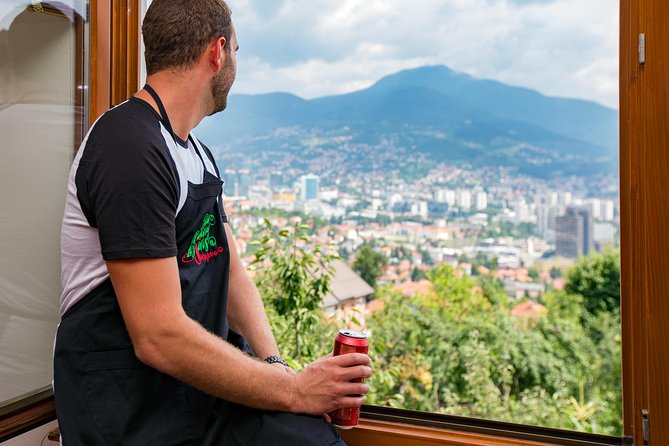
A panoramic view of Sarajevo gives the opening part a pleasant sense of place. You can settle in, ask questions, and get a feel for the food before the preparation begins. If you have just arrived in the city, this can be a gentle way to learn about Bosnian customs through the kitchen instead of through a formal lecture.
Wine is served during the lesson, along with soft drinks. The wine comes from Herzegovina, a part of Bosnia and Herzegovina known for its wine production. The hosts make a playful point about wine helping you feel brave enough to stretch burek dough. That humor tells you something about the tone: the class is intended to be social and relaxed, not stiff or overly technical.
More workshops in Sarajevo:
Stuffed onions, peppers, and leafy greens
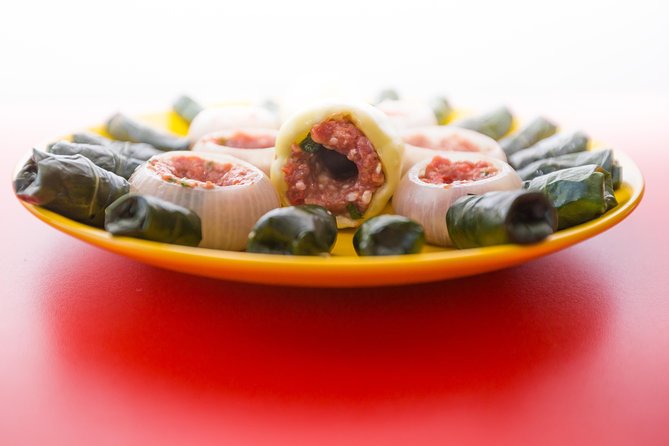
The first part of the class focuses on stuffed vegetables and leaves. The fillings use minced meat, rice, and spices, then each vegetable is prepared in its own way.
Sogan dolma uses onions filled with the meat and rice mixture. The work is careful, since the onion layers must be separated and handled without tearing. This is the kind of dish that helps you understand the patience behind Bosnian home cooking. The ingredients are familiar, but the preparation turns them into something more thoughtful than a simple pot of stuffed vegetables.
Next comes japrak, made with mangel or spinach leaves rolled around the same general filling. The leaves bring a different texture and require a lighter touch. You get to see how one basic mixture can be used in several forms, each with its own shape and character.
Dolma uses peppers filled with minced meat, rice, and spices. For a home cook, this is a useful lesson because the method is easy to remember and adapt. You are not only tasting a finished national dish. You are learning a basic Bosnian approach to combining vegetables, rice, meat, and seasoning.
The class covers the traditional names as well as the preparation. That makes the food easier to recognize later in Sarajevo restaurants and markets. It also gives you a way to explain what you are cooking when you try it at home.
Learning the art of stretching burek dough
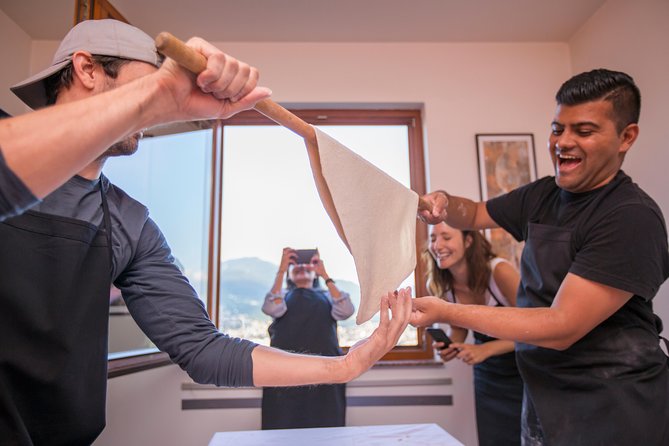
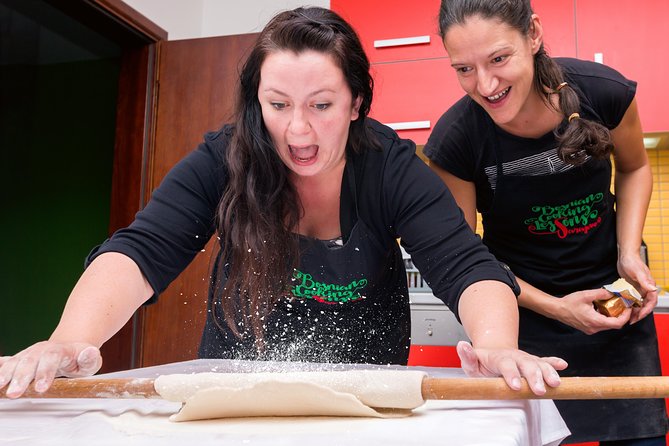
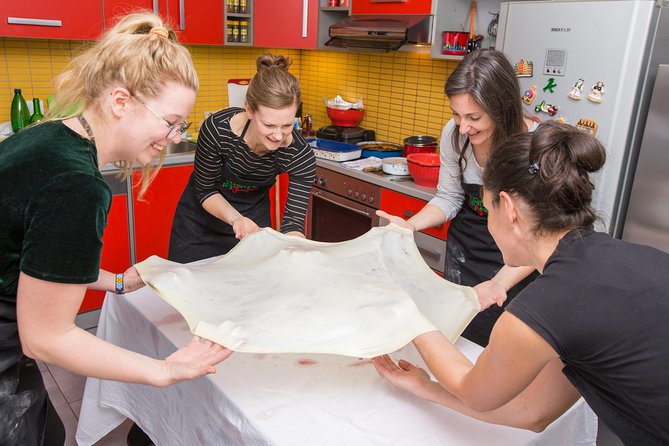
The second part centers on burek, the dish most likely to test your confidence. Burek uses phyllo dough rolled and stretched until it is thin enough to create a crisp, layered pastry. The filling can be potatoes, meat, or cheese, depending on the season.
This is a valuable lesson because burek can look simple when it arrives at a bakery, but the dough work takes practice. One participant described needing gentle guidance while assembling it. Another pointed out that seeing the dough become so thin made the final crisp texture easier to understand.
Expect this portion to be hands-on. You will not simply fold a ready-made pastry and call it done. You get to feel how delicate the dough is and learn the steps that produce the familiar flaky result. The process can be a little messy, but that is part of the fun.
I like that the class treats burek as a skill rather than just another recipe. If you are interested in baking, this may be the most memorable part of the afternoon. If you prefer simple, low-effort cooking, it may also be the part that demands the most patience.
Dinner tastes better when you made it yourself
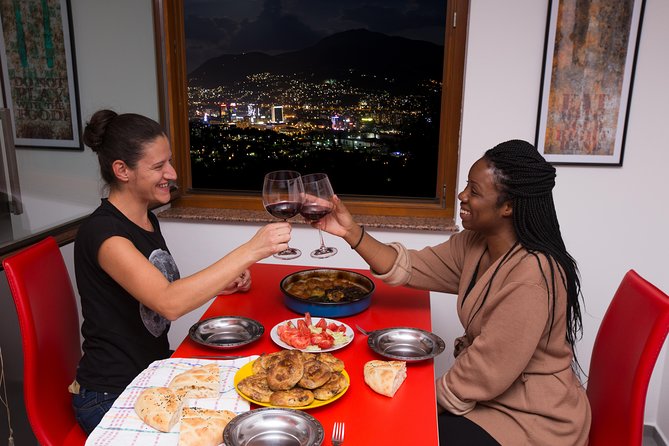
When the cooking is finished, you sit down to eat the meal you prepared together. Dinner is included, as are coffee or tea and alcoholic drinks. Soft drinks are also served while you learn.
The meal gives you a chance to compare the different preparations. The stuffed onions, japrak, and peppers share a filling but feel different on the plate. The burek adds crisp pastry to the meal, creating a useful contrast with the softer stuffed vegetables.
There is also time to ask questions after the food is ready. This is when you can ask about family cooking, local customs, ingredients, Sarajevo, or places to visit. Mersiha has provided advice about local activities and bus travel, which can be useful if you are still planning the rest of your time in Bosnia and Herzegovina.
A cooking class can easily feel rushed if the host is focused only on getting through the recipes. Here, the meal and conversation are part of the plan. That makes the class feel more like being invited into someone’s home for dinner, with a lesson built into the afternoon.
A few more options to weigh up in Sarajevo
- Sarajevo: Mostar, Konjic, Blagaj Tekke, Pocitelj & Waterfall
★ 4.9 · 1,335 reviews - Fall of Yugoslavia, Sarajevo War Tour with Tunnel of Hope Museum and Frontlines
★ 5.0 · 1,314 reviews - Sarajevo: Mostar, Konjic, Sufi House, Pocitelj & Kravice Falls
★ 5.0 · 1,179 reviews - ROSES OF SARAJEVO (Official WAR + CITY tour)- Story of a Survivor
★ 5.0 · 770 reviews
The hosts are a major part of the appeal
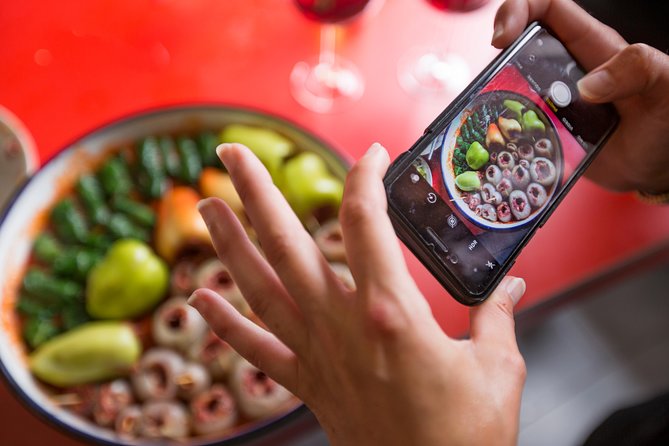
Mersiha and Mustafa receive especially strong praise for their warmth and care. The class is not only about learning food preparation. It is also about spending time with people who are happy to share their home and personal stories.
Mersiha is described as friendly, patient, professional, and easy to understand. That last point matters if English is not your first language. One solo participant who was worried about communication found her explanations clear and her manner reassuring.
Solo visitors should feel especially comfortable here. Mersiha has taken photos during the class for solo participants, a small but thoughtful touch when you are traveling without a companion to document the afternoon. Couples and friends can expect plenty of conversation, too.
The class can also carry more emotional weight than a standard food activity. One participant attended after visiting an exhibition about Srebrenica and feeling shaken by what they had seen. The kindness of Mersiha and Mustafa helped that person regain some calm. You should not book the class expecting counseling, of course, but the account shows how a welcoming home setting can matter during a difficult trip.
What the price includes at $96.79
At $96.79 per person, this is not the cheapest meal you will find in Sarajevo. The value depends on how much you want from the afternoon.
You are paying for roughly four hours of instruction, a home-cooked dinner, wine, soft drinks, coffee or tea, a small-group format, and direct help from the hosts. You also leave with recipes and, based on the experience described by a participant, step-by-step videos that can help you repeat the dishes at home.
That makes the price easier to justify than a standard dinner reservation. You are getting a meal plus a practical skill, cultural conversation, and a personal introduction to local food. If you only want to taste burek and dolma, Sarajevo restaurants and bakeries will cost less. If you want to understand how the dishes are made, this class offers more.
The maximum group size is 13. That is still large enough that you may not receive constant one-to-one attention, but it is much more manageable than a large commercial class. If you want the smallest possible setting, check the group size when booking.
Getting there from central Sarajevo
The meeting point is on Skendera Kulenovića, and private transportation is not included. Plan your route before the start time rather than assuming a pickup will be arranged.
A participant walked from central Sarajevo and reported about 40 minutes each way, with pleasant city views on the route. That gives you one possible way to reach the class, but the walking time may not suit everyone, especially after a long day or in poor weather.
There is one important detail to clarify before you go. A solo participant received pickup and drop-off at the hosts’ home, but the stated inclusions do not include private transportation. Treat that transfer as something to confirm directly, not as a guaranteed part of the booking.
The class starts at 2:30 pm, so you have time to reach the meeting point after lunch. Since dinner follows the cooking, avoid eating a large meal beforehand. You will want room for the food you prepare.
Who will enjoy this class most
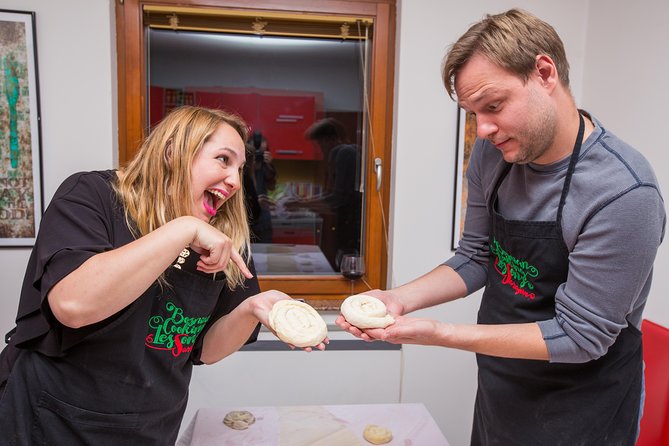
This class suits you if food is one of the main reasons you travel. It is also a good match if you enjoy meeting local people, asking questions, and learning techniques you can use later.
Solo visitors should find the atmosphere welcoming. Couples and friends will appreciate the shared work and the chance to eat together. It can also work well for people who are new to cooking classes because the instruction is described as patient and friendly.
You should request vegan or vegetarian options before attending. The standard dishes use minced meat, rice, and spices, but plant-based versions are available on request.
The class may be less suitable if you want a quick demonstration, a formal culinary course, or a central meeting point with transport included. It is also not the right pick if you want to spend the afternoon sightseeing without a fixed schedule. The cooking, conversation, and meal take most of the four-hour period.
Practical booking details
Confirmation is normally received at the time of booking. If you book within five hours of the start time, confirmation may arrive as soon as possible and remains subject to availability.
Free cancellation is available if you cancel at least 24 hours before the 2:30 pm start time. Cancellations made less than 24 hours before the class are not refunded, and changes inside that period are not accepted.
The activity is booked about 21 days ahead on average, so I would not leave it until the last minute if this is important to your Sarajevo plans. A mobile ticket makes the entry process simple, but you still need to keep the meeting address and start time handy.
Should you book Bosnian Cooking Lessons?
I would book this class if you want a personal, food-centered afternoon rather than another sightseeing stop. The strongest reasons are the home setting, the patient guidance from Mersiha, the chance to make real burek dough, and the useful recipes and videos for cooking at home later.
The price is fair for a four-hour lesson with dinner and drinks, but transport needs attention. Confirm how you will reach the house, request dietary changes in advance, and leave enough time to arrive before 2:30 pm.
If Sarajevo is part of a longer Balkan trip, this class gives you a meal, a new cooking skill, a city view, and a friendly connection with local hosts. That is a good return for one afternoon.
FAQ
Where does the Bosnian cooking class start?
The meeting point is on Skendera Kulenovića, 71000 Sarajevo, Bosnia and Herzegovina.
What time does the class begin?
The class starts at 2:30 pm.
How long does Bosnian Cooking Lessons last?
The activity lasts approximately four hours and ends back at the meeting point.
What dishes will I learn to make?
You will prepare sogan dolma, japrak, dolma, and burek. The stuffed dishes use minced meat, rice, and spices. Burek may be filled with potatoes, meat, or cheese depending on the season.
Are drinks and dinner included?
Yes. Dinner, coffee or tea, and alcoholic beverages are included. Wine and soft drinks are served during the lesson.
Are vegan and vegetarian options available?
Yes. Vegan and vegetarian options are available if requested in advance.
Is transportation included?
Private transportation is not included. One participant received pickup and drop-off, but you should confirm any transport arrangement directly before attending.
What is the cancellation policy?
You can cancel for a full refund up to 24 hours before the experience start time. Cancellations or changes made less than 24 hours before the start are not accepted for a refund.
Just added in Sarajevo
- Sarajevo Under Siege: A War History Tour★ 5.0 · 10 reviews
- Walking Tour in Sarajevo★ 5.0 · 3 reviews
- Private Full Day Safari Tour★ 5.0 · 8 reviews
- Bosnian Pyramid: The World’s Largest Pyramid (From Sarajevo)★ 5.0 · 1 review
- Ultimate adventure★ 5.0 · 2 reviews
- Mysterious Visoko Pyramids Driving and Walking Tour★ 5.0 · 7 reviews
- Travnik, Jajce, Pliva Lakes & Mills –Medieval & Ottoman Bosnia Full Day Tour★ 5.0 · 3 reviews
- Tour of Herzegovina – From Sarajevo★ 5.0 · 3 reviews
Workshops, compared.
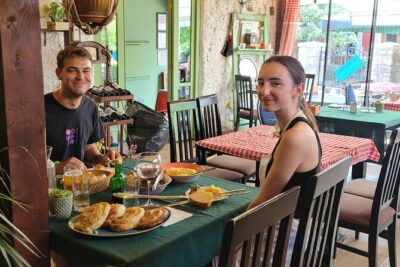
Traditional Bosnian Cooking Class in Mostar with Lunch and Drinks
Read our review →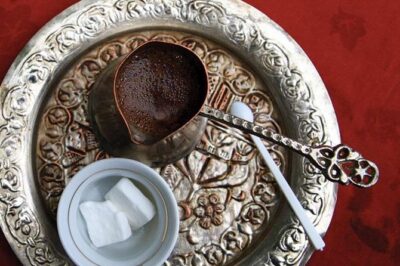
Bosnian Traditional Handicraft, half-day – do it yourself – Coppersmith Workshop
Read our review →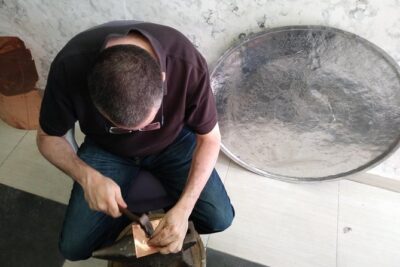
COPPER HANDICRAFT WORKSHOP (Make your own souvenir from Sarajevo)
Read our review →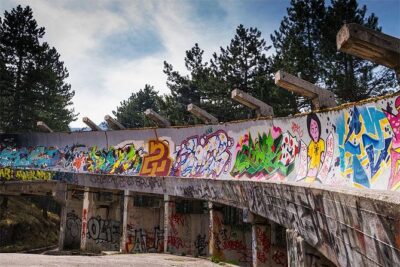
Sarajevo Street Art & Graffiti Workshop Funky Half Day Tour of Sarajevo
Read our review →
SARAJEVO STREET ART WORKSHOP (enjoy nature & spray on bobsleigh)
Read our review →Browse the lists this tour appears in