REVIEW · SARAJEVO TOURS
7 Days Balkan Tour Bosnia Croatia Montenegro Albania N.Macedonia
Five countries, seven days, one very full week. This private Balkan tour packs Sarajevo, Mostar, Dubrovnik, Kotor, Tirana, Ohrid, and Skopje into a single route. I like the private format, which gives your group its own vehicle, driver, and schedule rather than placing you on a large coach.
I also like the way the route joins major sights with serious historical stops, from Sarajevo’s War Tunnel to the bridge at Mostar and the Ottoman quarter of Skopje. The main caution is the pace: long drives, border crossings, and hot summer roads can leave you tired, especially in July.
The tour costs $2,013.49 per person and includes six nights in four-star hotels, six breakfasts, local guides, an air-conditioned vehicle, an English-speaking driver-guide, entrance fees where listed, and taxes. Lunches and dinners are extra, so your final budget needs room for meals.
In This Review
- Key points to know before booking
- Sarajevo begins with Ottoman streets and modern scars
- Konjic and Mostar follow the Neretva River
- Blagaj, Počitelj, Kravice, and Neum add variety
- Dubrovnik and Kotor bring famous stone cities
- Shkoder and Tirana show a different Albania
- Ohrid offers the gentlest day before Skopje
- Skopje closes the route with two cultural worlds
- What the $2,013.49 price really covers
- Who will enjoy this route most
- Should you book this Balkan tour?
- FAQ
- How long is the tour?
- Which countries does the tour visit?
- Where does pickup take place?
- Is this a private tour?
- What is included in the price?
- Are lunch and dinner included?
- Is the tour offered in English?
Key points to know before booking
- Five countries in seven days: Bosnia and Herzegovina, Croatia, Montenegro, Albania, and North Macedonia all appear on one carefully packed route.
- Sarajevo gets the most serious attention: You visit the Old Town, religious landmarks, Markale Market, Latin Bridge, and the Sarajevo War Tunnel.
- Private transport changes the experience: Only your group participates, with pickup available anywhere in Sarajevo.
- Several days involve long road hours: Traffic, mountain roads, and border crossings can reduce free time.
- Four-star hotels and breakfast are included: This removes much of the work of arranging accommodation across five countries.
- The strongest praise goes to the staff: Edis, Zulfo, and Elvis are singled out for their warmth, organization, storytelling, and local knowledge.
Sarajevo begins with Ottoman streets and modern scars
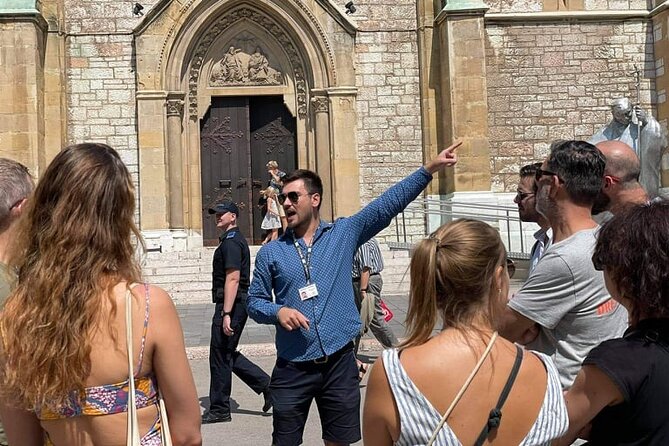
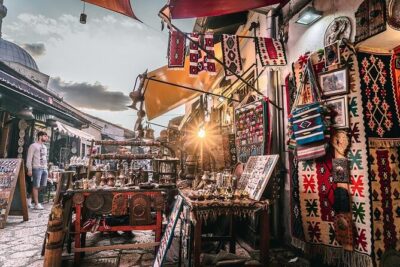
Your first morning starts with pickup anywhere in Sarajevo, followed by a walking introduction to the Old Town. The route begins near City Hall and moves toward the craft streets and Baščaršija Square, where the Sebilj fountain gives you an easy first picture of Sarajevo’s Ottoman character.
The Old Town is compact, but it rewards a slow eye. Look at the small shops, workshop fronts, and meeting points where Eastern and Western influences sit side by side. A 15-minute visit to a coppersmith’s shop adds useful context. This is not just a shopping stop. You learn about one of the old crafts still associated with Sarajevo and see the only preserved street connected with the Ottoman period.
At Gazi Husrev-beg Mosque, the guide explains how Gazi Husrev Bey used much of his fortune to build institutions across the city. His legacy included a mosque, school, caravan hotel, covered market, and other public works. The mosque requires an additional admission fee, so bring some local currency or confirm the current payment method before arriving.
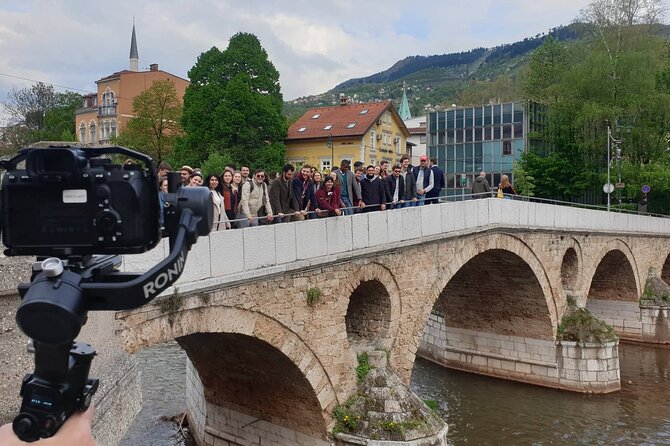
The Latin Bridge brings you to the event that helped trigger World War I: the assassination of Archduke Franz Ferdinand. This is a short stop, but the location gives the story a clear physical setting. You are not just hearing about a date in a textbook. You are standing beside the bridge and streets where the event unfolded.
Sarajevo’s religious variety appears in quick succession. You stop by the Jewish Museum in the former Old Jewish Temple, the Catholic Cathedral of the Sacred Heart, and the Serbian Orthodox Cathedral. The timing at each is brief, so do not expect full museum visits or long interior tours. Instead, these stops sketch the city’s mixed religious past.
At Markale Market, the focus shifts to the Siege of Sarajevo. You hear about daily shelling, survival, and the massacre at the marketplace. This is one of the tour’s most sobering moments, and it gives the city visit a human scale that monuments alone cannot provide.
The day ends at the Sarajevo War Tunnel Museum after a panoramic drive through the city. The tunnel was a vital wartime link during the siege, and the included admission makes this a valuable part of the tour rather than an optional extra. Allow yourself time to absorb this stop. Sarajevo is not presented as a pretty European capital only. You see both its old streets and its recent wounds.
A few more options to weigh up in Sarajevo
- Sarajevo: Mostar, Konjic, Blagaj Tekke, Pocitelj & Waterfall
★ 4.9 · 1,335 reviews - Fall of Yugoslavia, Sarajevo War Tour with Tunnel of Hope Museum and Frontlines
★ 5.0 · 1,314 reviews - Sarajevo: Mostar, Konjic, Sufi House, Pocitelj & Kravice Falls
★ 5.0 · 1,179 reviews
Konjic and Mostar follow the Neretva River
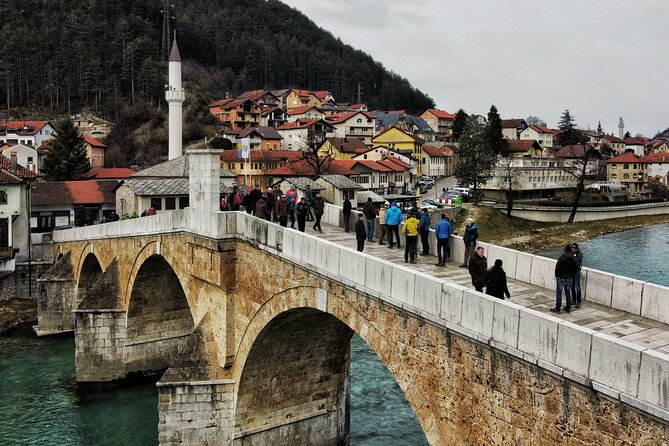
After breakfast, you leave Sarajevo for Herzegovina. About an hour later, you reach Konjic, a small town on the Neretva River. The main stop is its Ottoman stone bridge, dating from the 17th century. The visit lasts about 15 minutes, so this is a quick photo and orientation stop rather than a full town visit.
The road onward is one of the scenic rewards of the tour. You pass Jablanica Lake and the Neretva Canyon, with the river and mountain roads shaping the journey. The drive is part of the sightseeing here, although you should remember that scenic roads can also mean slow progress.
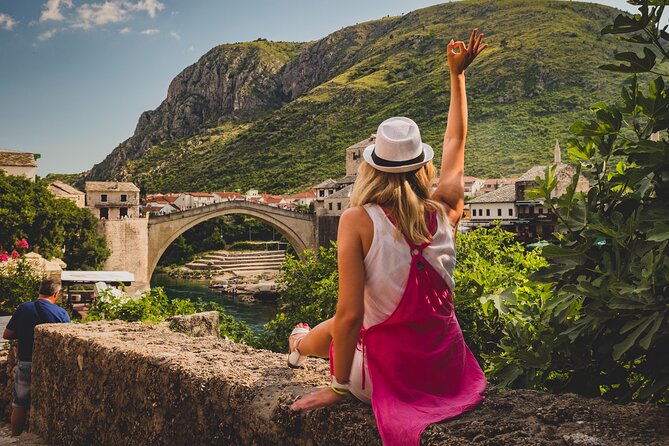
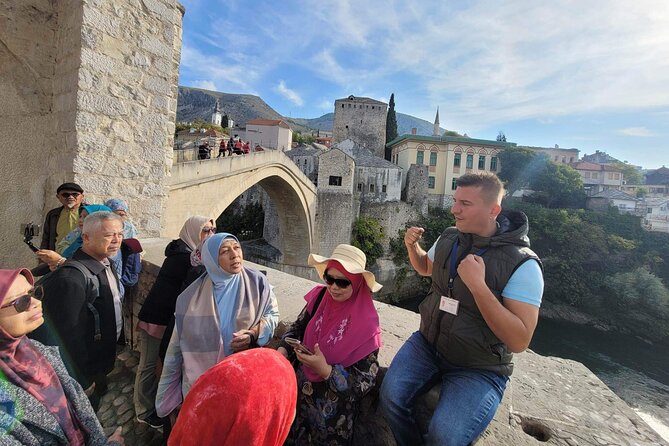
Mostar receives a longer block of time, about eight hours including the guided visit and free time. In the Old Town, you see the Ottoman bazaar, the Crooked Bridge, both banks of the river, Stari Most, and Koski Mehmet Pasha Mosque. The Old Bridge is the centerpiece, but the surrounding lanes are just as important. Shops, stone paving, and river views make this an easy place to wander after the guide finishes.
Mostar is also a place where timing matters. The schedule allows you to check into your hotel and enjoy the rest of the day at your own pace. That break is welcome after the drive from Sarajevo. I would use it for a relaxed walk along the river rather than trying to squeeze in another major attraction.
Blagaj, Počitelj, Kravice, and Neum add variety
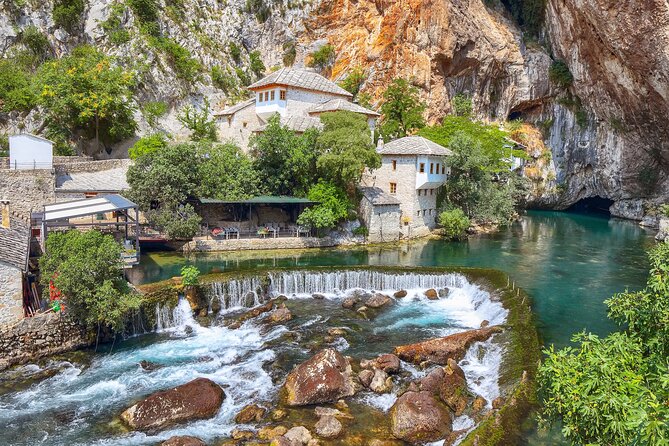
Day three keeps you in Herzegovina but changes the mood several times. At Blagaj, you visit the Buna River springs and the Dervish house. The spring is a natural focal point, while the religious building adds another layer to the region’s Ottoman and Islamic heritage. You have about an hour here.
Počitelj is a medieval stone settlement where the plan allows time for photographs and a possible climb to the 16th-century fortress. The word possible matters. The fortress climb is not described as mandatory, and the terrain may not suit everyone. Wear shoes with a firm sole if you want to go up.
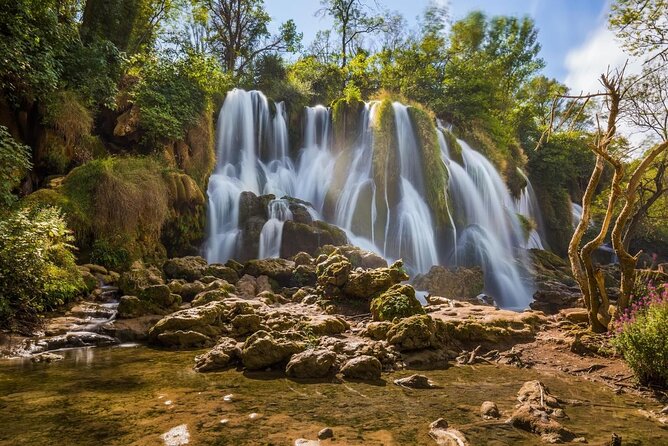
Kravice Falls gets the longest stop of the day, around two hours, with admission included. This is the day’s main nature break. You can enjoy the falls and the surrounding scenery without having to rush through in half an hour. After several city visits, the pause feels well judged.
The overnight stop is Neum, Bosnia and Herzegovina’s only coastal town. The schedule lists a 12-hour stay, which effectively means the night and some personal time around it. Neum is useful as a route stop between Herzegovina and Dubrovnik, but this is not a beach holiday built around extended coastal time. The value is practical: you sleep by the coast before crossing into Croatia.
Dubrovnik and Kotor bring famous stone cities
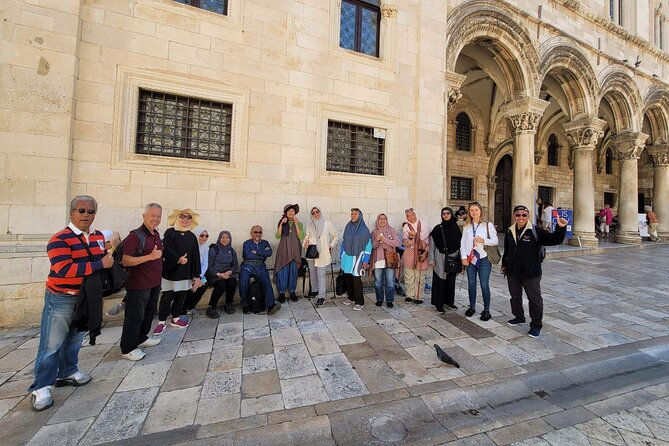
After breakfast, you check out and travel about 80 kilometers to Dubrovnik. A local guide leads you through the Old Town inside its stone walls, followed by roughly two hours of free exploration before continuing into Montenegro.
The Dubrovnik visit is short for such a major destination. You get a guided introduction and enough free time to see the central streets, but you will not cover every corner at a leisurely pace. The benefit is that you see Dubrovnik without arranging a separate transfer from Bosnia. The tradeoff is limited independent time.
Crossing into Montenegro brings you to Kotor, where another local guide leads a two-hour Old Town tour. Kotor’s compact medieval core is well suited to a guided walk, especially when you want help understanding the Venetian and local influences visible in its lanes and squares.
After Kotor, you continue to Budva for a short Old Town walk and hotel check-in. The schedule gives Budva an eight-hour block, including free time and the overnight stay. This makes Day 4 another long road day, so expect the pace to feel active rather than leisurely.
The route through Dubrovnik, Kotor, and Budva is one of the tour’s most photogenic sections, but it is also likely to be affected by traffic. One person who took the trip in July found that heavy traffic reduced downtime. That is useful advice: May or September may offer a more comfortable balance than the hottest part of summer.
A completely different kind of day:
- ROSES OF SARAJEVO (Official WAR + CITY tour)- Story of a Survivor
★ 5.0 · 770 reviews - Sarajevo: Mostar, Konjic, Počitelj, Sufi House, & Waterfalls
★ 4.9 · 572 reviews - Tunnel Museum: Bosnian & Yugoslav Wars Tour with War Veteran
★ 5.0 · 551 reviews - Sarajevo: 2 Hours Old Town Walking Tour With Local Guide
★ 5.0 · 505 reviews
Shkoder and Tirana show a different Albania
Day five crosses into Albania, beginning with Shkoder. A local guide leads the town visit, which lasts about three hours. The stop gives you an introduction to northern Albania before you continue to the capital.
In Tirana, the walking tour includes Skanderbeg Square, Ethem Bey Mosque, Mother Teresa Square, communist bunkers, and the Pyramid. These sights give you several ways to read the city: Ottoman-era religious heritage, national identity, communist rule, and modern public spaces.
The city tour is followed by hotel check-in and free time. That personal period matters because the route is otherwise tightly programmed. You can use it to rest, walk, or find dinner independently. Since lunch and dinner are not included, Tirana is also a good place to make your own food choices rather than being tied to a group meal.
The Albanian section is not as long as the Bosnia portion, but it adds a different national setting to the trip. You are not simply repeating the same old-town pattern in every country. The bunkers and Pyramid, in particular, help explain the country’s recent political past through physical reminders in the city.
Ohrid offers the gentlest day before Skopje
After checking out of your Tirana hotel, you travel toward Ohrid in North Macedonia. The journey takes about two hours plus the border crossing, according to the schedule. Border time can vary, so keep your passport accessible and avoid planning anything too tightly around arrival.
Ohrid’s Old Town receives a long 10-hour block. With a local guide, you visit the main promenade, the entrances to the Old Town, a pearl shop, an old paper factory, and St. Sofia Monastery. The combination of waterfront, crafts, and religious architecture gives this stop a slower feel than the capital-city visits.
The afternoon and evening are free and easy in Ohrid. I consider this one of the smartest pauses in the route. After several days of driving and guided walks, you get room to enjoy the town at your own rhythm. The schedule does not promise a boat trip or additional attraction, so do not assume those are included. It simply gives you time in Ohrid after the guided introduction.
The included hotel and breakfast also help here. You are not repacking every night, and the four-star accommodation provides a predictable base in each country. Still, hotel locations and exact properties are not specified, so ask for those details before booking if location is important to you.
Skopje closes the route with two cultural worlds
The final day involves about three hours of driving from Ohrid to Skopje, with short stops along the way. In Skopje, a local guide takes you through both sides of the Vardar River.
One side presents the Ottoman-influenced Old Town, bazaar, small shops, and restaurants. The other focuses on Macedonian national identity and Alexander the Great heritage. Seeing both areas in one walking tour gives you a useful framework for understanding the city’s contrasting public images.
The guided visit lasts about three hours. Afterward, the company transfers you to your accommodation or the airport, depending on your choice. The tour ends in Skopje, so you should arrange onward plans with the finishing transfer in mind.
This final day is short compared with Ohrid, and you will not have a full day to explore Skopje independently unless your own schedule allows an extra night. If Skopje interests you, adding personal time after the tour would make sense, but that extra night is not included.
What the $2,013.49 price really covers
At $2,013.49 per person, this is not a budget hop between cities. The price makes more sense for people who value private transport, hotel planning, local guides, and the ability to move through five countries without arranging each border crossing and transfer alone.
Six nights in four-star hotels, six breakfasts, a private air-conditioned vehicle, English-speaking driver-guide service, local guides, taxes, and listed entrance fees are included. The Sarajevo War Tunnel and Kravice Falls admissions are specifically included, while some mosque and museum entries are not. Check the final inclusions carefully so you know which small fees may arise.
Lunch and dinner are not included. That gives you freedom, but you should budget for two meals a day across seven days, plus drinks and any personal purchases. A complaint about an extra coffee at a hotel breakfast also suggests that you should clarify exactly what the breakfast arrangement covers. It is a small issue, but clear expectations prevent needless irritation.
The strongest value comes from the people. Edis is praised for being professional, polite, and a strong storyteller. Zulfo is also praised for his contribution as driver and guide. Elvis, the company owner, is described as highly responsive during planning, including replies across time zones. The posted ratings are all 5 out of 5, with six ratings shown, which is encouraging, though still a small sample.
Who will enjoy this route most
I would recommend this tour to a couple, family, or group of friends that wants a private introduction to the Balkans and prefers not to manage driving, hotels, guides, and borders alone.
It suits you especially well if:
- You want a broad first look at five countries.
- You enjoy history and local storytelling.
- You prefer private transport to a large coach.
- You are comfortable with full days and frequent hotel changes.
- You want four-star hotels and breakfast handled in advance.
- You value having a local driver who can explain current life as well as past events.
It may not suit you if you want long stays in each city, beach time, serious hiking, or a relaxed schedule. Dubrovnik, Kotor, Budva, Tirana, Ohrid, and Skopje all receive introductions, but none gets the kind of multi-day attention possible on a slower trip.
Summer heat is another real consideration. One July trip encountered temperatures in the 90s and sometimes above 100 degrees Fahrenheit, along with traffic delays. May and September may be worth asking about if your dates are flexible.
Should you book this Balkan tour?
Book it if your priority is seeing a lot with very little planning. The route is ambitious, but it connects major sights with meaningful historical stops and gives you a private driver, local guides, and organized hotels.
I would book with two conditions: confirm the exact hotel locations and ask what small admission or breakfast charges are not included. I would also avoid the hottest summer weeks if possible. For a first visit to the region, the combination of Sarajevo’s wartime stories, Mostar’s river setting, Dubrovnik and Kotor’s stone towns, Albania’s capital, Ohrid, and Skopje offers remarkable range in one week.
The cancellation terms are strict close to departure. You can receive a full refund by canceling at least six full days before the start time, while cancellations two to six days ahead receive 50 percent. Less than two days brings no refund, and the experience also requires a minimum number of participants.
FAQ
How long is the tour?
The tour lasts approximately seven days and ends in Skopje after the final walking tour.
Which countries does the tour visit?
The route includes Bosnia and Herzegovina, Croatia, Montenegro, Albania, and North Macedonia.
Where does pickup take place?
Pickup is available from any location in Sarajevo.
Is this a private tour?
Yes. Only your group participates in the activity.
What is included in the price?
The price includes six nights in four-star hotels, six breakfasts, local guides, an air-conditioned vehicle, an English-speaking driver-guide, all listed fees and taxes, and included admission fees where specified.
Are lunch and dinner included?
No. Lunch and dinner are not included.
Is the tour offered in English?
Yes. The tour includes an English-speaking driver-guide and local guides, and English is listed as the available language.
Just added in Sarajevo
- Sarajevo Under Siege: A War History Tour★ 5.0 · 10 reviews
- Private Full Day Safari Tour★ 5.0 · 8 reviews
- Walking Tour in Sarajevo★ 5.0 · 3 reviews
- Bosnian Pyramid: The World’s Largest Pyramid (From Sarajevo)★ 5.0 · 1 review
- Ultimate adventure★ 5.0 · 2 reviews
- Mysterious Visoko Pyramids Driving and Walking Tour★ 5.0 · 7 reviews
- Travnik, Jajce, Pliva Lakes & Mills –Medieval & Ottoman Bosnia Full Day Tour★ 5.0 · 3 reviews
- Sarajevo to/from Zagreb Transfer Day Tour (North-central Bosnia)★ 5.0 · 4 reviews
Sarajevo Tours, compared.
Sarajevo: Mostar, Konjic, Blagaj Tekke, Pocitelj & Waterfall
Read our review →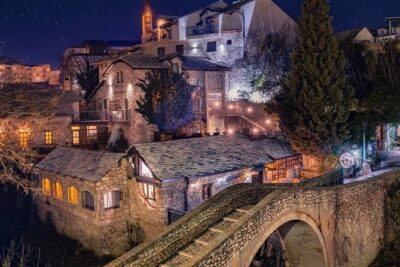
Sarajevo: Mostar, Konjic, Sufi House, Pocitelj & Kravice Falls
Read our review →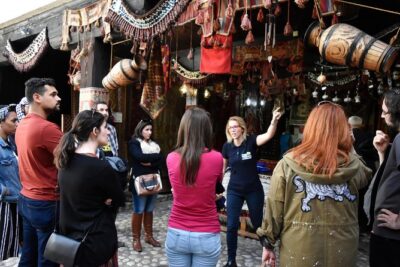
Sarajevo: 2 Hours Old Town Walking Tour With Local Guide
Read our review →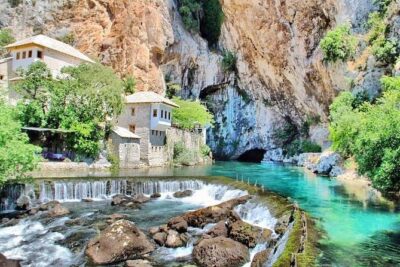
Sarajevo: Mostar, Konjic, Dervish House, Pocitelj & Kravica Falls
Read our review →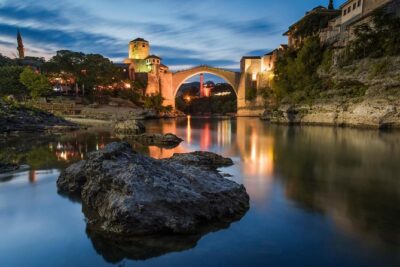
Mostar,Kravica Waterfall,Blagaj,Počitelj – Day Tour from Sarajevo
Read our review →
Jajce, Travnik and Pliva watermills – Day Tour from Sarajevo
Read our review →