
REVIEW · WALKING TOURS IN SARAJEVO
Crossroads of Cultures – Sarajevo Walking Tour
Sarajevo tells its story in close quarters. This two-hour walk links cathedral, mosque, synagogue, market, bridge, and city hall in one compact route, making it a strong first look at the city. I especially like the East-meets-West theme and the chance to hear local stories from guides such as Adnan Suka. The main trade-off is pace: 15 stops in about two hours means some visits are brief.
I also like the food advice built into the route, from Bosnian coffee and traditional metalwork to recommendations for cevapi and burek. At $24.08 per person, the tour offers good value if you want orientation and context rather than long museum visits. Keep extra money for entrance fees, food, and any coffee stop you choose.
In This Review
- Key points at a glance
- Why this Sarajevo walk works well as a first introduction
- Starting at Muvekita 7 with a small group
- Cathedral, synagogue, and the meeting of cultures
- Gazi Husrev-beg Mosque and the Ottoman center
- Sebilj, Kazandziluk, and the taste of old Sarajevo
- City Hall and the Sarajevo Assassination
- Orthodox Cathedral, Markale Market, and the Eternal Flame
- What $24.08 gets you
- Who should book this walk
- Final verdict: a smart first morning in Sarajevo
- FAQ
- Where does the Sarajevo walking tour begin?
- What time does the tour start?
- Where does the tour finish?
- How long does the tour last?
- What language is the tour offered in?
- How much does the tour cost?
- What is included in the tour price?
- Are museum entrance fees included?
- Can I cancel for a full refund?
Key points at a glance
- A compact route through Sarajevo’s major religious landmarks: See the Catholic cathedral, Jewish Museum, Gazi Husrev-beg Mosque, and Serbian Orthodox Cathedral.
- The city’s East-meets-West meeting point: Sarajevo Meeting of Culture gives you a clear visual explanation of the city’s cultural divide.
- Adnan Suka receives especially warm praise: He is described as friendly, professional, helpful, and able to explain local life clearly.
- Food and coffee are part of the story: Kazandziluk, Bravadziluk Street, cevapi, burek, and Bosnian coffee add everyday flavor to the walk.
- A small maximum group of 15: This should make it easier to hear the guide and ask questions.
- You return to the starting point: The walk begins at Muvekita 7 at 10:30 am and ends back there.
Why this Sarajevo walk works well as a first introduction
Sarajevo is a city where several traditions sit side by side. In a single morning, you move from the Sacred Heart Cathedral to the Gazi Husrev-beg Mosque, pass the former Jewish quarter, see the Serbian Orthodox Cathedral, and finish near the Eternal Flame.
That range gives the tour its purpose. You are not just collecting buildings. You are seeing how Sarajevo’s religious and political identities meet in a small central area. The guide connects those places, which is useful because the city’s story can otherwise feel like a series of separate sights.
The schedule is tightly packed. Most stops last five or ten minutes, while Latin Bridge receives 20 minutes. That tells you what kind of experience this is. You will get explanations, exterior views, and brief visits, but you should not expect a slow examination of every interior.
For a first morning in Sarajevo, I find that a fair exchange. You get your bearings quickly, then you can return later to the places that catch your attention.
More Walking Tours in Sarajevo
- Sarajevo: 2 Hours Old Town Walking Tour With Local Guide
★ 5.0 · 505 reviews - Private Walking Tour, Food Tasting and Bosnian Coffee in Sarajevo
★ 5.0 · 255 reviews - Sarajevo Grand Walking Tour
★ 5.0 · 232 reviews
Starting at Muvekita 7 with a small group
The meeting point is the Toureedoo office at Muvekita 7. The guide meets you in front of the office at 10:30 am, and the walk ends at the same location.
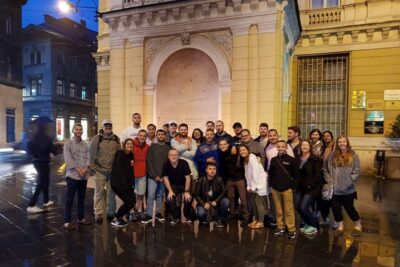
The maximum group size is 15 people. That is small enough for a more personal outing without making the price feel like a private tour. It also matters on narrow streets and inside compact historic buildings, where a large group can become awkward.
The tour is offered in English according to the current details. Several past accounts also describe Spanish-language walks led by Adnan Suka, whose Spanish was praised. If you need Spanish, confirm the language before booking, since the stated offering is English.
Wear comfortable shoes. The route is a walking tour through central Sarajevo, with repeated stops and a fair amount of standing. Public transportation is nearby, but you do not need transport during the activity itself.
Cathedral, synagogue, and the meeting of cultures
The first major stop is Katedrala Srca Isusova, or the Sacred Heart Cathedral. You receive an explanation of the place and its role in Sarajevo’s religious mix. The 10-minute visit is enough for a useful introduction, though not enough for a long architectural inspection.
From there, the group continues to the Jewish Museum of Bosnia and Herzegovina. This is connected with the site where Sarajevo’s first Jewish temple was built. The stop helps broaden the usual Ottoman and Austro-Hungarian story, reminding you that Jewish life is also part of the city’s past.
Admission to the Jewish Museum is not included. The same applies to some other interior sights, so ask the guide what can be entered during the walk and what needs a separate ticket. The tour price covers the guide, not a full museum program.
Sarajevo Meeting of Culture is one of the quickest stops, at about five minutes, but it may be one of the most useful for orientation. The guide explains why Sarajevo is often described as the place where East meets West. This is a good moment to pause and look at the change in architectural and cultural character around you.
Gazi Husrev-beg Mosque and the Ottoman center
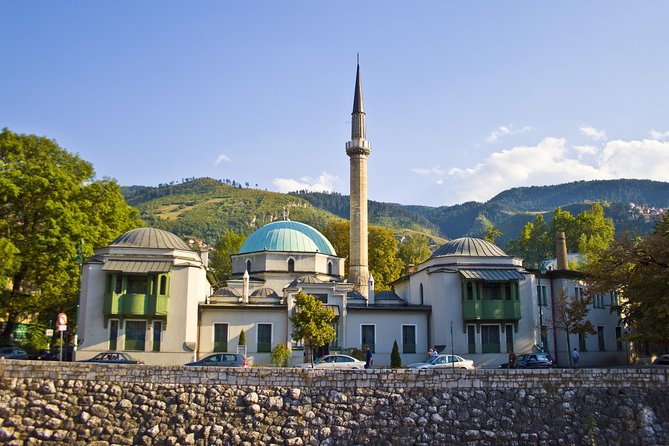
The Gazi Husrev-beg Mosque is a major stop for understanding the Ottoman side of Sarajevo. The guide explains its importance as the central mosque in Bosnia and Herzegovina.
The scheduled 10 minutes keeps the visit focused. You should think of this as an introduction rather than a detailed religious or architectural tour. If you want to enter, dress respectfully and follow any rules in force at the site. The tour information lists admission as free, but it does not promise an extended interior visit.
Nearby, the Old Sarajevo Clock Tower adds another piece to the city center. The guide explains its importance, and the five-minute stop gives you a quick landmark lesson. Short stops like this work best when you are happy to listen, take a photo, and keep moving.
Morica Han offers a different kind of Ottoman-era setting. It is described as the only preserved han, or motel, in Sarajevo. A han served as a place for merchants and travelers to rest, so this stop connects the city’s past with the practical business of movement and trade.
Admission is included at Morica Han. It receives about 10 minutes, enough to see the setting and hear why it matters. I would not expect a long, independent exploration, but it is a welcome change from passing only grand religious buildings.
A completely different kind of day:
- Sarajevo: Mostar, Konjic, Blagaj Tekke, Pocitelj & Waterfall
★ 4.9 · 1,335 reviews - Fall of Yugoslavia, Sarajevo War Tour with Tunnel of Hope Museum and Frontlines
★ 5.0 · 1,314 reviews - Sarajevo: Mostar, Konjic, Sufi House, Pocitelj & Kravice Falls
★ 5.0 · 1,179 reviews - ROSES OF SARAJEVO (Official WAR + CITY tour)- Story of a Survivor
★ 5.0 · 770 reviews
Sebilj, Kazandziluk, and the taste of old Sarajevo
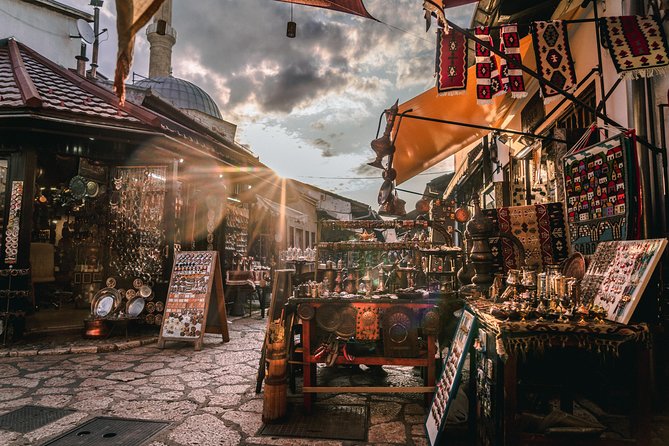
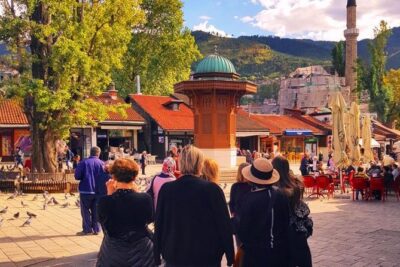
Sebilj Brunnen, the famous fountain also known as Pigeon’s Square, is one of the most recognizable points on the route. The fountain has strong visual appeal, and the nearby square gives the tour a livelier public setting.
The stop lasts about five minutes. That is enough to hear the basic story and take in the scene, but you may want to return later if you want more time for photographs or people-watching. Admission is included.
The walk then reaches Kazandziluk, the old coppersmiths’ street. Here, the guide talks about traditional Sarajevo crafts and explains how Bosnian coffee is made. This is one of the tour’s most practical touches because it moves beyond monuments and into the habits of daily life.
The coffee discussion also gives you something to look for during the rest of your visit. Bosnian coffee is not simply a generic café drink, and learning the basic method from a local guide can make your later order more meaningful. The supplied information does not promise a tasting as part of the tour, so treat this as an explanation rather than a guaranteed coffee break.
Bravadziluk Street follows with food recommendations. The guide points you toward places to try cevapi and burek. These suggestions are useful, but lunch is not included. Plan to pay separately, and consider saving your appetite because the route introduces two of Sarajevo’s best-known everyday foods.
City Hall and the Sarajevo Assassination
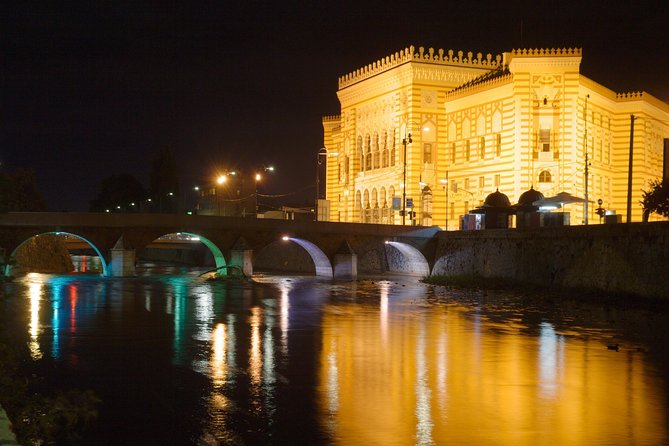
Sarajevo City Hall is one of the most striking Austro-Hungarian buildings in the city. The guide explains its importance and gives you a chance to see how sharply the architectural mood changes from the Ottoman center.
The stop lasts 10 minutes, and admission is not included. If you want to visit inside, budget extra time and money beyond the walking tour. The schedule is designed to show you the building and provide context, not to replace a full interior visit.
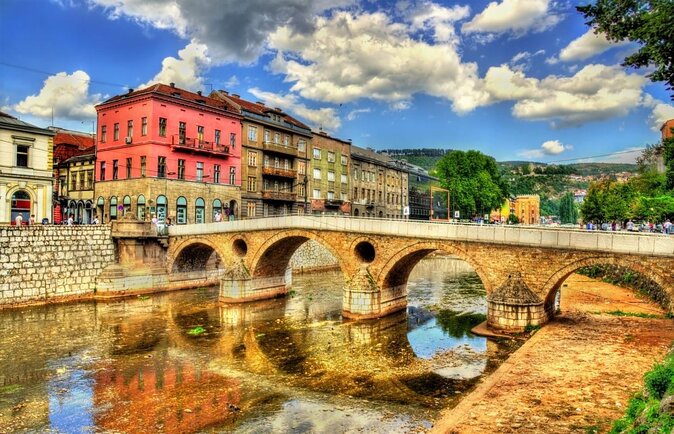
Latin Bridge receives the longest stop, 20 minutes. The guide explains the 1914 Sarajevo Assassination, the event that shook Europe and helped trigger the First World War. This is where the tour’s geography and world history meet in a particularly direct way.
I appreciate the longer timing here. A famous event can become a rushed photo stop, but 20 minutes allows the guide to explain what happened and why the location became so important. Still, the depth will depend on the guide and your questions. Adnan Suka is repeatedly praised for clear explanations about Sarajevo’s culture, history, and life, which makes him a particularly strong fit for this part of the walk.
Orthodox Cathedral, Markale Market, and the Eternal Flame
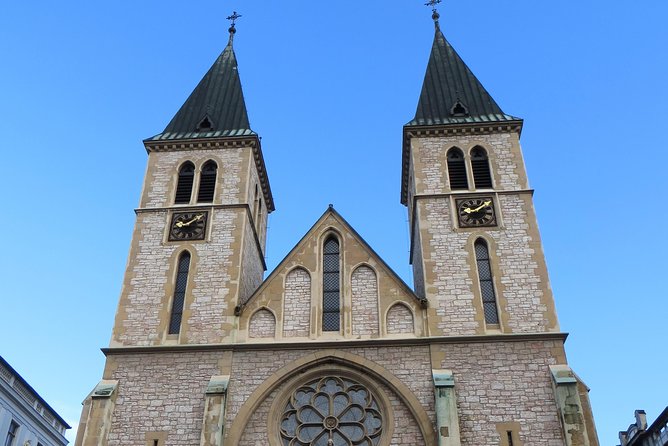
The Serbian Orthodox Cathedral is another short but important stop. The guide tells the story of Sarajevo’s main Orthodox church, adding another religious tradition to the route.
Admission is not included. The five-minute schedule suggests a brief explanation, not a full church visit. If the building interests you, ask the guide about returning later and check the separate entrance arrangements.
Pijaca Markale, the city market, shifts the focus back to ordinary local life. You see a place where fruit, vegetables, and meat products are sold. That makes the market a useful contrast with grand monuments and formal religious sites.
The market stop lasts 10 minutes. You may have time to look around, but the tour is not designed as a shopping trip. Keep the guide’s explanation in mind, and return later if you want to browse at your own speed.
The final stop is the Eternal Flame, a monument dedicated to the fighters of the Second World War. At five minutes, it is a concise ending to a route that has covered Ottoman, Austro-Hungarian, Jewish, Orthodox, Catholic, and wartime chapters.
Because the tour returns to the starting point, you finish with a familiar central location rather than being left at a distant sight. That is convenient if you want to continue sightseeing, find lunch, or revisit the market and old streets.
What $24.08 gets you
At $24.08 per person, the price is reasonable for a two-hour guided introduction with a maximum of 15 people. The value comes from the explanations and route design, not from included attractions. The tour includes the guide, while museum entrances, some church or building admissions, and lunch are extra.
You are paying to have Sarajevo’s central sights arranged in a meaningful order. Without a guide, you could walk past the cathedral, mosque, han, bridge, and city hall, but you might miss how closely their stories fit together.
The price is less attractive if you want long interior visits or plenty of free time at each stop. In that case, you would need to add independent visits after the tour. It becomes better value if you are in Sarajevo for a short stay or want a clear plan for your first day.
The experience also has free cancellation up to 24 hours before the start time. Late cancellations and late changes are not accepted for a refund. Poor weather can lead to a new date or full refund, and the same applies if the minimum number of participants is not reached.
Who should book this walk
I would choose this tour if you are visiting Sarajevo for the first time and want a clear two-hour orientation. It suits anyone interested in religious history, Ottoman and Austro-Hungarian architecture, local food, and the events surrounding 1914.
It is also a good choice if you prefer a small group to a large city tour. The 15-person limit should keep the guide close enough to hear, while still keeping the price moderate.
You may want something else if your main goal is museum time, a private itinerary, or a slow photography walk. The schedule moves quickly, and several stops last only five minutes. People with limited walking ability should also consider the format carefully, although the supplied details say most participants can take part and service animals are allowed.
The strongest reason to book is the guide quality. Adnan Suka is praised for being friendly, helpful, professional, and able to explain Sarajevo in both an interesting and approachable way. That personal connection can make a short route feel much more useful.
Final verdict: a smart first morning in Sarajevo
I recommend the Crossroads of Cultures walk for a first visit, especially at the reasonable $24.08 price. You see the city’s major religious and historic markers, learn where to eat, and gain a useful sense of how Sarajevo’s different cultural influences fit together.
Book it if you value a local guide and a well-planned route. Skip it if you want extensive time inside museums or buildings. For most visitors, the best plan is to take the walk early, note the places you want to revisit, then spend the rest of the day exploring at your own pace.
FAQ
Where does the Sarajevo walking tour begin?
The tour begins in front of the Toureedoo office at Muvekita 7, Sarajevo 71000, Bosnia and Herzegovina.
What time does the tour start?
The scheduled start time is 10:30 am.
Where does the tour finish?
The activity ends back at the meeting point at Muvekita 7.
How long does the tour last?
The walking tour lasts approximately two hours.
What language is the tour offered in?
The current tour details list English as the available language.
How much does the tour cost?
The listed price is $24.08 per person.
What is included in the tour price?
A tour guide is included.
Are museum entrance fees included?
No. Entrance fees to museums are not included. Admission is also listed as not included at the Jewish Museum, Sarajevo City Hall, and the Serbian Orthodox Cathedral.
Can I cancel for a full refund?
Yes. You can cancel at least 24 hours before the local start time for a full refund. Changes or cancellations made less than 24 hours before the start time are not accepted for a refund.
Just added in Sarajevo
- Sarajevo Under Siege: A War History Tour★ 5.0 · 10 reviews
- Walking Tour in Sarajevo★ 5.0 · 3 reviews
- Private Full Day Safari Tour★ 5.0 · 8 reviews
- Bosnian Pyramid: The World’s Largest Pyramid (From Sarajevo)★ 5.0 · 1 review
- Ultimate adventure★ 5.0 · 2 reviews
- Mysterious Visoko Pyramids Driving and Walking Tour★ 5.0 · 7 reviews
- Travnik, Jajce, Pliva Lakes & Mills –Medieval & Ottoman Bosnia Full Day Tour★ 5.0 · 3 reviews
- Sarajevo to/from Zagreb Transfer Day Tour (North-central Bosnia)★ 5.0 · 4 reviews
Walking Tours in Sarajevo, compared.
Sarajevo: 2 Hours Old Town Walking Tour With Local Guide
Read our review →
Private Walking Tour, Food Tasting and Bosnian Coffee in Sarajevo
Read our review →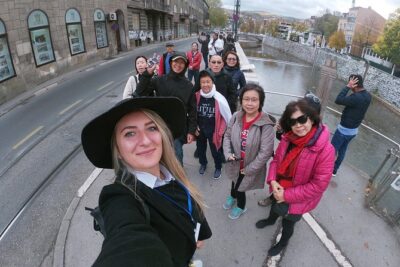
Delicious Sarajevo: Eat, Walk & Discover City Tour
Read our review →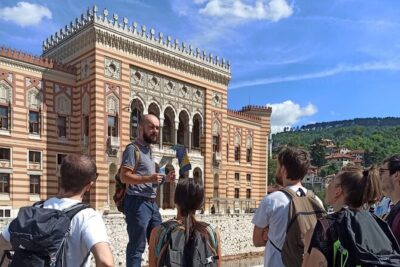
PROFESSIONAL SARAJEVO WALKING TOUR – With guide who guided STING!
Read our review →
Sarajevo genuine walking tour: Steps through history
Read our review →Browse the lists this tour appears in