REVIEW · SARAJEVO TOURS
From Sarajevo: Višegrad, Andrićgrad, Drvengrad & Šargan tour
Two countries, one very long day. This tour links eastern Bosnia with western Serbia, giving you the Ottoman bridge at Višegrad, two unusual film villages, mountain scenery, and the Šargan Eight railway without asking you to manage border roads yourself. I especially like the small group size of up to seven people and the way the guide handles the driving while you watch the hills and river valleys pass by.
I also like the literary link to Ivo Andrić and The Bridge on the Drina, plus the chance to ride a historic narrow-gauge train if it is running. The main drawback is the packed schedule: Andrićgrad and Drvengrad are built attractions rather than old, lived-in towns, and the train can add waiting time to an already lengthy day.
In This Review
- The essential facts at a glance
- Why this day trip is worth your time
- Starting in Sarajevo at 8 a.m.
- Višegrad and the bridge over the Drina
- Andrićgrad, a film village beside the river
- Crossing into Serbia and entering Mokra Gora
- The Šargan Eight railway: the optional highlight
- Drvengrad and lunch on Mećavnik
- Dobrun Monastery, the quiet final stop
- The guides make a major difference
- What the schedule feels like in practice
- Who should book this tour?
- FAQ
- How long does the tour take?
- Where does the tour begin?
- Is hotel pickup available?
- Is the Šargan Eight train included?
- How much does Drvengrad cost?
- Does the tour include food and drinks?
- How many people can join the tour?
- Should you book it?
The essential facts at a glance
- A full 10 to 12 hours takes you from Sarajevo through Višegrad and into Serbia.
- The Mehmed Paša Sokolović Bridge is a UNESCO-listed Ottoman bridge over the Drina River.
- The Šargan Eight train is optional, and its ticket costs extra.
- Drvengrad entrance also costs extra, at 3 euros per person.
- Pickup is flexible, with departure usually at 8 a.m. from Meet Bosnia Tours in Sarajevo’s old town.
- The group is limited to seven people, making the long drive more manageable and personal.
Why this day trip is worth your time
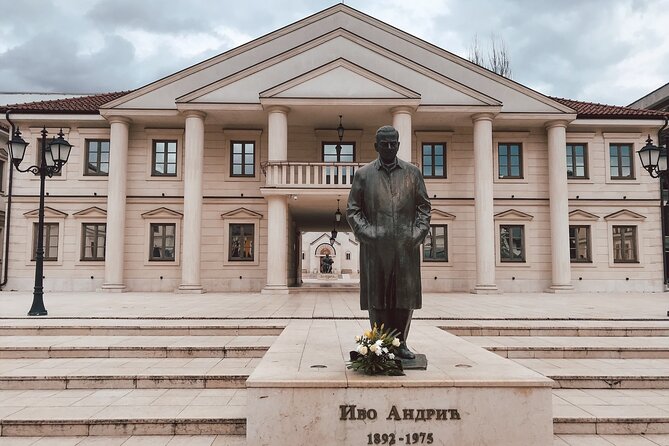
If you have several days in Sarajevo, you could explore eastern Bosnia and western Serbia at a slower pace. If you have only a short stay, this excursion gives you a wide view of the region in one ambitious outing.
The appeal is not just the number of stops. You move from Ottoman architecture and Bosnian literature to Serbian mountain parks, railway history, and film-inspired villages. The route also gives you long stretches of countryside between the main sights, which is part of the experience.
At $80.46 per person, the price is fair for a day that includes an air-conditioned vehicle, fuel, a driver-guide, and hotel pickup and drop-off when arranged outside the old town. You still pay for food, the 3 euro Drvengrad entrance, and the optional Šargan train. Those extra costs are modest, but you should include them when planning your budget.
The tour is especially useful if you do not want to rent a car. The route crosses the Bosnia and Herzegovina-Serbia border, and a local guide can make the crossing less stressful than handling the roads and border formalities yourself.
A few more options to weigh up in Sarajevo
- Sarajevo: Mostar, Konjic, Blagaj Tekke, Pocitelj & Waterfall
★ 4.9 · 1,335 reviews - Fall of Yugoslavia, Sarajevo War Tour with Tunnel of Hope Museum and Frontlines
★ 5.0 · 1,314 reviews - Sarajevo: Mostar, Konjic, Sufi House, Pocitelj & Kravice Falls
★ 5.0 · 1,179 reviews
Starting in Sarajevo at 8 a.m.
The usual meeting point is Meet Bosnia Tours at Gazi Husrev Begova 75, near the crossing of Mula Mustafe Bašeskije in the old town. The tour normally begins at 8 a.m., though pickup can be arranged if you are staying outside the old town area.
The opening is simple. You receive a short introduction and complimentary bottles of water before setting off. Bring breakfast or buy something before departure, since food and drinks are not included and the day begins early.
The vehicle is air-conditioned, and the group limit of seven is a real advantage on a long road trip. You are not being moved in a large coach, and a smaller group makes it easier to ask questions or adjust the pace when possible.
The exact day can vary with road conditions, border delays, weather, and the train schedule. Plan on 10 to 12 hours rather than treating that figure as a strict promise.
Višegrad and the bridge over the Drina
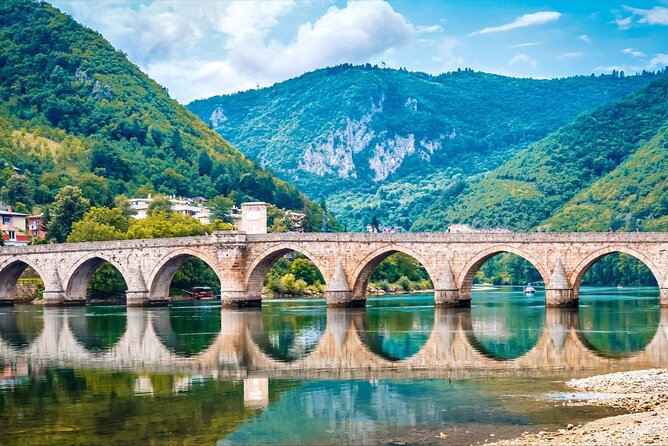
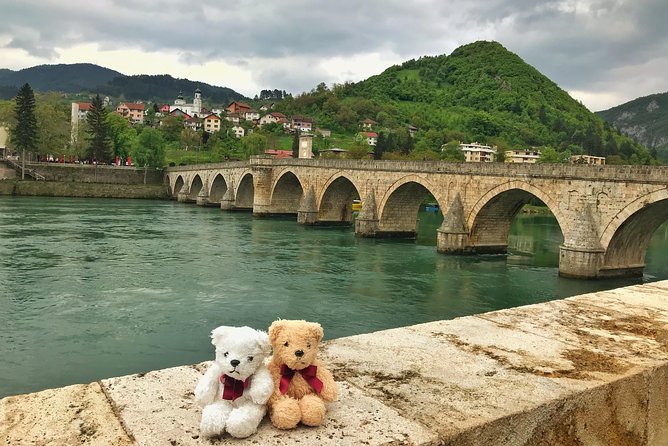
The first major stop is the Mehmed Paša Sokolović Bridge in Višegrad. You have about 45 minutes here, with no separate admission charge.
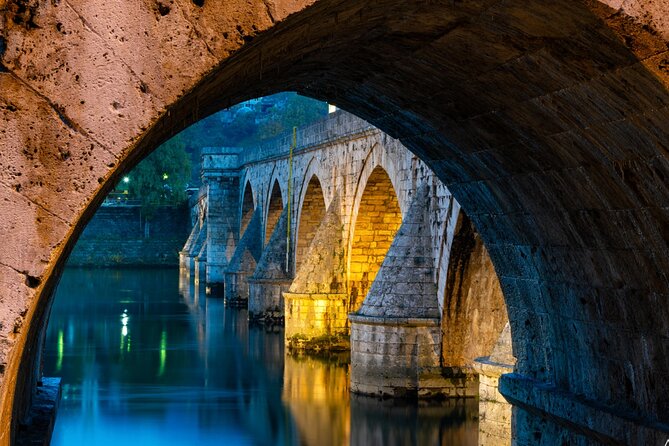
Built in 1577 by Ottoman architect Mimar Sinan for Grand Vizier Mehmed Paša Sokolović, the bridge has 11 stone arches crossing the Drina River. UNESCO added it to the World Heritage List in 2007.
The bridge carries more than architectural interest. It is the central subject of Ivo Andrić’s novel The Bridge on the Drina, and that connection gives the visit a literary edge. If you have read the book, the stop becomes far more meaningful. If you have not, the guide can still provide the historical setting and explain why this crossing matters.
Morning timing can work beautifully here. A past January visit found the bridge in fog with the mountains behind it, creating a quiet and striking scene. Weather is never guaranteed, of course, but the early arrival gives you a better chance of seeing Višegrad before the day feels busy.
You should allow time simply to look at the bridge and the river. This is not a stop that needs constant activity. Its strength is the setting, the stonework, and the sense of a route that has connected people for centuries.
Andrićgrad, a film village beside the river
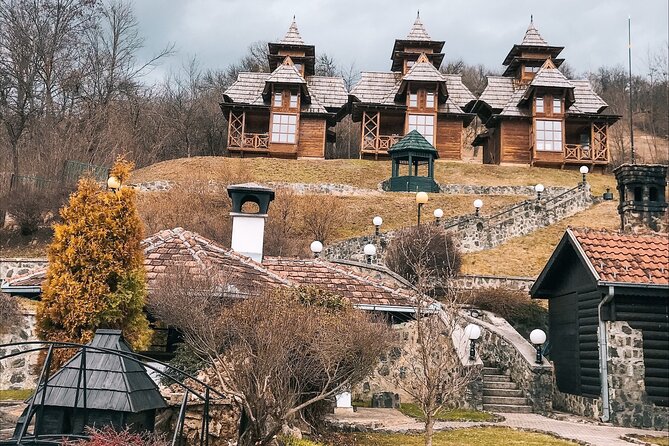
A short distance from the bridge is Andrićgrad, also known as Kamengrad. You have about 30 minutes to walk around.
The complex was created by Serbian filmmaker Emir Kusturica near the meeting point of the Drina and Rzav rivers. It was designed in connection with a planned film based on Andrić’s novel, and its streets and buildings draw on several architectural styles.
That origin explains both its charm and its limits. Andrićgrad looks like a carefully made historic town, but it is not an old medieval settlement that developed naturally over centuries. I enjoy it as a visual and cultural project, especially when paired with the bridge nearby. You should not expect the same depth of atmosphere you would find in a genuinely old town.
Thirty minutes is enough for a walk, photographs, and an explanation from your guide. If you prefer active sightseeing, this can feel brief. If you are already thinking about the long road ahead, the short visit keeps the schedule moving.
A completely different kind of day:
- ROSES OF SARAJEVO (Official WAR + CITY tour)- Story of a Survivor
★ 5.0 · 770 reviews - Sarajevo: Mostar, Konjic, Počitelj, Sufi House, & Waterfalls
★ 4.9 · 572 reviews - Tunnel Museum: Bosnian & Yugoslav Wars Tour with War Veteran
★ 5.0 · 551 reviews - Sarajevo: 2 Hours Old Town Walking Tour With Local Guide
★ 5.0 · 505 reviews
Crossing into Serbia and entering Mokra Gora
The route then crosses into Serbia toward Mokra Gora, a valley between the Tara and Zlatibor mountains. The area forms part of the Šargan-Mokra Gora nature park, which covers 10,813 hectares.
The drive is one of the best reasons to choose a guided outing rather than trying to combine these places independently in one day. You can watch the changing mountain scenery while someone else deals with the road and border crossing.
The tour includes views around Mokra Gora National Park and the eastern foothills of Tara Mountain. The descriptions of the route are broad rather than tied to one formal viewpoint, so think of this section as a scenic transition between the main stops.
Border crossings can take time. One past departure found the queue for the railway particularly slow, so keep your expectations flexible. Bring your passport and confirm your entry requirements before booking, since the tour crosses from Bosnia and Herzegovina into Serbia.
The Šargan Eight railway: the optional highlight
The Šargan Eight is a narrow-gauge railway known for its unusual route through the mountains. Its name refers to the shape of the track, which uses tight curves and engineering tricks to gain height over a short distance.
The railway also functions as an open-air display of older railway equipment. Along the track, preserved locomotives and wagons show how railway travel once worked in this mountain region.
The train ride is optional. Its ticket is not included and costs 1,200 Serbian dinars, listed as about 10 euros, payable by cash or card. The schedule and availability can affect the visit, so you decide on the spot if you want to join.
I would choose the train if railway history, mountain views, or unusual engineering interests you. A January departure described a ride through fresh snow, with the weather turning an already distinctive trip into a memorable one. You cannot count on snow, but the example shows how strongly conditions can shape this stop.
If you dislike queues or want more time at Drvengrad, skipping the train may be sensible. One detailed assessment found the wait and time spent entering Serbia made the railway less worthwhile than the bridge and the lunch stop near the Drina. This is the tour’s clearest either-or decision: take the ride for the experience, or use the time for a calmer visit elsewhere.
Drvengrad and lunch on Mećavnik
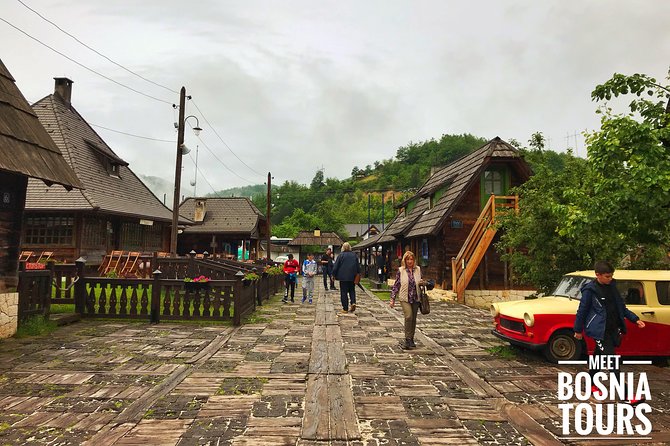
Drvengrad, also called Mećavnik or Wooden Town, is another project associated with Emir Kusturica. It was built on Mećavnik hill using traditional log cabins moved from the surrounding region. The oldest cabins are said to be about 90 years old.
The village sits somewhere between a rural settlement and a purpose-built ethnic village. Stone bases support the wooden houses, and cellars were fitted into the slope. It is a pleasant place to walk, but it is important to understand what you are seeing: this is a constructed attraction, not an untouched historic village.
You usually have about an hour and a half here, including free time for lunch. Food is not included, so this is the natural point to pay for your own meal. A restaurant with views toward the Drina area was singled out as one of the best parts of the day, so take time to enjoy the setting instead of treating lunch as a quick refueling stop.
Drvengrad entrance costs 3 euros per person. That fee is separate from the tour price. The attraction will suit you if you like cinema, wooden architecture, and unusual cultural projects. If you are mainly seeking authentic old villages, you may find it too polished and artificial.
Dobrun Monastery, the quiet final stop
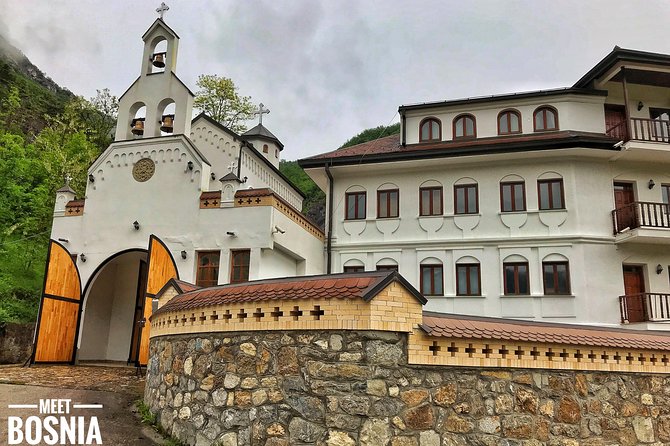
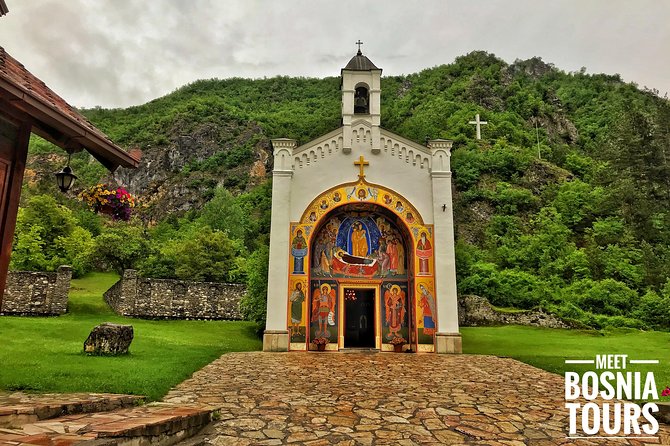
On the return route, the tour visits Orthodox Monastery Dobrun for about 20 minutes. The monastery was built in 1343 and is described as one of the oldest monasteries in the country.
This is a short stop, but it adds another layer to the day. After the bridge, film villages, railway, and mountain roads, Dobrun offers a religious and historical site with a quieter character.
Twenty minutes is enough for a look around, though not for an extended visit. The stop works best as a final cultural note rather than the main reason to book the tour.
The guides make a major difference
The strongest part of this experience is the guide. Past departures have included Kristijan, Amir, Kenny, Kenan, and Ejup, with praise focused on clear English, friendly conversation, local history, and the ability to explain what you are seeing between stops.
That matters on this particular route. Several hours are spent in the vehicle, and the quality of the commentary can determine whether the drive feels like wasted time or part of the tour.
One guide, Ejup, was praised for adapting to changing conditions and making even the road sections interesting. Kenan was also noted for explaining both the towns and the countryside. You should still confirm who your guide will be if a particular person is important to your decision, since the assigned guide can vary.
The best guides also help you decide how to use your limited time. They can explain what you are looking at, point out the historical links, and help you judge if the optional train is worth joining on that day.
What the schedule feels like in practice
This is a road-heavy day. You see a lot, but you do not get long, unhurried visits at every stop.
The bridge receives the most useful sightseeing time. Andrićgrad is short. The railway depends on timing and your choice to pay for the ride. Drvengrad gets the longest free period, partly because it is the lunch stop. Dobrun is brief.
That rhythm suits you if you want variety and do not mind changing locations often. It is less suitable if you prefer to spend half a day at one museum, historic town, or natural site.
Wear comfortable shoes and bring layers. The tour reaches mountain areas, and conditions can change. Carry your passport, water, and some Serbian dinars or a bank card for the optional fees. Since lunch is not covered, budget for a meal in Drvengrad.
Free cancellation is available up to 24 hours before departure for a full refund. If the minimum number is not reached and the operator cancels, you are offered another date or experience, or a full refund.
Who should book this tour?
Book it if you want to:
- See Višegrad and western Serbia from Sarajevo in one day.
- Visit the bridge connected to Ivo Andrić’s famous novel.
- Let a guide handle the driving and border route.
- Enjoy mountain scenery without renting a car.
- Add a historic railway to your Bosnia trip.
- Travel in a group of no more than seven people.
Think twice if you want only authentic historic places. Andrićgrad and Drvengrad are designed attractions, and the Šargan Eight can involve waiting. You may prefer a tour focused on Foča and Goražde if natural scenery and wartime history matter more to you than film villages and railway heritage.
FAQ
How long does the tour take?
The tour lasts approximately 10 to 12 hours and returns to the meeting point in Sarajevo.
Where does the tour begin?
The usual departure point is Meet Bosnia Tours at Gazi Husrev Begova 75 in Sarajevo, near the crossing with Mula Mustafe Bašeskije.
Is hotel pickup available?
Yes. Hotel pickup can be arranged if you are staying outside Sarajevo’s old town area.
Is the Šargan Eight train included?
No. The train is optional and costs 1,200 Serbian dinars, listed as about 10 euros per person. Payment can be made by card or cash.
How much does Drvengrad cost?
Entrance to Drvengrad costs 3 euros per person and is not included in the tour price.
Does the tour include food and drinks?
No. Food and drinks are not included. Complimentary bottles of water are provided at the start.
How many people can join the tour?
The maximum group size is seven people. Children must be accompanied by an adult, and most people can participate.
Should you book it?
Book this tour if you want a broad, efficient look at Višegrad and western Serbia, and if you value a good guide more than a slow schedule. The bridge over the Drina is the strongest cultural stop, the road scenery adds real value, and the optional train gives you a memorable extra when timing works.
At $80.46, the tour offers good value for a full day of transport, guiding, fuel, and pickup. Just budget for lunch and entrance fees, carry your passport, and accept that some sights are modern creations rather than original historic villages. If that balance sounds right, this is a useful and rewarding way to reach places that are awkward to connect from Sarajevo on your own.
Just added in Sarajevo
- Sarajevo Under Siege: A War History Tour★ 5.0 · 10 reviews
- Walking Tour in Sarajevo★ 5.0 · 3 reviews
- Private Full Day Safari Tour★ 5.0 · 8 reviews
- Bosnian Pyramid: The World’s Largest Pyramid (From Sarajevo)★ 5.0 · 1 review
- Ultimate adventure★ 5.0 · 2 reviews
- Mysterious Visoko Pyramids Driving and Walking Tour★ 5.0 · 7 reviews
- Travnik, Jajce, Pliva Lakes & Mills –Medieval & Ottoman Bosnia Full Day Tour★ 5.0 · 3 reviews
- Sarajevo to/from Zagreb Transfer Day Tour (North-central Bosnia)★ 5.0 · 4 reviews
Sarajevo Tours, compared.
Sarajevo: Mostar, Konjic, Blagaj Tekke, Pocitelj & Waterfall
Read our review →
Sarajevo: Mostar, Konjic, Sufi House, Pocitelj & Kravice Falls
Read our review →
Sarajevo: 2 Hours Old Town Walking Tour With Local Guide
Read our review →
Sarajevo: Mostar, Konjic, Dervish House, Pocitelj & Kravica Falls
Read our review →
Mostar,Kravica Waterfall,Blagaj,Počitelj – Day Tour from Sarajevo
Read our review →
Jajce, Travnik and Pliva watermills – Day Tour from Sarajevo
Read our review →