
REVIEW · HISTORICAL TOURS
Mostar gastro and historical treasures
Mostar tastes better with a story. This private four-hour walk links Bosnian food, coffee, beer, bridges, monuments, and museum displays, giving you a broad introduction to the city without splitting your day between separate food and sightseeing tours. I especially like the mix of homemade pie and traditional dishes with the chance to see Mostar from local spots, including the area beneath the Old Bridge. I also like that guide Armela has been praised for making the history entertaining, not just factual.
The main consideration is timing. The advertised duration is about four hours, yet the listed stops add up to closer to four hours and forty minutes. You should also note that private transport is not included, so this is best suited to people comfortable walking between central Mostar sights.
- Homemade pie starts the food story, with traditional Bosnian coffee, tea, local wine, beer, and desserts added later.
- The Old Bridge is viewed from below, offering a local perspective rather than only the standard postcard angle.
- Armela is praised for an entertaining approach, useful when the tour covers both ancient and recent events.
- The route crosses several sides of Mostar, from Spanish Square and Zrinjevac Park to Lučki Most and the Old Town.
- Vegetarian, vegan, and gluten-free diets can be accommodated, but you should state your needs when booking.
- The private format keeps the day personal, with only your group taking part.
In This Review
- Starting at Spanish Square at 11:00
- Monuments around Hrvatski Dom and Zrinjevac Park
- A first taste of Mostar’s homemade food
- War memorials and Mostar’s Peace Bell Tower
- The Crooked Bridge before the Old Bridge
- Food, beer, and the heart of the Old Town
- Photos from Lučki Most
- Aleksa Šantić and the Museum of Herzegovina
- Coffee and Bosnian desserts at Narodno Pozoriste
- What the private format really adds
- Is the food value strong?
- Timing, walking, and practical planning
- Who should book this Mostar experience?
- Should you book it?
- FAQ
- Where does the tour start?
- What time does the tour begin?
- Where does the tour end?
- How long does the experience last?
- Is transportation included?
- Is this a private tour?
- Can the tour accommodate special diets?
- What is included in the food and drink portion?
Starting at Spanish Square at 11:00
Your day begins at Španski trg 1, known in English as Spanish Square. The first stop focuses on the area connected with Mostar since 1476, setting up the city’s long Ottoman, Austro-Hungarian, Yugoslav, and modern story in one central place.
You get about 20 minutes here. That is enough for an orientation and a first explanation of how Mostar developed, but not enough for a detailed lecture on every period. I like this as a starting point because you begin with context before reaching the Old Bridge, where many visitors see only the stone arch and souvenir shops.
The meeting point is near public transportation, and the tour ends on Maršala Tita. Since no private vehicle is included, ask about the walking route if you have limited mobility or prefer to minimize time on foot. Most travelers can participate, but the schedule includes several outdoor stops and a walk through the historic center.
Monuments around Hrvatski Dom and Zrinjevac Park
The next two stops shift from city history to public memory. At Hrvatski Dom, you visit a monument to a Bosnian queen. The stop lasts about 10 minutes, so expect a concise explanation rather than a long visit.
After that comes Park Zrinjevac, described as Mostar’s most beautiful park. You have about 10 minutes there. A park stop may sound modest beside the Old Bridge, but it gives the tour a useful change of pace. You can look at the city’s public spaces and hear how local identity is represented away from the busiest lanes.
These stops also show the private tour’s advantage. With a larger group, short monument visits can feel rushed or impersonal. Here, you can ask Armela to explain the figures and symbols that catch your eye. The tour is not only about famous landmarks. It also uses smaller places to explain how Mostar remembers its past.
More history tours in Mostar:
- Mostar War Heritage Walking Tour
★ 5.0 · 6 reviews - Sarajevo Full Day Tour: History, Culture, Nature, War & Olympics
★ 5.0 · 27 reviews - Sarajevo genuine walking tour: Steps through history
★ 5.0 · 22 reviews
A first taste of Mostar’s homemade food
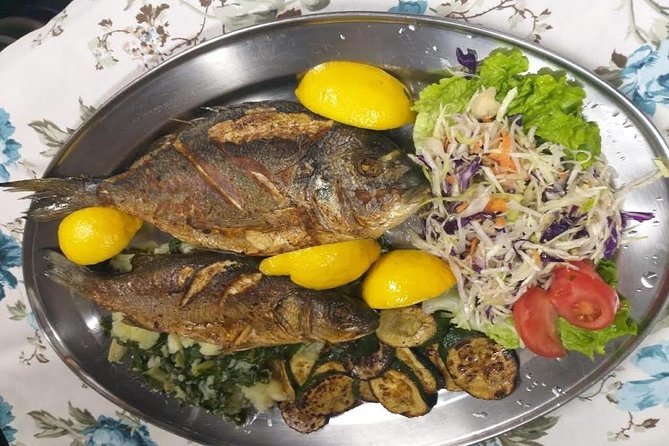
A 30-minute food tasting follows the opening sights. The food program includes a traditional homemade pie made by your guide, along with a mixed serving of local dishes.
The wording describes the food as breakfast, lunch, dinner, and snacks, but this is a four-hour experience rather than a full day of separate meals. I would read that as a generous sequence of tastings that can add up to a full meal. Do not arrive expecting four formal courses at four different restaurants.
The homemade pie is one of the more personal parts of the experience. Food made by the guide gives you a direct connection to Bosnian home cooking, rather than only a restaurant sample. You may also have traditional Bosnian coffee or tea, with dietary adjustments available for vegetarian, vegan, and gluten-free diets.
Tell the provider about dietary needs before the tour. The information confirms that these diets can be catered for, but it does not specify the exact replacement dishes. If you have a severe allergy, ask what ingredients are used in the pie and other samples.
War memorials and Mostar’s Peace Bell Tower
The route then returns to the city’s difficult modern story. You visit a monument to victims of the Second World War, with about 10 minutes set aside for the stop.
This part matters because Mostar’s story is not only about medieval rulers and a famous bridge. Its monuments reflect the damage caused by twentieth-century conflict and the effort to remember civilians and soldiers. The short visit should give you a clear point of reference, while Armela’s explanations help connect the memorial to the wider city.
Next comes Mostar Peace Bell Tower, a 15-minute stop. The tower is identified as the highest bell tower in Bosnia and Herzegovina. Even without a long visit inside, its height gives the route a strong visual marker.
The name Peace Bell Tower also adds meaning to the stop. It brings the tour back to the subject of reconciliation after the darker wartime material. I appreciate that the tour does not avoid painful parts of Mostar’s past, but it also does not make them the only story you hear.
The Crooked Bridge before the Old Bridge

Before reaching Mostar’s best-known landmark, you visit the Crooked Bridge in the Old Bridge area. This smaller bridge offers a useful comparison with the Old Bridge and helps you see how crossings shape the old city.
You get roughly 10 minutes here. That is enough for photographs and a brief explanation, though the stop is likely to feel quick if you want a long pause. The value lies in seeing a less famous bridge before the main attraction. It prepares you to pay attention to the design, setting, and role of the Old Bridge instead of simply checking off the city’s biggest sight.
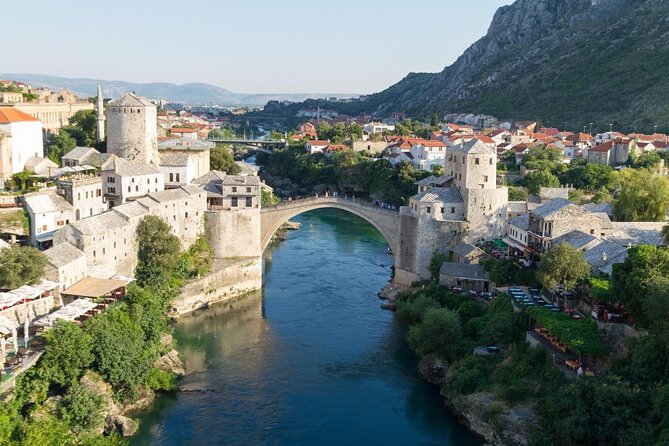
The tour then takes you beneath Mostar’s Old Bridge for about 15 minutes. This is one of its most distinctive choices. Most visitors naturally photograph the bridge from the riverbanks or the stone streets above. Looking up from below gives you a different sense of its scale and its place in daily life.
The description frames this as a way to understand what the bridge means to local people. That local angle is important. The Old Bridge is a major symbol, but it is also part of Mostar’s living center. Seeing it from below helps move the experience beyond a quick photo stop.
A few more options to weigh up in Mostar
- From Dubrovnik: Mostar and Kravica Waterfall Day Trip
★ 4.7 · 4,709 reviews - Dubrovnik: Kravica Waterfalls, Mostar and Pocitelj Day Trip
★ 4.5 · 3,045 reviews - Discover Herzegovina Day Tour from Mostar: Kravice Waterfalls, Blagaj, Počitelj
★ 5.0 · 742 reviews - Herzegovina Day Tour from Mostar: Blagaj, Pocitej, Kravice falls (Join Us! :D)
★ 5.0 · 372 reviews
Food, beer, and the heart of the Old Town
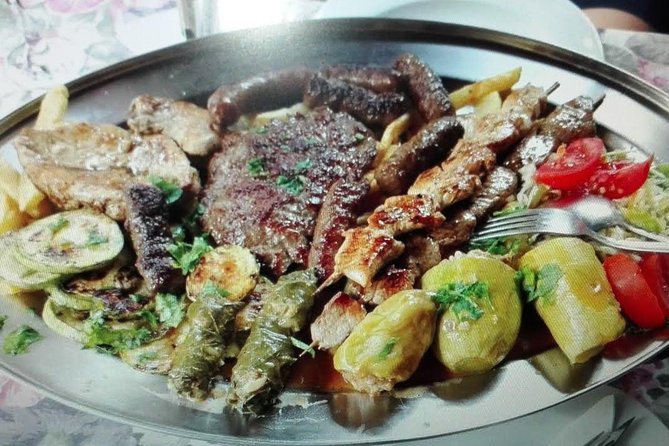
A full hour in the Old Bridge area is given to food and beer. This is the tour’s largest single stop, and it is where the food theme becomes more substantial.
The included drinks are local wine and beer, along with traditional Bosnian coffee or tea elsewhere in the experience. Alcoholic drinks make this tour less suitable for anyone who does not drink, though the supplied information does not state whether nonalcoholic alternatives are available. Ask in advance if that matters to you.
The food is described as a mix of traditional dishes, with enough samples to make up a full meal. That is good value in principle, especially on a private tour where the guide can explain what you are eating and adjust the pace to your group. Still, the exact menu and restaurant locations are not specified, so you cannot judge the food selection in advance.
I would plan to treat this as your main midday meal. The 11:00 start means the substantial food stop arrives at a sensible time, while the later dessert and coffee stop adds a second, lighter food break.
Photos from Lučki Most
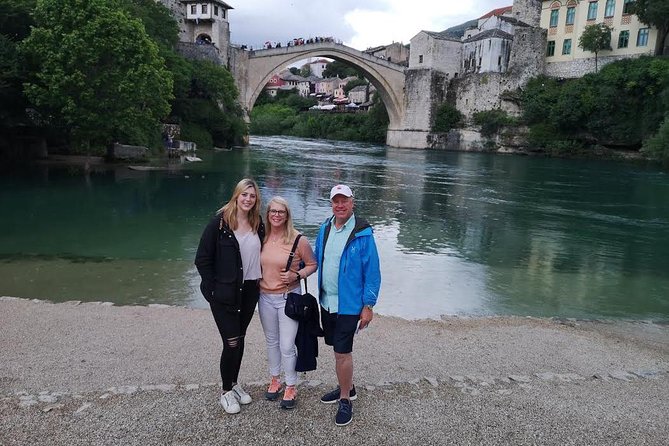
After the Old Town food stop, you pause on Lučki Most for about 15 minutes. The purpose is simple: photographs.
This is a practical addition. Mostar’s bridges are not only things to cross. They are viewing points, and Lučki Most gives you another angle on the city and river. If you want good pictures, use this pause rather than trying to force every photograph into the crowded Old Bridge area.
The stop also breaks up the museum and monument sections. A good walking tour needs these short pauses. You get time to look, take pictures, and catch your breath before returning to Mostar’s cultural history.
Aleksa Šantić and the Museum of Herzegovina
The Aleksa Šantić Monument honors Mostar’s most important poet. The visit lasts about 10 minutes.
A poet’s monument adds a cultural layer that food and war memorials cannot provide. It points to Mostar as a city of writers and public figures, not only bridges and conflict. The brief timing means you will probably receive a compact introduction to Šantić and his connection to the city.
The longer museum stop comes at the Museum of Herzegovina. You have about 45 minutes to visit its ethnographic exhibition, and admission is included.
This is one of the most valuable parts of the route for anyone who wants more than a walking tour. An ethnographic exhibition can help you understand everyday life, household traditions, clothing, crafts, and regional customs. The supplied information does not list individual displays, so I would not promise a particular object or gallery. What you can count on is a museum visit with a meaningful amount of time, rather than a quick doorway glance.
The museum also gives the food tastings more context. Traditional dishes make more sense when you see them as part of local household culture rather than isolated items on a menu.
Coffee and Bosnian desserts at Narodno Pozoriste
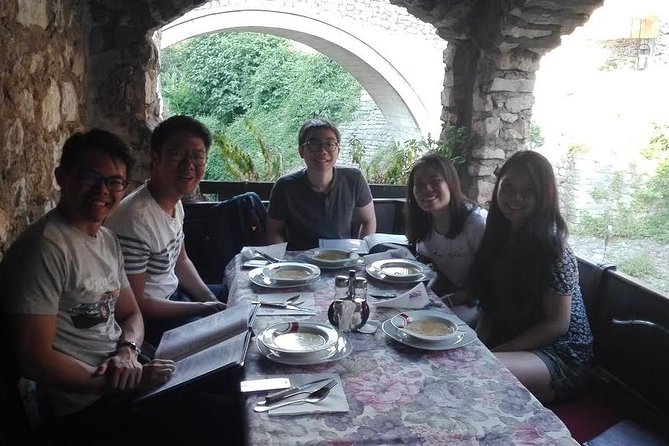
The final stop is at Narodno Pozoriste Mostar, where you visit a café and taste traditional desserts. You have about 30 minutes, making this a relaxed finish rather than a rushed final sample.
This is a pleasant way to end the route. Traditional Bosnian coffee is usually a small, strong ritual, and pairing it with dessert gives you a quiet moment after the bridges, monuments, and museum. Tea is also included as an option.
The café setting makes the final stop feel social. You can ask follow-up questions about the food and places you have seen, or simply let the day settle. Since the tour begins at 11:00, this stop may come in the middle or later part of the afternoon, depending on how the group moves through the schedule.
What the private format really adds
This is a private tour, so only your group takes part. That changes the feel of a four-hour route. You can ask questions about family food traditions, the city’s wartime past, or the meaning of a monument without waiting for a large group to move on.
Armela’s style is another important factor. She is praised as entertaining, which is especially useful here because the experience covers a lot: the period beginning in 1476, a Bosnian queen, Second World War victims, the Peace Bell Tower, the Old Bridge, Aleksa Šantić, and ethnographic culture. A guide who can keep those subjects lively will make the route easier to follow.
The private format does not automatically make every stop longer. Several visits last only 10 minutes, and the total schedule is ambitious. Its benefit is flexibility and conversation, not unlimited time at every monument.
Is the food value strong?
No price is provided, so I cannot judge the exact cost. I can judge what the package includes. You receive a private guide, several food tastings, a mixed traditional meal, homemade pie, Bosnian coffee or tea, local wine and beer, traditional desserts, and admission to the Museum of Herzegovina.
Private guiding usually costs more than joining a group walk, but you are also paying for a food-focused experience and drinks. Compare the tour price with the cost of booking a private history walk, a separate food tour, museum admission, and drinks. If you would have paid for those separately, the package may offer solid value.
The biggest unknown is the exact food menu. Ask what dishes are planned, where the meal takes place, and how dietary requests will be handled. That answer will tell you more about value than the word lunch or dinner in the inclusions.
Timing, walking, and practical planning
The tour starts at 11:00 at Španski trg 1 and ends on Maršala Tita. Private transportation is not included, so plan on walking and using public transportation only for getting to or from the start and end points.
The tour is advertised as approximately four hours. However, the listed stop times total about four hours and forty minutes. That does not necessarily mean the tour will run that long, since stop times can overlap with walking or may be estimates, but I would avoid scheduling a tight connection afterward.
Good weather is required. If poor weather cancels the experience, you can receive a different date or a full refund. The tour also requires a minimum number of participants, despite being private for your group, so a low booking count can affect departure.
Cancellation is free up to 24 hours before the start time. Inside that window, you will not receive a refund, and changes are not accepted. The cut-off follows local time in Mostar.
Who should book this Mostar experience?
I would choose this tour if you want your first day in Mostar to cover food and major context at the same time. It suits couples, families, and small private groups who prefer conversation over a fixed large-group script.
It is also a good match if you want to understand the Old Bridge as part of local life, not just photograph it. The view from beneath the bridge, the Crooked Bridge, Lučki Most, the museum, and the memorials create a fuller picture of the city.
I would hesitate if you want a slow museum visit, a long sit-down meal, or a tour focused only on architecture. The route covers many places, and some stops are short. I would also ask more questions before booking if you have strict dietary requirements or do not drink alcohol.
Should you book it?
Book this experience if you want a private, food-centered introduction to Mostar with a serious look at the city’s past. The combination of homemade pie, traditional dishes, coffee, beer, wine, desserts, the Old Bridge from below, and an ethnographic museum visit gives you more range than a standard sightseeing walk.
Before paying, confirm the exact duration, food menu, dietary substitutions, and walking plan. If those details suit you, this is a strong choice for a first visit, especially with Armela’s entertaining guide style and the private setting.
FAQ
Where does the tour start?
It starts at Španski trg 1, Mostar 88000, Bosnia and Herzegovina.
What time does the tour begin?
The start time is 11:00 am.
Where does the tour end?
It ends on Maršala Tita in Mostar.
How long does the experience last?
The advertised duration is approximately four hours. The listed stop times add up to longer than four hours, so you should confirm the expected finish time before booking other plans.
Is transportation included?
No. Private transportation is not included.
Is this a private tour?
Yes. Only your group will participate.
Can the tour accommodate special diets?
Yes. The experience can be catered to vegetarian, vegan, and gluten-free diets. Tell the provider about your requirements when booking.
What is included in the food and drink portion?
The experience includes a mix of traditional food, homemade traditional pie, Bosnian coffee or tea, local wine and beer, snacks, and traditional desserts. Admission to the Museum of Herzegovina is also included.
Just added in Mostar
- War Photo Exhibition Tour in Mostar★ 5.0 · 2 reviews
- Walking Tour in Old Town Mostar★ 5.0 · 5 reviews
- The Ottoman Experience Tour in Mostar★ 5.0 · 1 review
- Wine Tour & Tasting (Herzegovina)★ 5.0 · 1 review
- Transfer service from Mostar-Sarajevo★ 5.0 · 1 review
- Herzegovina Highlights Tour from Mostar★ 5.0 · 2 reviews
- Private Tour in Croatia★ 5.0 · 1 review
- Pocitelj City Tour★ 4.5 · 3 reviews
Historical Tours, compared.
Sarajevo genuine walking tour: Steps through history
Read our review →
SARAJEVO STREET ART TOUR (art, history & mystery) – sARTajevo!
Read our review →
BOSNIAN PYRAMIDS TOUR (nature, history & archeology)
Read our review →
Jajce and Travnik Historical Tour – Day Tour from Sarajevo
Read our review →
One-way Day trip from Sarajevo to Belgrade – UNESCO World Heritage Tour
Read our review →Browse the lists this tour appears in