
REVIEW · HISTORICAL TOURS
SARAJEVO STREET ART TOUR (art, history & mystery) – sARTajevo!
Sarajevo’s walls tell stories. This evening walking tour pairs street art with local history, leading you from Bentbaša to Ferhadija through murals and small works you could easily miss alone. I like the tiny group limit of five, and I like that guides such as Alan, Ado, and Mak bring direct knowledge of Sarajevo’s art scene.
The main consideration is scope. The tour lasts about two to three hours, but some stops are brief, and Sarajevo has a limited number of major street-art sites. One German-language review felt the content and structure could use more depth. If you want a wide survey of every mural in town, this may feel compact.
In This Review
- Key points before you book
- Why Sarajevo’s street art deserves your time
- Starting at Bentbaša and the mural about preservation
- Papagajka and Sarajevo’s early street-art scene
- The Academy of Fine Arts, where old and new meet
- Aria, Mr. Chat, and the Singer mural
- Ferhadija and the Srebrenica mural
- What the guides add to the walk
- The route, pace, and evening timing
- What $30.04 buys you
- Who should book this Sarajevo walk?
- Booking and cancellation details
- Should you book sARTajevo?
- FAQ
- Where does the Sarajevo Street Art Tour start?
- What time does the tour begin?
- How long does the experience last?
- Where does the tour finish?
- What language is the tour offered in?
- How many people can join the tour?
- Can I cancel for a full refund?
Key points before you book
- A maximum of five people keeps the walk personal and makes it easier to ask questions.
- The 6:00 pm start gives the tour an evening feel and fits well after a day of sightseeing.
- Five central stops connect murals, stickers, graffiti, architecture, and Sarajevo’s past.
- The Srebrenica 1992/1995 mural brings difficult wartime memory into the city walk with care.
- Guides may include working artists, including Alan, whose own pieces are shown along the route.
- The tour costs $30.04 per person, a fair price if you value interpretation rather than simply photographing walls.
Why Sarajevo’s street art deserves your time
Sarajevo is often introduced through its old market streets, religious buildings, bridges, and wartime sites. Those places matter, but they do not tell the whole story. Street art shows how the city’s people use public space now, how artists respond to memory, and how modern creative life fits beside older architecture.
That is the useful idea behind this tour. You are not simply taken from one painted wall to another. The art becomes a way to discuss Sarajevo’s past and present. A mural can point toward wartime grief, local identity, city design, or the changing way people claim a wall.
I especially like this approach if you are not an art expert. One person described learning how street art shaped life in Sarajevo despite having little background in art. That is a good sign for beginners. You do not need to know artistic terms before you arrive. The guide explains what you are seeing and why it matters.
The small-group format also helps. With no more than five people, the walk should feel more like a conversation than a lecture. That matters when you want to stop, ask about a symbol, or hear how a particular work fits into local life.
More history tours in Sarajevo:
- Sarajevo Full Day Tour: History, Culture, Nature, War & Olympics
★ 5.0 · 27 reviews - Sarajevo genuine walking tour: Steps through history
★ 5.0 · 22 reviews - BOSNIAN PYRAMIDS TOUR (nature, history & archeology)
★ 5.0 · 17 reviews
Starting at Bentbaša and the mural about preservation
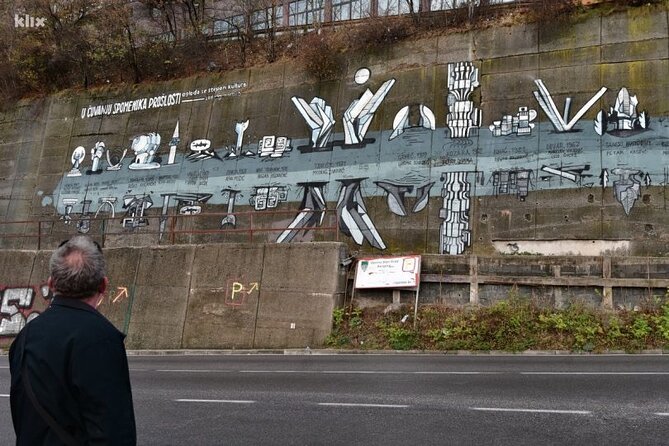
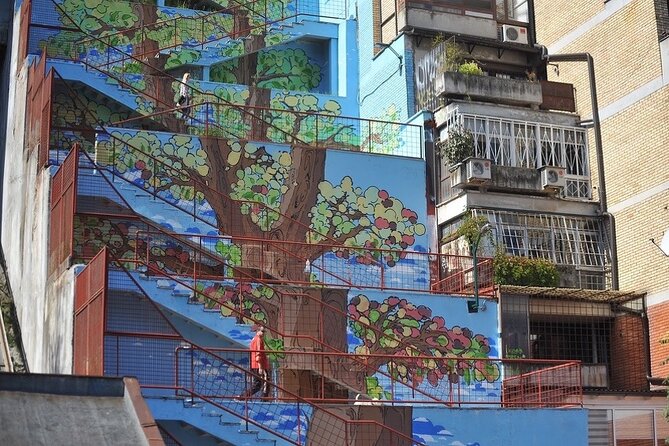
The meeting point is at Đulagina 2, and the tour begins at 6:00 pm. The first stop is Bentbaša, where you see the mural titled In the preservation of monuments of the past.
This is a smart opening point because it frames the basic question of the tour: What should a city preserve, and how can art help it remember? The mural gives the guide a chance to explain how public artwork can speak about older places and shared memory.
You receive about 20 minutes here. That is enough time for a focused explanation and a close look at the work, but not enough for a long artistic lecture. I would treat this as an introduction rather than a full stop in its own right.
The route begins with a clear link between the built city and the painted city. You start by thinking about monuments and memory, then move toward more recent forms of expression. That gradual shift gives the walk a stronger shape than a random hunt for colorful walls.
Papagajka and Sarajevo’s early street-art scene
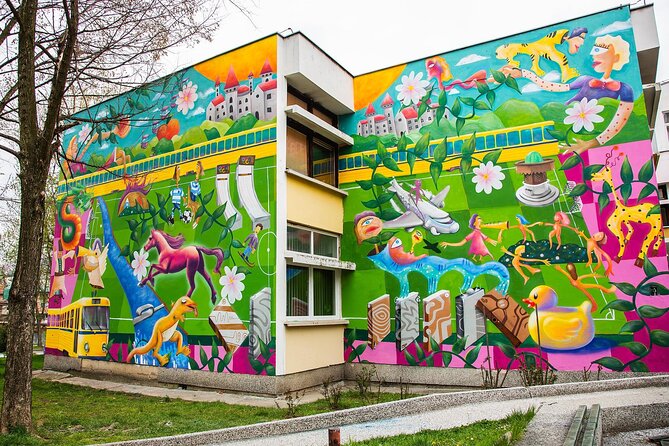
The second stop is the Papagajka building, also called Perrot. The building hosted Sarajevo’s first street-art festival, and wall-art examples can be found here.
This is one of the more unusual parts of the walk. You are not only seeing finished pieces. You are hearing about a place connected with the development of the local scene. A festival gives street art a public setting, while the walls show how that art looks once it becomes part of the everyday city.
The visit lasts around 20 minutes. The guide explains the building and the examples of wall art, helping you see Papagajka as more than a photo stop. If you walked past on your own, you might notice the artwork but miss its place in Sarajevo’s creative story.
The stop may be less satisfying if you expect a large open-air gallery with many major works. The tour description points to examples rather than a huge collection. Still, its value is in the context. You learn how street art began to gain a public platform in the city.
The Academy of Fine Arts, where old and new meet
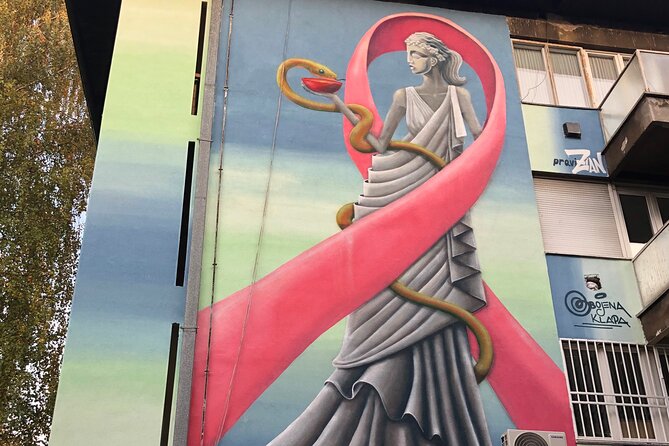
The Academy of Fine Arts is given about 30 minutes, making it the longest stop on the route. It is also described as one of the most beautifully designed objects in Sarajevo.
Here the tour broadens beyond walls. The academy lets the guide connect Sarajevo’s formal art tradition with sticker art and other small-scale forms found around the city. That contrast is useful. A grand, carefully designed building and a tiny sticker may seem far apart, yet both show how people communicate through visual work.
Sticker art will be demonstrated and explained at this stop. That detail makes the walk more attentive to scale. You begin noticing that street art is not only a large mural. Small stickers, repeated marks, and quick interventions can also shape how a street feels.
I would pay close attention here if architecture interests you. The academy gives you a chance to look at Sarajevo’s design while also learning how newer artists work in less formal ways. The 30-minute stop should allow more conversation than the shorter mural visits.
The tradeoff is that the tour remains a street walk, not an indoor art visit. The academy is used as a place for explanation and observation, and the tour information does not promise entry to an interior gallery or classroom.
A few more options to weigh up in Sarajevo
- Sarajevo: Mostar, Konjic, Blagaj Tekke, Pocitelj & Waterfall
★ 4.9 · 1,335 reviews - Fall of Yugoslavia, Sarajevo War Tour with Tunnel of Hope Museum and Frontlines
★ 5.0 · 1,314 reviews - Sarajevo: Mostar, Konjic, Sufi House, Pocitelj & Kravice Falls
★ 5.0 · 1,179 reviews - ROSES OF SARAJEVO (Official WAR + CITY tour)- Story of a Survivor
★ 5.0 · 770 reviews
Aria, Mr. Chat, and the Singer mural
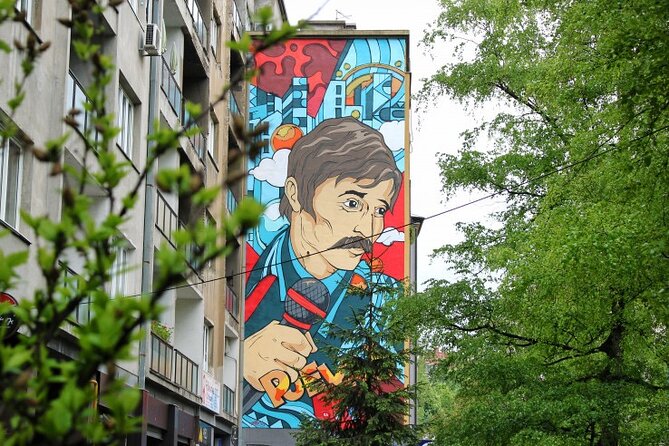
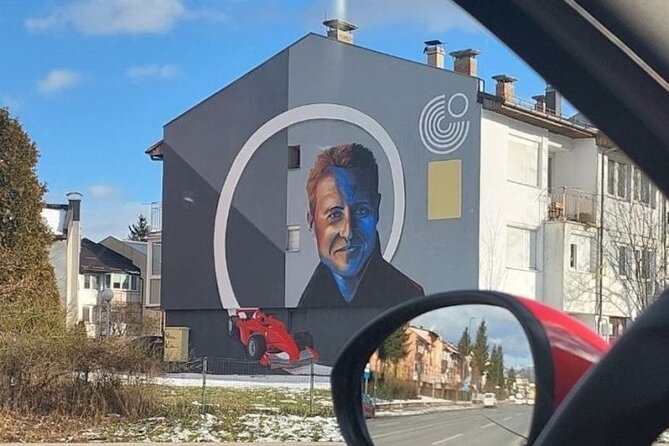
The Aria stop takes about 20 minutes and brings together several different points of interest. You see street-art ideas connected with Mr. Chat, the Singer mural, known locally as Pjevač, and Gallery Boris Smoje.
This section sounds particularly good for showing the range of Sarajevo’s public art. You move from a recognizable street-art concept to a named mural and then to a gallery setting. The guide explains and visits each location, so you can compare different ways artists and cultural spaces use the city.
The Singer mural is a useful reminder that local art can carry a title, a personality, and a story of its own. The name Pjevač gives the work a local identity that might disappear if you only took a quick photograph. Ask the guide how the pieces relate to Sarajevo’s people and daily life, since that social context is one of the tour’s strongest features.
This stop is short, so do not expect a long discussion of every artist. Its purpose is to show variety and keep the walk moving. For me, that balance works best when you want a city walk with art rather than a formal seminar.
Ferhadija and the Srebrenica mural
The final stop is behind Ferhadija Pedestrian Street, where you see the mural Srebrenica 1992/1995. The guide also introduces the graffiti scene around the street.
This is the most serious part of the tour. Srebrenica is not a decorative subject, and the mural places Bosnia’s wartime memory directly into the public space of central Sarajevo. You should expect the tone to become more reflective here.
The artwork also shows why street art can be important in a city shaped by conflict. A museum can preserve documents and objects, but a wall meets people during ordinary life. It asks passersby to remember while they shop, walk, meet friends, or cross the center.
The stop lasts about 30 minutes, tying it with the academy as the longest visit. That gives the guide time to discuss the mural and the wider graffiti scene. I appreciate that the tour does not treat the difficult subject as a quick photo opportunity.
At the same time, anyone who prefers light sightseeing should know the route includes painful history. That is not a flaw, but it is part of the choice you are making. The tour uses art to discuss Sarajevo’s past, and the final stop makes that purpose clear.
What the guides add to the walk
The strongest part of this experience is the guide’s connection to the local art world. Alan has shown his own work during the walk, and the personal link helps explain how artists, walls, and city life connect. Ado has been praised for his command of English and his grasp of Sarajevo’s past and present. Mak has also guided the route, offering direct familiarity with the artists and people behind the works.
Because different guides may lead the tour, the exact tone can vary. The shared strength is the local perspective. You are not just receiving general facts about graffiti. You are hearing about Sarajevo’s art scene from someone familiar with the works and the people who made them.
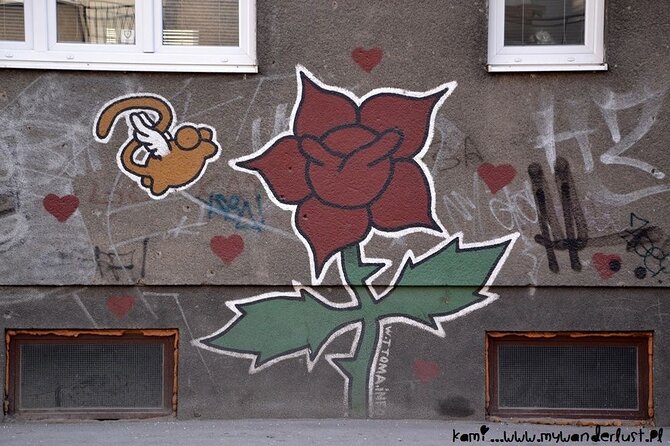
That is why the tour works for people who do not normally seek out art tours. The guide provides the missing link between a wall and the city around it. You may leave with a new habit of looking for small details, such as recurring blue flowers or stickers that would have passed unnoticed before.
The comments about Alan, Ado, and Mak also point to a practical benefit: English communication should be comfortable. The tour is offered in English, and the guide’s role is central to making the works understandable.
The route, pace, and evening timing
The walk covers five stops and returns to the original meeting point. The stated duration is about two to three hours, while the listed stop times add up to roughly two hours. The extra time likely allows for walking between locations and discussion along the way, but you should keep your evening flexible.
Starting at 6:00 pm is useful if you want to spend the day at Sarajevo’s major sights first. It also gives the experience a change of pace from daytime sightseeing. You will be walking through ordinary city spaces as people continue with their evening routines, which fits the subject better than a sealed-off gallery would.
The route is near public transportation, and most people can participate. Service animals are allowed. Since this is a walking experience, sensible shoes and a little water are practical choices, though the supplied details do not specify the walking distance or terrain.
The group limit is a major advantage. Five people allows the guide to stop for questions without slowing a large crowd. It also means that a late arrival or personal interest can affect the feel of the walk, so arrive at Đulagina 2 before the 6:00 pm start.
What $30.04 buys you
At $30.04 per person, this is not the cheapest way to see Sarajevo’s streets. You can walk through Ferhadija, pass the academy, and find some public art without paying an admission fee.
The value comes from interpretation. Every mural on the route is explained, and the guide connects the pieces to Sarajevo’s art, architecture, history, and present-day culture. That is hard to reproduce with a map or a quick internet search, especially for works away from the main sightseeing path.
The small group also makes the price easier to justify. You are paying for access to a focused local conversation, not for a large vehicle or a long list of attractions. If you enjoy urban culture and want to understand what you are seeing, the fee is reasonable.
If your main goal is a fast set of photographs, the value is weaker. The walk takes time, and some stops are brief. You also need to accept that the city’s street-art scene may not provide an endless sequence of major murals. One balanced assessment found the tour worthwhile but suggested that its organization and content could be developed further.
Who should book this Sarajevo walk?
I would choose this tour if you want a different view of Sarajevo after seeing the main historic sights. It suits you especially well if you enjoy:
- Modern art, murals, stickers, or graffiti
- Local stories told through public places
- Sarajevo’s wartime and postwar history
- Small groups and direct conversation
- Walking routes that include places you might otherwise overlook
- A guide who can explain art without assuming specialist knowledge
It is also a good choice for couples or small groups who want one shared activity in the evening. The tour has enough historical content to interest serious sightseers, while the art keeps the format relaxed and visual.
I would hesitate if you want a museum-style tour with many works, a long catalog of artists, or a strictly chronological account of Sarajevo street art. The route has five main stops, and its strength is interpretation rather than quantity.
Booking and cancellation details
You receive confirmation at the time of booking. The ticket is mobile, and the activity returns to the starting point at Đulagina 2.
Free cancellation is available if you cancel at least 24 hours before the local start time. Changes or cancellations within 24 hours are not accepted for a refund. The activity requires a minimum number of participants, so if that number is not reached, you are offered another date or experience, or a full refund.
The experience is offered by Art and Tours Sarajevo. Since the group can be as small as five people, booking ahead is sensible if the 6:00 pm time fits your plans.
Should you book sARTajevo?
Book it if you want Sarajevo’s walls to make more sense. The best parts are the small group, the local guides, and the way murals turn difficult history and modern culture into one walk.
I would place it after your first look at Sarajevo’s main sights, not instead of them. Come ready to walk, ask questions, and spend time with both attractive and painful subjects. At $30.04, it is a good buy for curious visitors who want context, but less essential for anyone seeking only a long list of photogenic walls.
FAQ
Where does the Sarajevo Street Art Tour start?
The tour starts at Đulagina 2, Sarajevo 71000, Bosnia and Herzegovina.
What time does the tour begin?
The start time is 6:00 pm.
How long does the experience last?
The tour lasts approximately two to three hours.
Where does the tour finish?
The activity ends back at the meeting point.
What language is the tour offered in?
The tour is offered in English.
How many people can join the tour?
The tour has a maximum of five participants.
Can I cancel for a full refund?
Yes. You can cancel at least 24 hours before the experience’s local start time for a full refund. Cancellations or changes made less than 24 hours before the start are not accepted for a refund.
Just added in Sarajevo
- Sarajevo Under Siege: A War History Tour★ 5.0 · 10 reviews
- Walking Tour in Sarajevo★ 5.0 · 3 reviews
- Private Full Day Safari Tour★ 5.0 · 8 reviews
- Bosnian Pyramid: The World’s Largest Pyramid (From Sarajevo)★ 5.0 · 1 review
- Ultimate adventure★ 5.0 · 2 reviews
- Mysterious Visoko Pyramids Driving and Walking Tour★ 5.0 · 7 reviews
- Travnik, Jajce, Pliva Lakes & Mills –Medieval & Ottoman Bosnia Full Day Tour★ 5.0 · 3 reviews
- Tour of Herzegovina – From Sarajevo★ 5.0 · 3 reviews
Historical Tours, compared.
Sarajevo genuine walking tour: Steps through history
Read our review →
BOSNIAN PYRAMIDS TOUR (nature, history & archeology)
Read our review →
Jajce and Travnik Historical Tour – Day Tour from Sarajevo
Read our review →
One-way Day trip from Sarajevo to Belgrade – UNESCO World Heritage Tour
Read our review →Browse the lists this tour appears in