
REVIEW · HISTORICAL TOURS
Sarajevo: Jewish Heritage Tour
Sarajevo’s Jewish story is hiding in plain sight. This small-group walking tour connects the city’s former synagogues, Jewish neighborhoods, cemetery, museum, and the remarkable Sarajevo Haggadah, giving you a clearer view of a community that helped shape the city. I especially like the small maximum group of eight and the way the route mixes major sights with less obvious places. The main caution is that several admissions are extra, and seeing the Haggadah may depend on the day you visit.
The tour lasts about two to three hours and is conducted in English. I also like that hotel pickup can be arranged, although the regular meeting point is central and the route itself is mainly explored on foot. Guides such as Armina Pijalovic, Ahmed, Edin, and Arna have been praised for patient explanations, personal insight, and the ability to connect Jewish history with Sarajevo’s Muslim, Christian, and Ottoman past.
In This Review
- Key points to know before booking
- Why Jewish Sarajevo deserves a dedicated tour
- Starting at Gazi Husrev-begova 75
- Inside the Jewish Museum in Sarajevo
- Streets, shops, schools, and the Eternal Flame
- The Bosnian Cultural Center and a synagogue with a new role
- The Ashkenazi Synagogue and Jewish life today
- The Old Jewish Cemetery on Sarajevo’s hillside
- The Sarajevo Haggadah at the National Museum
- What the guide adds to the experience
- Price, time, and overall value
- Who should book this Sarajevo tour?
- Should you book it?
- FAQ
- How long does the Sarajevo Jewish Heritage Tour last?
- What time does the tour begin?
- Where does the tour start and finish?
- Is hotel pickup available?
- Is the tour offered in English?
- What is the maximum group size?
- Is transportation included?
- Are entrance tickets included?
- Can I cancel for a full refund?
Key points to know before booking
- The Sarajevo Haggadah is the star attraction: Learn how a 14th-century manuscript from Barcelona reached Sarajevo and survived three wars.
- You visit several meaningful sites: The Jewish Museum, Ashkenazi Synagogue, Old Jewish Cemetery, National Museum, and former synagogue buildings all play a role.
- The tour is more than a museum visit: Streets, shops, schools, hotels, public squares, and former places of worship help you picture Jewish life in everyday Sarajevo.
- The group is capped at eight people: That makes it easier to ask questions and hear the guide on city streets.
- Admission costs are separate: Tickets are not included for the Jewish Museum, Ashkenazi Synagogue, or National Museum.
- Check Haggadah display dates: A past update listed Tuesdays and Thursdays, so ask Meet Bosnia Tours to confirm before you book.
Why Jewish Sarajevo deserves a dedicated tour
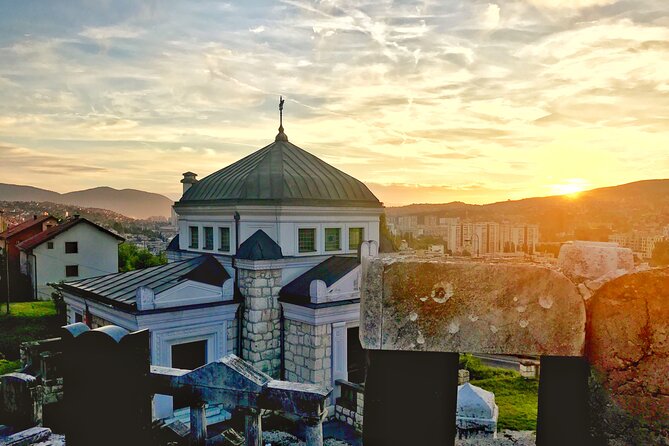
Sarajevo is often introduced through its Ottoman bazaar, Austro-Hungarian buildings, and the painful story of the 1990s siege. Those chapters matter, but they do not tell the whole story. The Jewish community forms another essential part of the city’s identity, particularly the Sephardic community that arrived during the Ottoman period after Jews were expelled from Spain.
A guide helps you notice evidence that can be easy to miss. A street corner may mark the location of an old shop. A public building may have once served the community in another way. A synagogue may now have a cultural function rather than a religious one.
That is the value of this experience. You are not simply looking at old buildings. You are learning how a community worked, where people worshipped, where children studied, and how Jewish residents participated in Sarajevo’s commercial and civic life.
The subject also brings Sarajevo’s tradition of coexistence into sharper focus. The tour places Jewish experience beside the city’s Muslim and Christian communities, rather than treating it as an isolated chapter. That wider view is one of the tour’s strongest features.
More history tours in Sarajevo:
- Sarajevo Full Day Tour: History, Culture, Nature, War & Olympics
★ 5.0 · 27 reviews - Sarajevo genuine walking tour: Steps through history
★ 5.0 · 22 reviews - SARAJEVO STREET ART TOUR (art, history & mystery) – sARTajevo!
★ 5.0 · 18 reviews
Starting at Gazi Husrev-begova 75
The standard meeting point is Meet Bosnia Tours at Gazi Husrev-begova 75, near the crossroads of Mula Mustafe Bašeskije. The tour begins at 9:00 a.m. and returns to the same meeting point.
Hotel pickup is available upon request. The listing also notes an air-conditioned vehicle, which may be useful for arranged pickup or parts of the experience, but you should expect substantial walking between central sights. Wear comfortable shoes and bring water, especially if you prefer an unhurried pace.
A small group can make a real difference here. With no more than eight participants, you should have a better chance to ask about family stories, religious buildings, wartime survival, or the details of a particular street. This is not a large bus excursion where the guide has to compete with traffic and side conversations.
The tour is offered in English. One practical point is worth keeping in mind: one past guest found that a guide spoke too quickly in English. If you need a slower pace, say so early. A good guide can adjust, and this subject is best understood when you have time to absorb the details.
Inside the Jewish Museum in Sarajevo
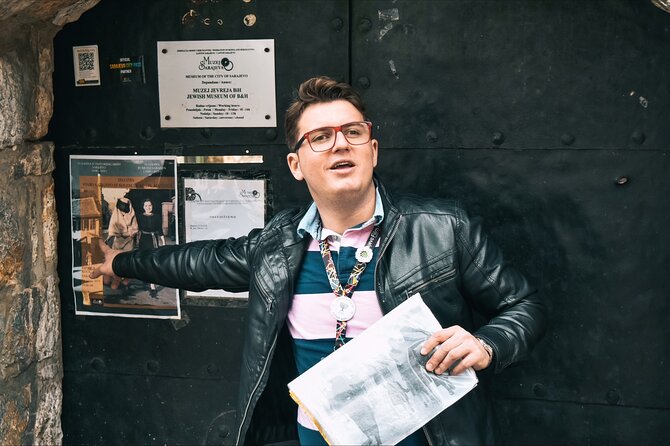
The first major stop is the Jewish Museum of Bosnia and Herzegovina. It occupies Sarajevo’s oldest synagogue, built in 1581, and the building itself gives the visit a strong sense of place.
The museum introduces the local Jewish community before the walking route moves into the city. Expect the guide to explain the arrival and development of Sephardic Jews during Ottoman rule, followed later by the arrival of Ashkenazi Jews under the Austro-Hungarian Empire.
A 20-minute film about the Sarajevo Haggadah is part of the visit. This helps prepare you for the National Museum later, where the manuscript is kept. The film matters because the Haggadah is not just an old religious book. It carries the story of Jewish life in medieval Spain, migration, preservation, and the remarkable choices made by people in Sarajevo who protected it.
Admission to the Jewish Museum is not included in the tour price. Ask about the current entrance fee when you book, since the supplied details do not give an amount.
Streets, shops, schools, and the Eternal Flame
The walk toward the Eternal Flame broadens the story beyond religious buildings. Your guide points out Jewish businesses, the location of Sarajevo’s first hotel, former shops, and the site of the city’s first Jewish school.
This is where a local guide adds value. A city map can show you where the buildings are, but it cannot easily explain what a shop meant to the neighborhood or why a former synagogue gained a nickname such as the singing synagogue. The tour uses these places to show Jewish life as part of ordinary city life, not as a separate museum subject.
The Eternal Flame is also a useful landmark for understanding Sarajevo’s changing public spaces. The area connects Jewish contributions with the city’s Austro-Hungarian period and civic development. Your guide may also explain the link between the National Theatre square and the Jewish community.
These are free outdoor stops, but they are not filler. They help you see how Jewish residents lived and worked among Sarajevo’s other communities. The route also gives you a pleasant chance to walk through central Sarajevo rather than moving from one indoor attraction to another.
A few more options to weigh up in Sarajevo
- Sarajevo: Mostar, Konjic, Blagaj Tekke, Pocitelj & Waterfall
★ 4.9 · 1,335 reviews - Fall of Yugoslavia, Sarajevo War Tour with Tunnel of Hope Museum and Frontlines
★ 5.0 · 1,314 reviews - Sarajevo: Mostar, Konjic, Sufi House, Pocitelj & Kravice Falls
★ 5.0 · 1,179 reviews - ROSES OF SARAJEVO (Official WAR + CITY tour)- Story of a Survivor
★ 5.0 · 770 reviews
The Bosnian Cultural Center and a synagogue with a new role
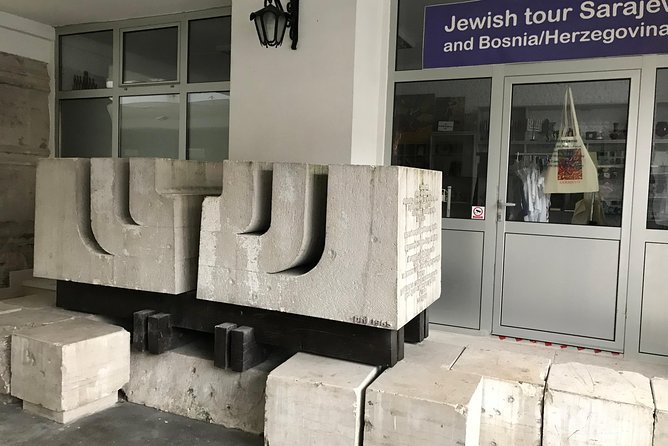
The Bosnian Cultural Center occupies a former Sephardic synagogue, once one of the largest Sephardic synagogues in Europe. Today, the building serves another function, making it an important example of how Sarajevo’s religious and civic spaces changed over time.
This stop is brief, about ten minutes, and admission is free. Do not expect a long museum visit here. Its importance comes from the building’s past and from the guide’s explanation of what happened to Jewish institutions as the community changed.
The stop also makes a useful point about preservation. A building can lose its original religious purpose while still carrying memory and meaning. In Sarajevo, that shift reflects demographic change, war, political upheaval, and the reduced size of the Jewish community.
The Ashkenazi Synagogue and Jewish life today
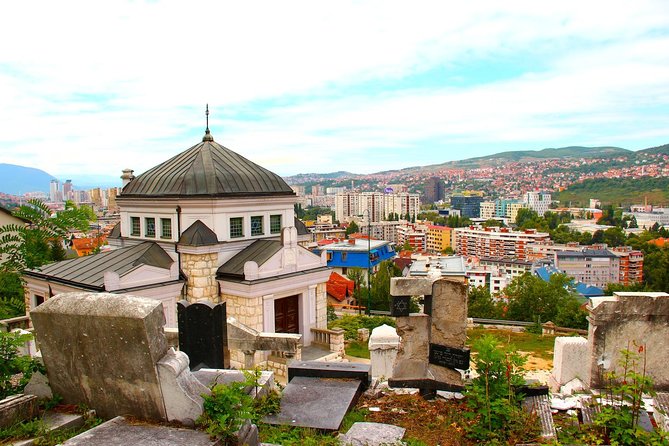
The Ashkenazi Synagogue is described as the center of Jewish life in Sarajevo today. It gives the tour a present-day endpoint after the earlier stops have focused on the past.
That balance is important. It is easy for a heritage tour to present a community as something that disappeared long ago. Here, you get a chance to connect historic Jewish life with the community that remains.
The planned visit lasts about 45 minutes, making it one of the more substantial stops. Admission is not included, so factor in an additional ticket cost. The exact visiting arrangements may depend on synagogue access and scheduling, so confirm the details with Meet Bosnia Tours before departure.
Your guide may also help you understand the difference between Sephardic and Ashkenazi Jewish traditions in Sarajevo. The two communities arrived in different historical periods, yet both became part of the city’s Jewish story. Seeing both former and current places of worship makes that development easier to follow.
The Old Jewish Cemetery on Sarajevo’s hillside
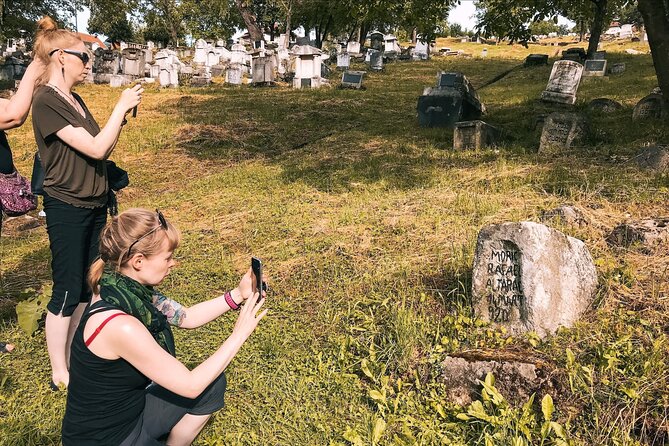
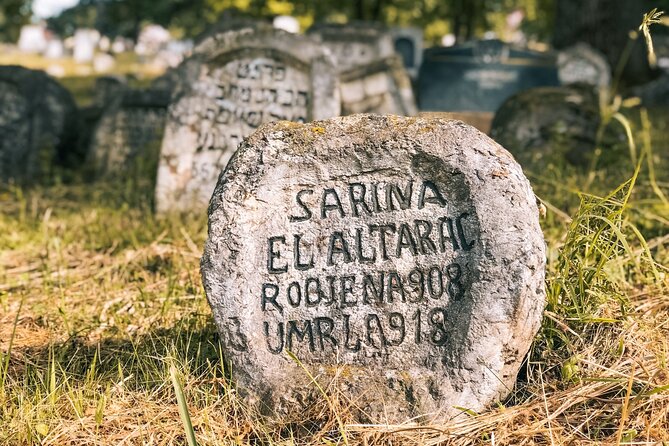
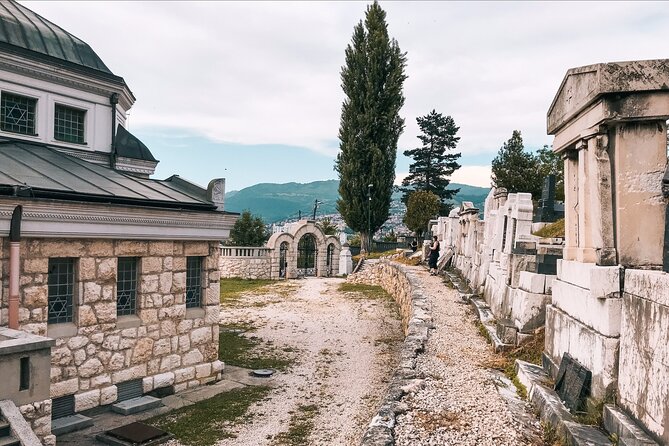
The Old Jewish Cemetery is nearly 500 years old and was established by Sephardic Jews during the Ottoman period. It later became a burial place for Ashkenazi Jews who arrived with the Austro-Hungarian Empire in the late 19th century.
The cemetery is scheduled for about 30 minutes. That is enough time to listen to the guide, look at the graves, and consider how the site reflects several periods of Jewish life in Sarajevo.
This is likely to be one of the quieter and more reflective parts of the tour. It also adds a physical sense of age that a museum display cannot provide. The cemetery links the city’s present to families who lived in Sarajevo under different empires and political systems.
The cemetery stop may involve uneven ground or a slope, though the supplied tour details do not give specific accessibility information. If mobility is a concern, contact the operator before booking and ask about the exact route and conditions.
The Sarajevo Haggadah at the National Museum
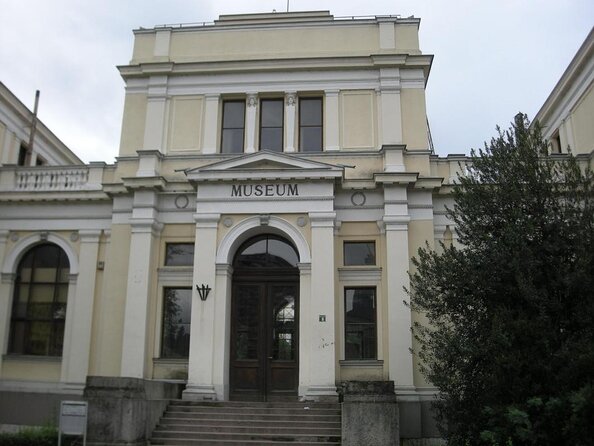
The National Museum of Bosnia and Herzegovina is the tour’s most important stop for many people. It houses the Sarajevo Haggadah, a manuscript assembled by Jews in 14th-century Barcelona and brought to Sarajevo by a Jewish family in the 16th century.
The Haggadah contains stories and illustrations connected with Passover. Its importance reaches far beyond its age. The book survived three wars and became the best-known object of Jewish heritage in Bosnia and Herzegovina.
Its survival also brings Muslim protectors into the story. A Muslim librarian at the National Museum helped save the manuscript from the Nazis. The story is often presented alongside accounts of local Muslim religious leaders who protected it at other dangerous moments.
That history does not erase the conflicts and suffering Sarajevo has faced. It does show why the city’s story cannot be reduced to simple divisions between religious communities. Acts of courage, friendship, and protection also belong in the picture.
Admission to the National Museum is not included. More important, the Haggadah may not be displayed every day. A past tour update identified Tuesdays and Thursdays as display days, but schedules can change. If seeing the original manuscript is central to your plans, tell the company before booking and ask them to arrange the tour for a day when it is available.
The itinerary includes a 20-minute visit at the National Museum. That is enough for a focused explanation, but you should not expect time to explore the entire museum in detail. If you want a broader museum visit, plan a separate return visit.
What the guide adds to the experience
The guide is the key factor here. The route has meaning, but much of the Jewish story is not obvious from the buildings alone.
Armina Pijalovic has been praised for her clear explanations, personal warmth, patience with an older couple, and ability to connect Sarajevo’s Jewish past with the city’s recent history and current conditions. Ahmed has been described as an engaging storyteller and serious academic researcher who could handle detailed questions. Edin, the owner of Meet Bosnia, has also guided the tour and is noted for his personal interest in the Jewish community.
The company may assign a different guide, so do not assume one specific person will lead your departure. Still, the strongest pattern is clear: this tour depends on a guide who can explain context, answer questions, and help you make sense of places that do not announce their importance.
The best approach is to come with questions. Ask about Sephardic and Ashkenazi life, the Haggadah’s travels, Sarajevo’s former synagogues, and the present Jewish community. The guides have also helped with practical city advice, including food and drink suggestions, which is a useful extra after the formal tour ends.
Price, time, and overall value
At $72.18 per person, this is not a bargain-priced city walk, especially because admission is extra at several stops. Group discounts may be available, and the maximum group size of eight helps explain why the price is higher than a large general walking tour.
I think the value depends on your interest. If you want a quick introduction to Sarajevo’s main sights, this is not the best use of your money. A general city tour would cover more famous landmarks.
If you want to understand Jewish Sarajevo, the price is easier to justify. The guide brings together sites that would be difficult to connect on your own, and the Haggadah story alone gives the tour a strong purpose. You are paying for interpretation, route planning, and access to a focused subject rather than simply for transportation.
Food and drinks are not included. The route lasts two to three hours, so you can easily plan lunch afterward in central Sarajevo. The early 9:00 a.m. start also leaves most of your day free.
Who should book this Sarajevo tour?
I recommend it most strongly if you have a personal, religious, academic, or family connection to Jewish history. It is also a good choice if you want to understand Sarajevo through more than its Ottoman and wartime narratives.
You do not need to be Jewish to appreciate the tour. Its subject is tied to the wider story of Sarajevo, including migration, trade, education, religious coexistence, war, and cultural preservation.
This tour may be less suitable if you dislike walking, want a very casual sightseeing outing, or have no interest in museums and historical explanation. The route is focused, and the guide does much of the storytelling. It is not designed as a food tour or a general introduction to every part of Sarajevo.
The experience suits curious adults, older couples who appreciate a patient guide, and families with children old enough to engage with serious history. Children must be accompanied by an adult, and most participants can take part according to the available information.
Should you book it?
Book this tour if you want Sarajevo’s Jewish story explained by someone who can connect buildings, people, and events across centuries. The small group, central walking route, and strong guide feedback make it a thoughtful choice.
Before paying, confirm three things: the admission costs, the exact synagogue access, and whether the Sarajevo Haggadah will be displayed on your chosen day. If those details line up, this tour offers a focused and meaningful way to see a part of Sarajevo that is easy to miss on your own.
FAQ
How long does the Sarajevo Jewish Heritage Tour last?
The tour lasts approximately two to three hours.
What time does the tour begin?
The scheduled start time is 9:00 a.m.
Where does the tour start and finish?
It starts at Meet Bosnia Tours, Gazi Husrev-begova 75, near the crossroads of Mula Mustafe Bašeskije. The tour ends back at the same meeting point.
Is hotel pickup available?
Yes. Hotel pickup can be arranged upon request.
Is the tour offered in English?
Yes, the tour is offered in English.
What is the maximum group size?
The tour has a maximum of eight participants.
Is transportation included?
A local professional guide and an air-conditioned vehicle are included. The sightseeing route itself includes walking between central Sarajevo sights.
Are entrance tickets included?
No. Admission is not included for the Jewish Museum of Bosnia and Herzegovina, the Ashkenazi Synagogue, or the National Museum of Bosnia and Herzegovina.
Can I cancel for a full refund?
Yes, if you cancel at least 24 hours before the experience start time. Cancellations or changes made less than 24 hours before the start are not accepted for a refund.
Just added in Sarajevo
- Sarajevo Under Siege: A War History Tour★ 5.0 · 10 reviews
- Walking Tour in Sarajevo★ 5.0 · 3 reviews
- Private Full Day Safari Tour★ 5.0 · 8 reviews
- Bosnian Pyramid: The World’s Largest Pyramid (From Sarajevo)★ 5.0 · 1 review
- Ultimate adventure★ 5.0 · 2 reviews
- Mysterious Visoko Pyramids Driving and Walking Tour★ 5.0 · 7 reviews
- Travnik, Jajce, Pliva Lakes & Mills –Medieval & Ottoman Bosnia Full Day Tour★ 5.0 · 3 reviews
- Sarajevo to/from Zagreb Transfer Day Tour (North-central Bosnia)★ 5.0 · 4 reviews
Historical Tours, compared.
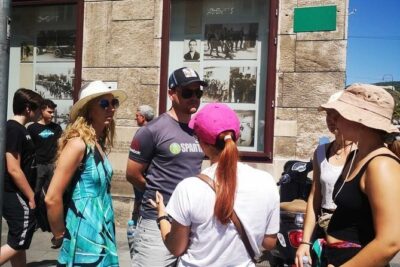
Sarajevo genuine walking tour: Steps through history
Read our review →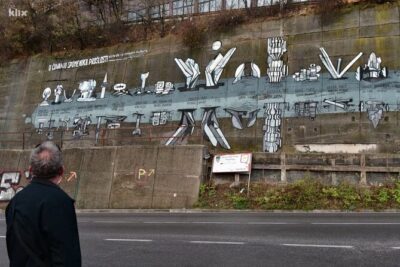
SARAJEVO STREET ART TOUR (art, history & mystery) – sARTajevo!
Read our review →
BOSNIAN PYRAMIDS TOUR (nature, history & archeology)
Read our review →
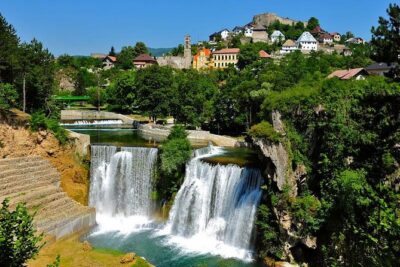
Jajce and Travnik Historical Tour – Day Tour from Sarajevo
Read our review →
One-way Day trip from Sarajevo to Belgrade – UNESCO World Heritage Tour
Read our review →Browse the lists this tour appears in