REVIEW · SARAJEVO TOURS
Sarajevo: Eastern Bosnia Tour Foča pyramids, Foča Mosque, Goražde
Bosnia’s quieter side rewards curious visitors. This 8-hour trip from Sarajevo reaches the unusual sand pyramids near Foča, the rebuilt Aladža Mosque, and Goražde’s wartime sites. I like the mix of nature and serious history, and I especially like that the route goes far beyond Sarajevo’s familiar sights. The main drawback is the long day on the road, with several hours devoted to Eastern Bosnia’s towns and memorial sites rather than leisurely sightseeing.
The tour costs $104.53 per person, including transportation, a licensed guide, hotel pickup and drop-off, and taxes. That is a fair price for a full-day outing in an air-conditioned vehicle, though food and drinks are extra. You should also be ready for an itinerary that deals directly with the Bosnian War, including siege positions and the story of the Drina Martyrs.
In This Review
- Key points to know before booking
- Why Eastern Bosnia is worth your time
- The morning route to Foča
- Foča’s sand pyramids: an odd and rewarding first stop
- Aladža Mosque and Foča’s Ottoman past
- Two hours in Foča beside the Drina
- Goražde and the memory of the siege
- Rorovi: former front lines above Goražde
- What the price includes, and what it does not
- The guide can make or break this day
- Who should book this Eastern Bosnia trip?
- Should you book it?
- FAQ
- How long does the Eastern Bosnia tour last?
- Where does the tour start?
- Is transportation included?
- What is the maximum group size?
- Are admission fees included?
- Is food included?
- Can I cancel for a full refund?
Key points to know before booking
- Foča’s sand pyramids are the day’s most unusual natural sight, with formations shaped by erosion over more than 200 years.
- Aladža Mosque was rebuilt after being destroyed in 1992, making the visit both an architectural stop and a lesson in cultural survival.
- Goražde offers wartime history beyond Sarajevo, including the Bridge under a Bridge and former defensive positions at Rorovi.
- The route lasts about eight hours, so you will spend a substantial part of the day in the vehicle.
- A licensed guide adds real value, especially in Goražde, where the historical meaning of each stop is more important than visual spectacle.
- The group is limited to 20 people, and hotel pickup is included, which makes the day easier to manage.
Why Eastern Bosnia is worth your time
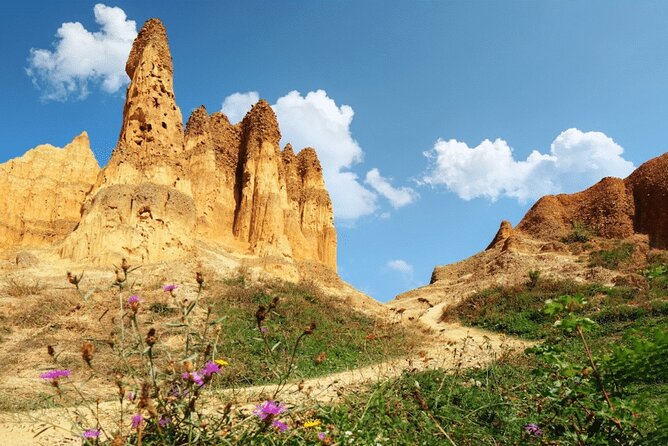
Sarajevo is an essential stop in Bosnia and Herzegovina, but it can also become the center of your entire visit. Eastern Bosnia gives you a broader view of the country. Here, mountains and rivers frame towns shaped by Ottoman rule, twentieth-century conflict, and long efforts to restore damaged landmarks.
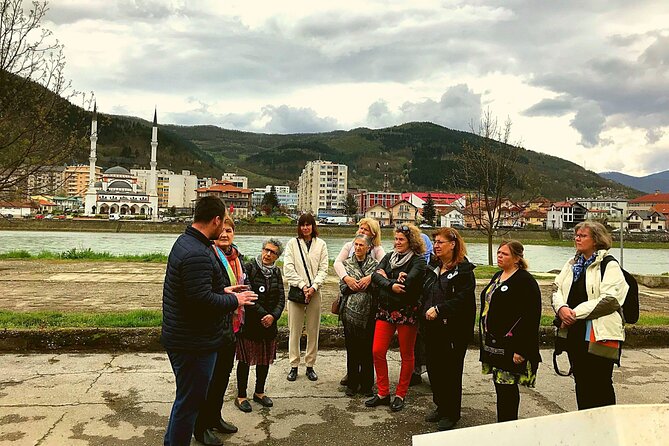
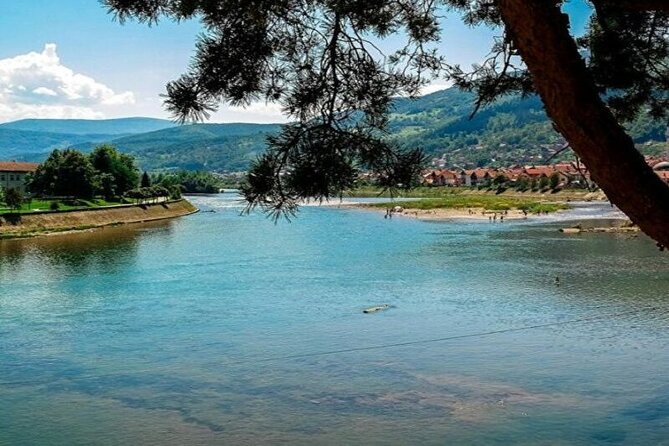
The route reaches Foča and Goražde, both on or near the Drina River. These are not polished sightseeing towns designed around international tourism. That is part of their appeal. You see places where ordinary life continues alongside reminders of Ottoman architecture and the 1992 to 1995 war.
I would choose this trip if you want context, not just photographs. The natural formations near Foča are visually striking, but the strongest part of the day may be the guide’s explanation of what happened in Goražde and why its survival mattered.
You should not expect a relaxed food tour or a slow river excursion. This is a road-based history trip with several focused stops. The pace is practical: see the site, hear its story, and continue.
A few more options to weigh up in Sarajevo
- Sarajevo: Mostar, Konjic, Blagaj Tekke, Pocitelj & Waterfall
★ 4.9 · 1,335 reviews - Fall of Yugoslavia, Sarajevo War Tour with Tunnel of Hope Museum and Frontlines
★ 5.0 · 1,314 reviews - Sarajevo: Mostar, Konjic, Sufi House, Pocitelj & Kravice Falls
★ 5.0 · 1,179 reviews
The morning route to Foča
The day begins at 8:00 a.m. at the Meet Bosnia Tours office on Gazi Husrev begova Street, near the crossing of Mula Mustafe Bašeskije. Hotel pickup is also offered, a useful feature if you are staying away from the old center or do not want to find the meeting point early in the morning.
Transportation is in an air-conditioned vehicle. Since the tour covers Sarajevo, Foča, Goražde, and Rorovi in one day, comfort matters. The vehicle is not merely a transfer between two nearby attractions. You will be crossing a large part of Eastern Bosnia, and the road time is part of the experience.
The group can include up to 20 people. That is small enough for a guide to speak with the group directly, but it is not a private tour. If you prefer complete control over stops and timing, a private vehicle would offer more flexibility. For most people, the group format keeps the price reasonable.
The scenery changes as you leave Sarajevo, but no detailed route commentary is promised at every stage. I would treat the drive as a chance to watch the country shift from the capital’s urban setting toward river towns and more remote natural formations.
Foča’s sand pyramids: an odd and rewarding first stop
The Sand Pyramids stop lasts about one hour, and admission is free. These formations are made of sand and have existed for more than 200 years. Their shape comes from erosion at the base, which gradually exposes and raises the upper sections.
The most interesting detail is that the pyramids do not actually grow in the ordinary sense. Their height increases as the sand beneath them erodes. That gives the site a slow, ongoing quality. You are looking at a natural process rather than a fixed monument.
The formations are compared with better-known examples in Colorado, Serbia, and Italy, but the Foča site remains far less familiar. That makes it a useful stop for anyone who has already seen Bosnia’s main historic centers and wants something harder to find on a standard route.
Allow yourself time to look beyond the most obvious formations. The area includes other geomorphological shapes, and a guide can help explain what you are seeing. One particularly strong account of the tour praised the guide for pointing out more than the named pyramids, including additional natural formations in the surrounding area.
This stop does have limits. It is not a large visitor complex, and there are no stated facilities, food services, or entrance exhibits included. The appeal is the formation itself and the explanation you receive, not a long list of organized activities.
Aladža Mosque and Foča’s Ottoman past
The Aladža Mosque, also called the Colorful Mosque, is one of Foča’s most important buildings. Built in 1549, it was regarded as one of the major Ottoman mosques in the European part of the empire and one of Bosnia and Herzegovina’s three most important historic mosques.
Its story is painful. The mosque was blown up in 1992, during the Bosnian War. Reconstruction was completed between 2016 and 2018. The visit therefore gives you two things at once: a look at Ottoman design and a clear example of the damage inflicted on Bosnia’s religious and cultural sites.
The stop lasts about 30 minutes, with no separate admission charge. That is enough for an introduction and a close look, but not a long architectural study. If you are especially interested in Islamic art, Ottoman construction, or the destruction and rebuilding of historic buildings, you may want to ask the guide focused questions.
The rebuilt mosque also raises a useful point about restoration. You are not seeing an untouched sixteenth-century building. You are seeing a historic monument reconstructed after deliberate destruction. That does not make the visit less important. It makes the site’s meaning more current and more complicated.
Dress and conduct should be respectful at any mosque. The tour information does not specify a formal dress code or interior access, so do not assume every part of the building will be open during your visit.
A completely different kind of day:
- ROSES OF SARAJEVO (Official WAR + CITY tour)- Story of a Survivor
★ 5.0 · 770 reviews - Sarajevo: Mostar, Konjic, Počitelj, Sufi House, & Waterfalls
★ 4.9 · 572 reviews - Tunnel Museum: Bosnian & Yugoslav Wars Tour with War Veteran
★ 5.0 · 551 reviews - Sarajevo: 2 Hours Old Town Walking Tour With Local Guide
★ 5.0 · 505 reviews
Two hours in Foča beside the Drina
The tour gives Foča about two hours, longer than the mosque visit. That allows the town to be treated as a place rather than a quick photo stop.
Foča sits where two rivers meet, and those waterways continue through three national parks. The town’s position helps explain its importance over the centuries. It was an Ottoman stronghold in the Balkans, and its streets and surviving landmarks reflect that role.
You will walk through the town and hear about its Ottoman past. The description does not promise a formal museum visit, a restaurant stop, or a fixed shopping period. This is better understood as a guided town visit, with the emphasis on local setting and historical context.
I like this part of the route because it prevents Foča from becoming just a backdrop for the mosque. The town connects the architecture to a wider story of trade, power, rivers, and regional movement.
The practical caution is time. Two hours sounds generous, but it can pass quickly if you want photographs, a careful walk, and time to listen to the guide. Food is not included, so carry money for any meal or drink you may want during the day. The tour does not promise a scheduled lunch, so it is wise to ask about the day’s meal timing at the start.
Goražde and the memory of the siege
Goražde receives about three hours, making it the central stop for modern history. Like Sarajevo, the town endured a long siege during the Bosnian War. Its location along the Drina River and its isolation during the conflict shaped the daily lives of its residents.
The tour focuses on resistance, survival, and the practical ways people kept a connection with the outside world. You will learn about the Bridge under a Bridge, an ingenious corridor built during the siege. The name alone hints at the difficult conditions in which people created routes for movement and supply.
This is not light sightseeing. Goražde asks you to listen carefully and accept that the town’s importance cannot be measured by monuments alone. The guide’s role is especially important here. A good explanation links the physical places to the people who used them and to the decisions made under extreme pressure.
The tour also covers the Drina Martyrs, described as brave people who held firm along the river. The exact presentation may vary with the guide and conditions, but you should expect a direct discussion of wartime courage and loss.
I value the time allowed in Goražde because a brief drive-through would flatten its story. Three hours gives room to see the town, hear about the siege, and understand why the Bridge under a Bridge mattered. Still, the subject may feel emotionally heavy. If you want only scenic stops, this is not the right outing. If you want to understand Bosnia beyond postcard views, it is one of the strongest reasons to go.
Rorovi: former front lines above Goražde
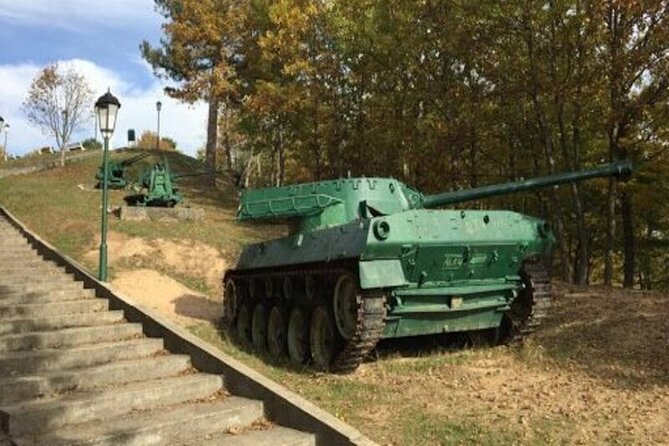
The final listed stop is Rorovi, with about 20 minutes on site. These were front-line positions used by soldiers who kept Goražde under siege for four years.
The short visit is not designed as a long walk or a broad museum experience. It is a focused stop where the physical position helps you understand the military pressure around the town. After hearing about the siege in Goražde, seeing former defensive locations gives the story a clearer geographic frame.
Because the stop is brief, listen closely to the guide rather than expecting a large collection of signs or displays. The value is in the explanation and the location. Weather may affect the experience, since the tour requires good conditions and can be canceled if those conditions are not met.
Rorovi also rounds out the day’s progression. You begin with unusual natural formations, move through Ottoman architecture and a historic town, then reach the modern conflict sites that shaped Goražde. That range gives the trip more substance than a simple list of attractions.
What the price includes, and what it does not
At $104.53 per person, the tour offers reasonable value for an eight-hour day. You receive a licensed guide, transportation in an air-conditioned vehicle, hotel pickup and drop-off, and all fees and taxes. There is no separate charge listed for the Sand Pyramids, Aladža Mosque, Foča, Goražde, or Rorovi.
The biggest value is transportation. Reaching these places independently would require planning a long route through Eastern Bosnia, arranging a vehicle, and working out how much time to allow at each stop. The guide also matters because several sites, especially in Goražde, need explanation to make sense.
Food and beverages are not included, and private expenses are extra. The tour does not state that lunch is provided, so plan for your own drinks and food. Since it is an early start and a long day, bringing water and a snack is sensible, even though the tour information does not specify whether stops for meals are scheduled.
Group discounts are available. The maximum group size is 20, so check the final price for your party before booking. A larger group may feel less personal, but the cost can be attractive for couples, families, or small groups who want a guide without paying private-tour rates.
The guide can make or break this day
This route depends heavily on the guide. The best parts are not simply what you see, but how the guide connects the sand formations to natural erosion, the mosque to its destruction and reconstruction, and Goražde to the experience of siege.
A published five-star rating for the experience gives particular praise to the guide’s explanations, attention, and care throughout the day. The guide’s name is not provided, so you cannot request a specific person from the available information. Still, the feedback suggests that personal attention is one of the tour’s strongest features.
I would ask questions as you go. At the Sand Pyramids, ask about the erosion process. At Aladža Mosque, ask what was reconstructed and how the original design is understood today. In Goražde, ask how the Bridge under a Bridge worked and how the town maintained links during the siege.
That kind of conversation can turn a long drive into a more rewarding day. It also helps you get more than a quick collection of photographs.
Who should book this Eastern Bosnia trip?
I would recommend it to you if you have already seen Sarajevo’s main sights and want a broader view of Bosnia and Herzegovina. It suits people interested in Ottoman architecture, twentieth-century European history, unusual geology, and places that receive fewer international visitors.
It is also a good fit if you do not want to rent a car. The included transportation and hotel pickup remove much of the work involved in reaching Foča and Goražde.
Families can participate, since most visitors can join and service animals are allowed. However, the wartime sections may not suit very young children, depending on how your family handles serious historical material. The tour information does not give a minimum age or specific child facilities.
You may want to skip it if you have only one day in Sarajevo and prefer to focus on the capital. You may also find the day tiring if long road journeys are difficult for you. The eight-hour duration is approximate, and the route includes several substantial stops, so this is not a short excursion.
Confirmation is provided when you book, and free cancellation is available up to 24 hours before the start time. Changes or cancellations inside that window are not refunded, and poor weather or an insufficient number of bookings can lead to a new date or a full refund.
Should you book it?
Book this tour if you want Bosnia’s story to extend beyond Sarajevo. The Sand Pyramids give you an unusual natural stop, Foča explains the Ottoman past, and Goražde brings the country’s recent war into clear human focus.
The strongest reason to go is the guide-led context, especially in Goražde and at Rorovi. The main trade-off is time: you will spend much of the day on the road, and meals are not included.
At $104.53, I consider it a solid choice for a full day with transport, a licensed guide, and several difficult-to-reach sites. Choose it for history, place, and perspective, not for a leisurely outing with lots of free time.
FAQ
How long does the Eastern Bosnia tour last?
The tour lasts approximately eight hours and begins at 8:00 a.m. It ends back at the meeting point in Sarajevo.
Where does the tour start?
The stated meeting point is Meet Bosnia Tours at Gazi Husrev begova 75, near the crossing of Mula Mustafe Bašeskije, in Sarajevo. Hotel pickup is also offered.
Is transportation included?
Yes. Transportation in an air-conditioned vehicle is included, along with hotel pickup and hotel drop-off.
What is the maximum group size?
The tour can have a maximum of 20 travelers.
Are admission fees included?
Yes. All fees and taxes are included, and the listed stops have no separate admission charge.
Is food included?
No. Food and beverages are not included, and private expenses are also excluded.
Can I cancel for a full refund?
Yes, if you cancel at least 24 hours before the experience start time. Cancellations made less than 24 hours before the start time are not refunded.
Just added in Sarajevo
- Sarajevo Under Siege: A War History Tour★ 5.0 · 10 reviews
- Walking Tour in Sarajevo★ 5.0 · 3 reviews
- Private Full Day Safari Tour★ 5.0 · 8 reviews
- Bosnian Pyramid: The World’s Largest Pyramid (From Sarajevo)★ 5.0 · 1 review
- Ultimate adventure★ 5.0 · 2 reviews
- Mysterious Visoko Pyramids Driving and Walking Tour★ 5.0 · 7 reviews
- Travnik, Jajce, Pliva Lakes & Mills –Medieval & Ottoman Bosnia Full Day Tour★ 5.0 · 3 reviews
- Sarajevo to/from Zagreb Transfer Day Tour (North-central Bosnia)★ 5.0 · 4 reviews
Sarajevo Tours, compared.
Sarajevo: Mostar, Konjic, Blagaj Tekke, Pocitelj & Waterfall
Read our review →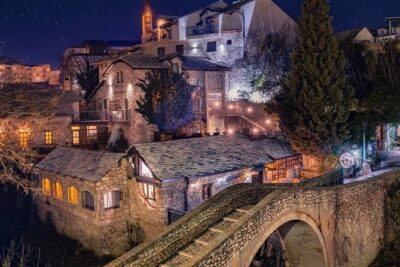
Sarajevo: Mostar, Konjic, Sufi House, Pocitelj & Kravice Falls
Read our review →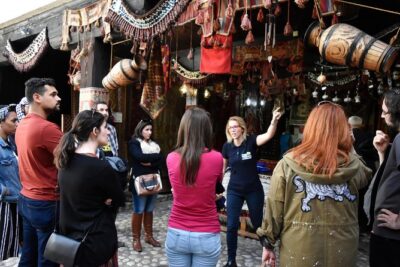
Sarajevo: 2 Hours Old Town Walking Tour With Local Guide
Read our review →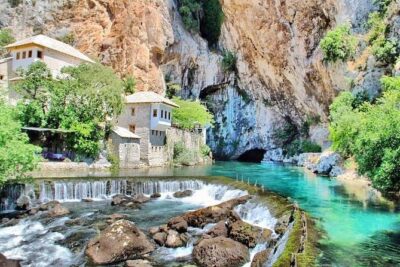
Sarajevo: Mostar, Konjic, Dervish House, Pocitelj & Kravica Falls
Read our review →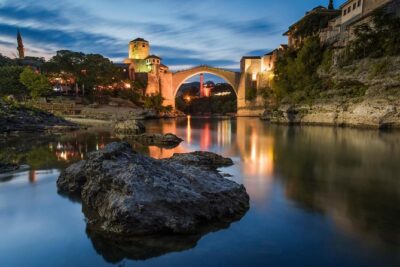
Mostar,Kravica Waterfall,Blagaj,Počitelj – Day Tour from Sarajevo
Read our review →
Jajce, Travnik and Pliva watermills – Day Tour from Sarajevo
Read our review →