
REVIEW · WALKING TOURS IN SARAJEVO
Sarajevo Walking Tour
Sarajevo’s story unfolds street by street. This two-hour walk connects Ottoman courtyards, Austro-Hungarian buildings, religious landmarks, and the site linked to the start of World War I, giving you a quick but meaningful introduction to the city. I especially like the east-meets-west route and the way it mixes famous sights with small details, such as Sarajevo’s lunar clock and its old caravan inns.
I also like the low price, about $12.10 per person, with a guide included. Aid Celjo received specific praise for showing the best spots and giving a strong history lesson. The main consideration is pace: with twelve stops in roughly two hours, most visits are short, and entry to Sarajevo City Hall is not included.
In This Review
- Key points to know before you book
- Why this short Sarajevo walk works
- Starting at the Eternal Flame
- Gazi Husrev-beg Mosque and Sarajevo’s Ottoman center
- Where east meets west
- Coppersmith Street and Sarajevo’s working traditions
- The Emperor’s Mosque and Sarajevo’s early Ottoman period
- Sebilj Fountain in Baščaršija
- Sarajevo City Hall and the moved house
- Morića Han and the old caravan route
- The lunar clock and Tašlihan’s ruins
- Latin Bridge and the start of World War I
- The Jewish Museum and Sarajevo’s layered identity
- Ending where you began
- Is $12.10 good value?
- Who should book this Sarajevo tour?
- Final verdict: book it for a first look at Sarajevo
- FAQ
- Where does the Sarajevo Walking Tour start?
- Where does the tour end?
- How long does the tour last?
- What language is the tour offered in?
- How much does the tour cost?
- Is a guide included?
- Are admission tickets included?
- Is the tour suitable for all fitness levels?
- How large can the group be?
- Can you cancel for a full refund?
Key points to know before you book
- A compact tour with twelve stops: You cover Sarajevo’s central old town and nearby landmarks in about two hours.
- History from several eras: The route links Ottoman Sarajevo, Jewish heritage, Austro-Hungarian architecture, and the World War I story.
- Gazi Husrev-beg Mosque has a remarkable detail: It was the first mosque in the world to receive electricity, in 1898.
- The route begins and ends at the Eternal Flame: This makes it easy to fit into a day of independent sightseeing.
- The price is unusually modest: At about $12.10, the tour offers a guided orientation without charging admission for most stops.
- Expect a walking tour, not a museum tour: Most stops last only five minutes, and City Hall admission costs extra.
Why this short Sarajevo walk works
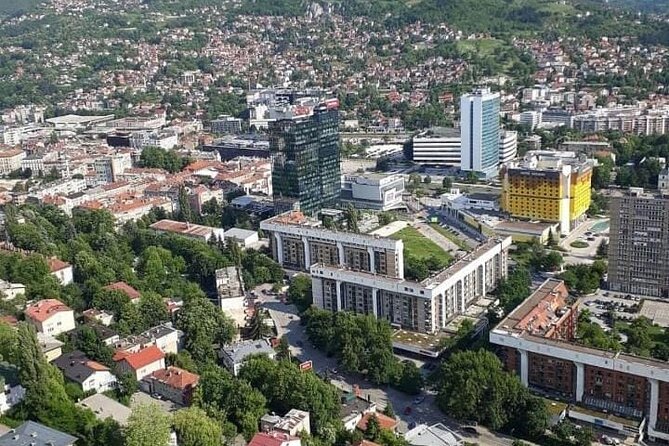
Sarajevo can feel like several cities sharing one narrow valley. Ottoman streets lead toward Austro-Hungarian façades, religious buildings sit close together, and major twentieth-century events are tied to ordinary corners of the center. A guide helps you connect those pieces instead of seeing them as unrelated photo stops.
This tour is built for that first layer of understanding. You are not spending an hour inside one museum or climbing to a distant viewpoint. Instead, you move through central Sarajevo, stopping often for short explanations and photographs.
The tour is offered in English and includes a guide. It uses a mobile ticket, begins and ends at the Eternal Flame on Ferhadija, and is limited to a maximum of 30 people. That group size is not tiny, so you should expect a shared walk rather than a private conversation with the guide. Still, the short route and central meeting point make it a practical first activity after arriving in Sarajevo.
The tour requires a moderate level of physical fitness. No special activity is listed beyond walking, but you should be comfortable moving between twelve stops over two hours. Comfortable shoes are a sensible choice.
More Walking Tours in Sarajevo
- Sarajevo: 2 Hours Old Town Walking Tour With Local Guide
★ 5.0 · 505 reviews - Private Walking Tour, Food Tasting and Bosnian Coffee in Sarajevo
★ 5.0 · 255 reviews - Sarajevo Grand Walking Tour
★ 5.0 · 232 reviews
Starting at the Eternal Flame
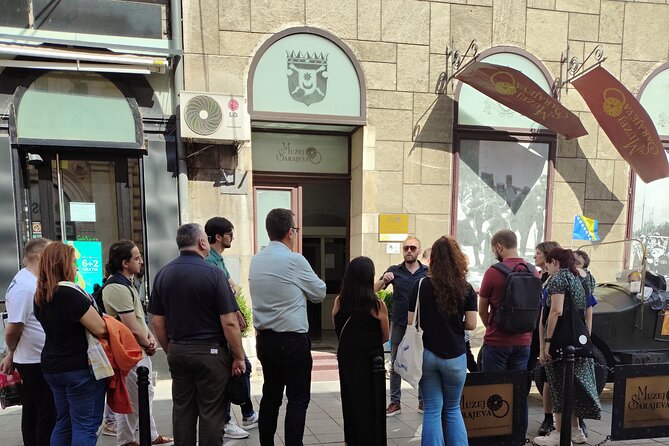
The meeting point is Sarajevo’s Eternal Flame, marked at VC5C+GPH on Ferhadija. This is both a useful place to begin and a fitting introduction to the city’s twentieth-century story.
The flame is a memorial to those who liberated Sarajevo during World War II. Your guide can frame the walk with this reminder that Sarajevo’s past is not limited to the Ottoman period or the assassination connected with World War I.
Starting here also makes the logistics simple. You do not need to find an outlying neighborhood or arrange a separate transfer. Since the tour returns to the same spot, you can continue shopping, eating, or exploring Ferhadija afterward without planning a complicated pickup.
Gazi Husrev-beg Mosque and Sarajevo’s Ottoman center
The first major stop is Gazi Husrev-beg Mosque, the central mosque of Sarajevo. You have about ten minutes here, the longest scheduled visit on the route, which makes sense. This is one of the city’s main landmarks and an important anchor for understanding the Ottoman character of the old center.
The unusual detail is easy to remember: the mosque received electricity in 1898 and is described as the first mosque in the world to do so. That small fact gives the building a more modern connection than you might expect from its historic setting.
Admission is free, but a short stop does not necessarily mean a full interior visit. Follow your guide’s instructions about access and respectful behavior. As with any active place of worship, dress and conduct should be considerate.
From here, the walk moves through the meeting point of Sarajevo’s cultural influences. You are not simply looking at one religious monument. You are beginning to see how the city’s Ottoman streets, Muslim traditions, trade, and later European influences sit close together.
Where east meets west
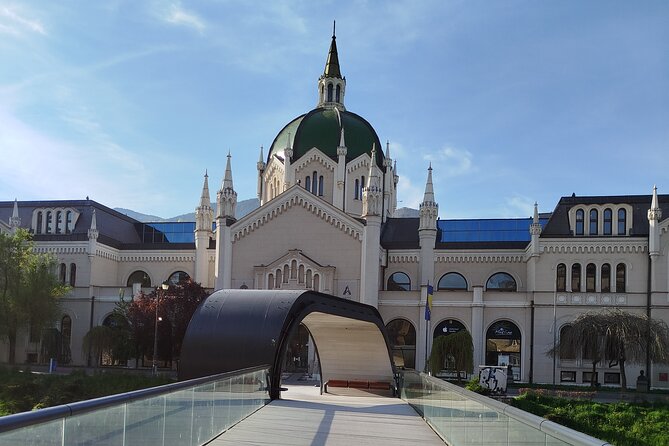
The Sarajevo Meeting of Culture receives only five minutes, but its importance is larger than the clock suggests. The stop marks the point where the city’s eastern and western architectural and cultural zones meet.
This is one of the best orientation moments on the walk. Sarajevo is often described as a place where east meets west, but the phrase can feel vague until you see the transition in the streets around you. Your guide gives that idea a physical location.
Do not expect a long formal visit here. It is a quick explanation and a chance to understand the layout before continuing. The value comes from using the spot as a reference point during the rest of your stay.
A completely different kind of day:
- Sarajevo: Mostar, Konjic, Blagaj Tekke, Pocitelj & Waterfall
★ 4.9 · 1,335 reviews - Fall of Yugoslavia, Sarajevo War Tour with Tunnel of Hope Museum and Frontlines
★ 5.0 · 1,314 reviews - Sarajevo: Mostar, Konjic, Sufi House, Pocitelj & Kravice Falls
★ 5.0 · 1,179 reviews - ROSES OF SARAJEVO (Official WAR + CITY tour)- Story of a Survivor
★ 5.0 · 770 reviews
Coppersmith Street and Sarajevo’s working traditions
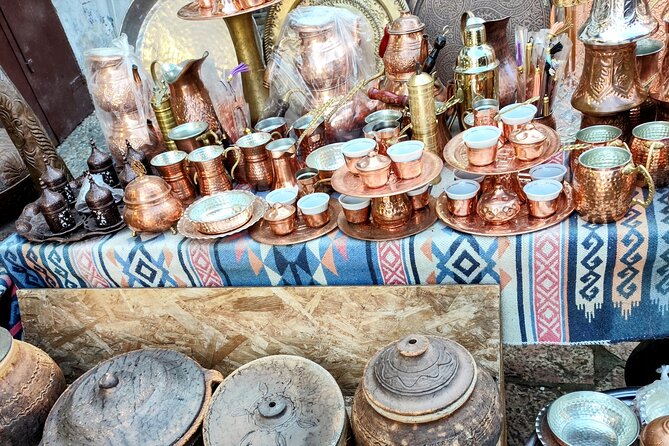
The five-minute stop at Coppersmith Store Hidic introduces one of the most tangible parts of the old town. Sarajevo’s coppersmith street is known for handmade copper goods, including traditional coffee sets and small souvenirs.
The street reflects a handicraft tradition that has been active for nearly 500 years. That makes this stop more than a shopping suggestion. The objects on display connect Sarajevo’s present-day shops with the craft and trade traditions that helped shape the old market district.
You may find this a useful place to decide if you want to return later with more time. Five minutes is enough to see the street and hear the background, but not enough for a relaxed look at every item. If you are interested in coffee culture or practical souvenirs, note the location and come back after the tour.
The Emperor’s Mosque and Sarajevo’s early Ottoman period
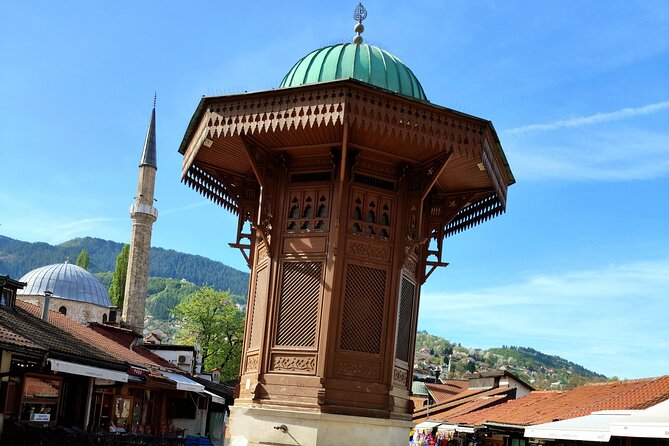
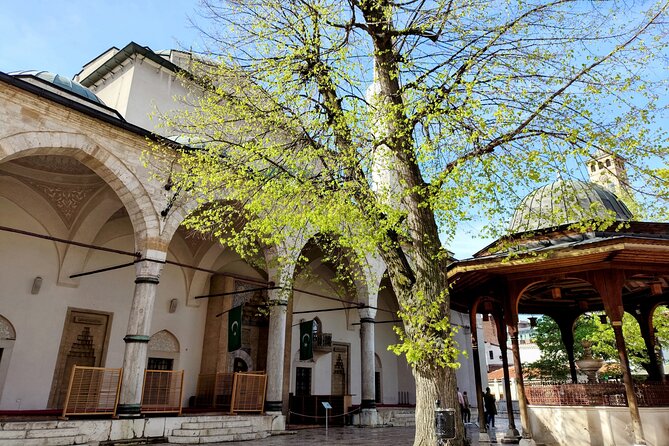
The Emperor’s Mosque is described as Sarajevo’s oldest mosque, dating to 1457. The scheduled visit is brief, about five minutes, so the guide’s explanation matters more than a lengthy examination of the building.
This stop adds an early date to the story. After hearing about the later electrical milestone at Gazi Husrev-beg Mosque, you get a clearer sense of how long Islamic architecture and worship have been part of Sarajevo’s urban life.
The tour does not list an admission charge. You should still treat the visit as a cultural site, not just a quick backdrop for photographs. The short timing means you may want to return independently if the mosque becomes a particular interest.
Sebilj Fountain in Baščaršija
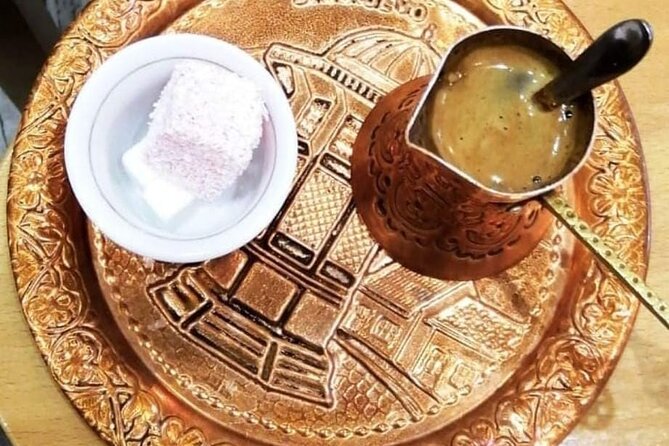
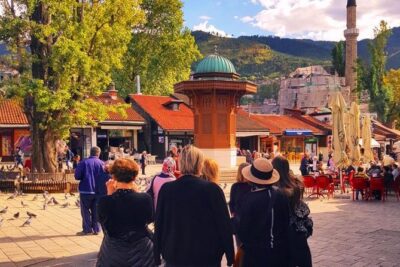
Sebilj is Sarajevo’s best-known public fountain and one of the city’s most recognizable meeting points. The stop lasts about five minutes and gives you a chance to see a classic symbol of the old market area.
A public fountain can sound modest beside a grand mosque or city hall, but Sebilj helps explain the daily structure of Ottoman Sarajevo. It is a public feature tied to movement, gathering, and the practical needs of people passing through the market.
This is also a useful place to get your bearings. The fountain is highly visible, and its location makes it easy to remember when you return to the old town on your own. Since the visit is short, listen for the guide’s context rather than expecting a formal tour of the fountain itself.
Sarajevo City Hall and the moved house
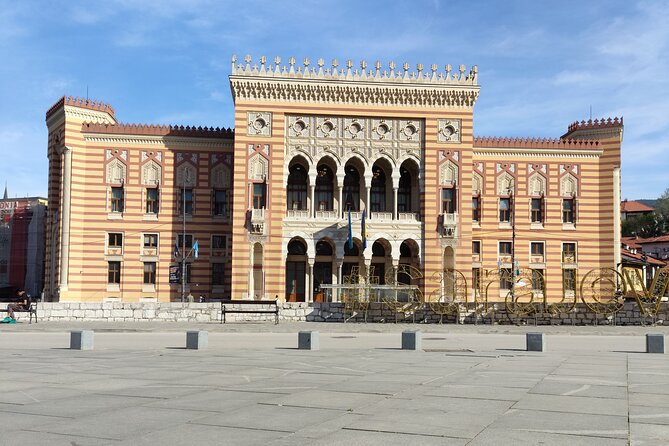
Sarajevo City Hall is one of the city’s major symbols. The route gives you about five minutes outside the building and includes a story about a stubborn Bosnian whose house was moved across the river because of the town hall’s construction.
That story adds a human scale to a large civic building. Instead of hearing only about architecture and official plans, you also hear how a major project affected one resident. It is the kind of local detail that helps a city feel lived in.
Admission to City Hall is not included. The tour does not promise an interior visit, so you should treat this stop as an exterior explanation unless you arrange entry separately. If the building interests you, allow extra time and budget for a possible admission fee beyond the $12.10 tour price.
Morića Han and the old caravan route
Morića Han was an inn where merchant caravans could stay during the Ottoman period. The five-minute stop gives you a look at the commercial side of Sarajevo’s past.
An inn like this helps explain why the old town developed where it did. Merchants needed places to sleep, store goods, meet other traders, and continue their journeys. The building is therefore part of the city’s economic story, not simply another old structure.
You will not have much time for an extended examination, but the stop fits well with Coppersmith Street. Together, they show a city shaped by trade, craft, and movement.
The lunar clock and Tašlihan’s ruins
The Old Sarajevo Clock Tower is about 30 meters high. Its most unusual feature is that its public clock keeps lunar time, a system connected with the Islamic calendar rather than the standard clock system used in everyday civic life.
The stop lasts only two minutes, making it one of the quickest explanations on the route. That is enough to hear the key fact and see the tower, but you may want to pause later if clocks, religious timekeeping, or Ottoman urban design interest you.
Nearby Tašlihan was an Ottoman caravanserai where caravans could stop for food and shelter. The name links back to the same trade network represented by Morića Han. Seeing both places helps you understand how Sarajevo served merchants moving through the region.
These two stops are a good example of the tour’s style. You get a memorable fact and a piece of urban history, but not a long, detailed visit. The guide keeps the walk moving.
Latin Bridge and the start of World War I
Latin Bridge is one of the most important historical stops. It is connected with the event that ignited the chain of events leading to World War I, so the guide’s explanation can place Sarajevo at the center of a global turning point.
The stop lasts about seven minutes. That is enough for a clear account of why this location matters, though the subject can easily fill much longer. If you have a strong interest in twentieth-century history, you may want to return later and explore the area at your own pace.
The value here is not only the famous event. It is the contrast between the ordinary scale of the bridge and the enormous consequences associated with it. A short stop can make that contrast especially sharp.
The Jewish Museum and Sarajevo’s layered identity
The Museum of the Jews of Bosnia and Herzegovina is housed in the oldest synagogue in Bosnia and Herzegovina. The tour allows about five minutes at this stop.
The inclusion of this site is important because it prevents the walk from presenting Sarajevo as a city with only one tradition. The route has already shown Islamic and Ottoman landmarks, then moved through Austro-Hungarian and civic history. The Jewish museum adds another part of Sarajevo’s religious and cultural identity.
Five minutes is not enough for a full museum visit. The tour introduces the building and its place in the city, while a separate visit would be better if you want to read displays or spend time inside. Admission is not listed as included, so check separately before planning a longer visit.
Ending where you began
The walk finishes back at the Eternal Flame. This loop is convenient and gives the tour a clear shape, beginning with a World War II memorial and ending at the same point after moving through centuries of Sarajevo’s history.
The final return also makes it easy to continue your day. You can use the central location to explore independently, revisit a shop, find a meal, or walk back toward the old town. Because the route is compact, it works well as a morning introduction or an early afternoon orientation.
The tour is not designed for long stops, private reflection, or extensive museum time. Its strength is connection. You see how religious buildings, markets, inns, bridges, memorials, and civic architecture fit into one central walk.
Is $12.10 good value?
At about $12.10 per person, this is a strong value if you want a guided introduction to Sarajevo. The price includes the tour and guide, while admission is free at nearly every listed stop. The only stated exception is Sarajevo City Hall, where entry is not included.
You are paying for organization and explanation rather than expensive access. That matters in a city where several significant sights are close together but their stories span different periods. A guide can help you understand why the Old Clock Tower, Morića Han, Latin Bridge, and the Eternal Flame belong in the same two-hour route.
The price is less compelling if you already know Sarajevo well or prefer to spend ten to twenty minutes at each location. Twelve stops in two hours means an average of about ten minutes per stop, with several visits scheduled for only five minutes and the clock tower for two.
Who should book this Sarajevo tour?
I would choose this walk if you are visiting Sarajevo for the first time, have limited time, or want historical orientation before exploring alone. It suits people who prefer a clear route and a guide who can connect Ottoman, Jewish, Austro-Hungarian, and wartime history.
It is also a good fit if you want to keep costs low. The guide is included, the route stays central, and the maximum group size is 30 people. Aid Celjo was specifically praised for covering the city’s best spots and giving a strong history lesson, so requesting or checking for that guide may be worthwhile if possible, though guide assignment is not guaranteed by the information provided.
I would hesitate only if your priority is extensive interior access. The schedule is brisk, City Hall admission is extra, and the museum and mosques receive short visits. Think of this as a well-priced introduction, not a full-day cultural program.
The booking terms are also friendly if your plans are uncertain. You can cancel for a full refund up to 24 hours before the local start time. Changes or cancellations inside that window are not accepted for a refund.
Final verdict: book it for a first look at Sarajevo
Book this Sarajevo Walking Tour if you want a short, affordable route through the city’s most important central stories. The combination of Gazi Husrev-beg Mosque, the Meeting of Culture, Coppersmith Street, Sebilj, Morića Han, Latin Bridge, the Jewish Museum, and the Eternal Flame gives you a useful map of Sarajevo’s past.
Go in expecting short explanations and exterior visits, not lengthy museum time. At $12.10, that is a fair trade, especially when the guide adds the historical links that make each stop matter. For a first day in Sarajevo, this is a sensible way to get oriented, then return to the places that deserve a slower look.
FAQ
Where does the Sarajevo Walking Tour start?
The tour starts at the Eternal Flame on Ferhadija in Sarajevo, at the location marked VC5C+GPH.
Where does the tour end?
The tour ends at the same Eternal Flame meeting point where it begins.
How long does the tour last?
The tour lasts approximately two hours.
What language is the tour offered in?
The tour is offered in English.
How much does the tour cost?
The listed price is $12.10 per person.
Is a guide included?
Yes. The tour includes the tour and a tour guide.
Are admission tickets included?
Admission is free at most listed stops. Admission to Sarajevo City Hall is not included.
Is the tour suitable for all fitness levels?
The experience states that you should have a moderate level of physical fitness.
How large can the group be?
The maximum group size is 30 people.
Can you cancel for a full refund?
Yes. You can cancel at least 24 hours before the experience start time for a full refund. Cancellations made less than 24 hours before the start time are not refunded.
Just added in Sarajevo
- Sarajevo Under Siege: A War History Tour★ 5.0 · 10 reviews
- Walking Tour in Sarajevo★ 5.0 · 3 reviews
- Private Full Day Safari Tour★ 5.0 · 8 reviews
- Bosnian Pyramid: The World’s Largest Pyramid (From Sarajevo)★ 5.0 · 1 review
- Ultimate adventure★ 5.0 · 2 reviews
- Mysterious Visoko Pyramids Driving and Walking Tour★ 5.0 · 7 reviews
- Travnik, Jajce, Pliva Lakes & Mills –Medieval & Ottoman Bosnia Full Day Tour★ 5.0 · 3 reviews
- Sarajevo to/from Zagreb Transfer Day Tour (North-central Bosnia)★ 5.0 · 4 reviews
Walking Tours in Sarajevo, compared.
Sarajevo: 2 Hours Old Town Walking Tour With Local Guide
Read our review →
Private Walking Tour, Food Tasting and Bosnian Coffee in Sarajevo
Read our review →
Delicious Sarajevo: Eat, Walk & Discover City Tour
Read our review →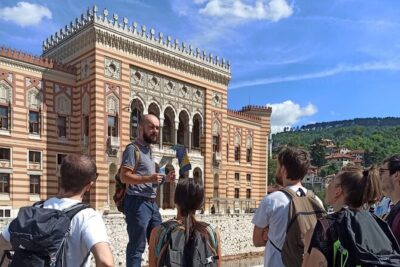
PROFESSIONAL SARAJEVO WALKING TOUR – With guide who guided STING!
Read our review →
Sarajevo genuine walking tour: Steps through history
Read our review →Browse the lists this tour appears in