
REVIEW · SARAJEVO WAR HISTORY TOURS
Sarajevo War Tour: A Veteran’s Story of the Siege (fees included)
Sarajevo’s recent past is impossible to miss. This four-hour tour makes sense of it through firsthand stories from a siege survivor, while taking you to the Tunnel of Hope, Sniper Alley, Trebević Mountain, and the old Olympic bobsleigh track. I like the personal, open discussion with guides such as Adnan, Mustafa, Enes, Omer, and Ibrahim, and I like that the air-conditioned vehicle connects sites spread across the city and hills. The main consideration is emotional weight: this is a serious tour about death, destruction, and civilian suffering, not a light sightseeing outing.
The small group limit of eight people gives you room to ask questions, and complimentary pickup and drop-off make the morning easy to manage. I also appreciate that the War Tunnel entrance fee is included in the $48.39 price. Still, the itinerary can shift, and one person noted that not every listed stop was visited, so treat the schedule as a strong outline rather than a guarantee.
In This Review
- Key points at a glance
- Why this Sarajevo tour is worth your morning
- From Markale Market to Sniper Alley
- The Tunnel of Hope and the city’s lifeline
- Trebević Mountain: seeing the siege from above
- Walking the abandoned Olympic bobsleigh track
- The Jewish Cemetery and the return to Sarajevo
- Price, group size, and what you actually receive
- How to prepare for a respectful visit
- Who should book this Sarajevo war tour?
- FAQ
- How long is the Sarajevo War Tour?
- How much does the tour cost?
- Is the War Tunnel admission included?
- Does the tour offer hotel pickup and drop-off?
- Where does the tour start?
- Is the tour conducted in English?
- How large is the group?
- How much walking is involved?
- Can children and students receive a reduced tunnel admission?
- What is the cancellation policy?
Key points at a glance
- Hear the siege from someone who lived through it: Guides share personal memories alongside the wider story of Yugoslavia’s breakup and the 1992 to 1995 siege.
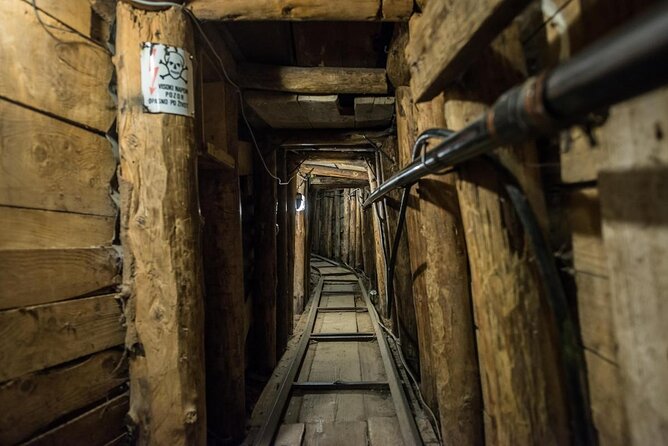
- Walk through the Tunnel of Hope: The included museum visit features a short film, original exhibits, and a passage through part of the tunnel.
- See Sarajevo from wartime positions: Trebević Vidikovac and other mountain sites show why the city was so exposed.
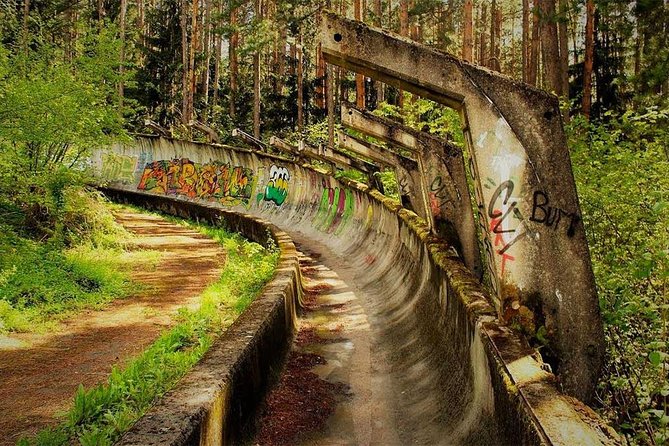
- Visit the Olympic bobsleigh track: Graffiti now covers parts of this abandoned 1984 venue, which also served as a front-line area during the war.
- Ride instead of hike between scattered sites: Pickup, drop-off, and an air-conditioned vehicle are included.
- Expect thoughtful, difficult discussion: Guides welcome questions, including personal ones, but the subject matter calls for respect.
Why this Sarajevo tour is worth your morning
Sarajevo can be confusing at first. The city’s Ottoman center, Austro-Hungarian streets, socialist blocks, Olympic sites, and war damage all sit close together, but the connections are not always obvious. A good guide helps you see how geography shaped daily life during the siege.
This tour is particularly useful early in your stay. It gives you a framework for later visits to museums, memorials, cemeteries, and streets where you may notice shell scars or plaques. I would not treat it as a simple collection of photo stops. Its real value comes from linking places to lived experience.
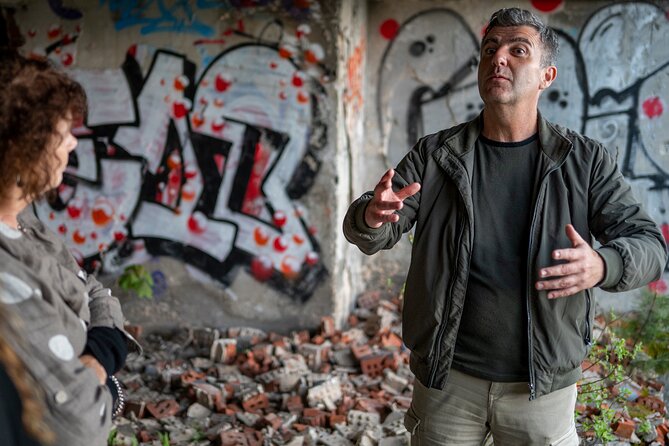
The guide is a Sarajevo siege survivor and, depending on the departure, you may be accompanied by someone who served as a soldier or officer during the conflict. Adnan, Mustafa, Enes, Omer, and Ibrahim are among the guides praised for answering long questions and explaining both the war and the wider breakup of Yugoslavia.
That personal element changes the tone. You are not only hearing dates and military movements. You may hear about childhood, family, fear, movement through the tunnel, or what it meant to live inside a surrounded city. The guides are also described as warm and humorous, which helps, though the mood remains sober.
Other tours covering the siege of Sarajevo:
- Fall of Yugoslavia, Sarajevo War Tour with Tunnel of Hope Museum and Frontlines
★ 5.0 · 1,314 reviews - ROSES OF SARAJEVO (Official WAR + CITY tour)- Story of a Survivor
★ 5.0 · 770 reviews - Tunnel Museum: Bosnian & Yugoslav Wars Tour with War Veteran
★ 5.0 · 551 reviews
From Markale Market to Sniper Alley
The vehicle begins at the Funky Tours office on Besarina čikma 5, or at a pickup point in Sarajevo. The first drive introduces the breakup of Yugoslavia and the siege. The guide invites questions, and this is a good time to ask for context if the political background feels unfamiliar.
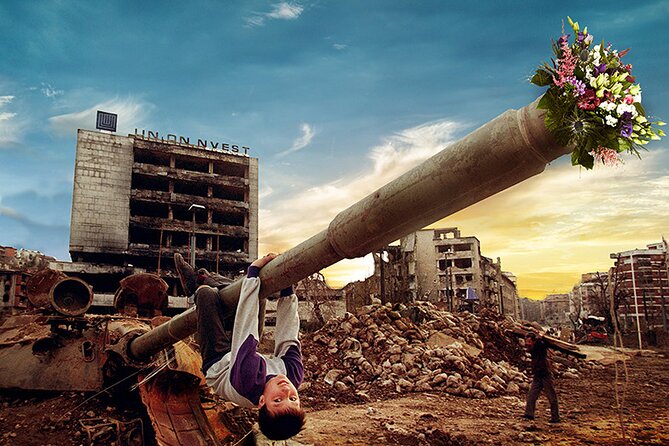
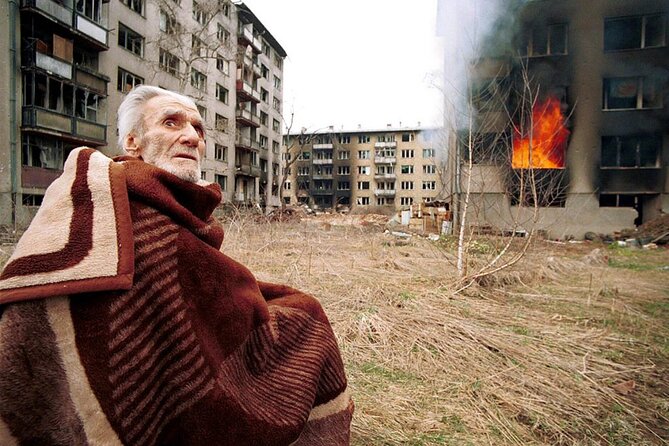
You pass Markale Market, the site of one of the largest massacres in Sarajevo during the 1992 to 1995 war. You also pass a memorial to the 1,601 children killed in Sarajevo. These are brief roadside encounters rather than long museum visits, but they establish the human cost before you reach the main stops.
The tour then moves to Hotel Holiday in the Marijin Dvor area. This building was constructed for the 1984 Winter Olympics and later became a base for foreign journalists covering the Bosnian war. The surrounding area became known as Sniper Alley, one of the most dangerous parts of the city.
Expect about 15 minutes at the hotel. You will not spend a long time touring the building. The value is in standing at a place that appeared repeatedly in international news reports and hearing how the road functioned during the siege.
This stop may be less visually dramatic than the mountain or bobsleigh track. Its importance is geographic and human. Your guide can point out the routes people had to cross and explain why ordinary movement through the city became so dangerous.
The Tunnel of Hope and the city’s lifeline
The War Tunnel Museum is the central stop, with about 90 minutes allotted to the visit and the surrounding explanation. The entrance fee, listed as 10.5 euros for adults and 2.5 euros for children and students, is included.
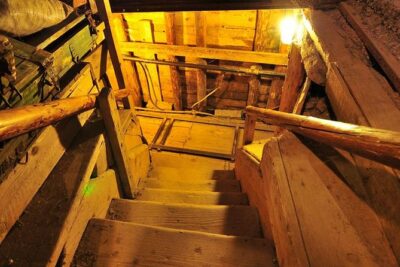
You begin with a short film about the war and the tunnel. You then walk through a preserved section of the passage and visit exhibits connected with the siege. The tunnel acted as a vital supply route for Sarajevo, a city cut off and heavily damaged during the blockade.
The passage itself is modest. That is part of its power. This is not a grand underground attraction. It is a narrow, practical reminder of the effort required to move people, food, equipment, and hope into a trapped city.
The survivor guide adds meaning that a museum label cannot provide. Guides have described using the tunnel themselves, and one account focused on journeys made with a brother. You can ask about the tunnel’s purpose, the city’s daily life, and the political events that led to war.
Allow time for difficult subjects. The tour discusses the death of Yugoslavia, nationalist politics, military forces, and the suffering of civilians. The guide may offer personal views as well as established historical facts. That can make the conversation feel direct and human, but if you prefer a strictly neutral academic presentation, you may find the style more personal than expected.
The museum has limited walking compared with a full walking tour. Still, the tunnel section is not suitable for everyone with limited mobility. One person with restricted mobility stayed at a hotel for coffee while a companion explored the bobsleigh track. Ask the operator about your needs before booking if stairs, uneven ground, or longer walks could be a problem.
Trebević Mountain: seeing the siege from above
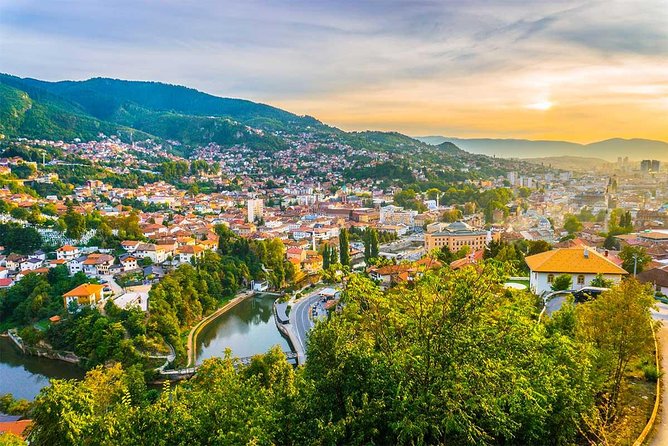
After the tunnel, the vehicle climbs toward Trebević Mountain. Much of the mountain’s length formed part of the front line during the siege, and several areas still show the marks of fighting.
Stops can include Zlatište, Osmice, Trebević Vidikovac, and other damaged sites. You might see bunkers, trenches, shell fragments, tank tracks, and military remains. The tour presents these not as polished monuments but as places where damage has remained visible for decades.
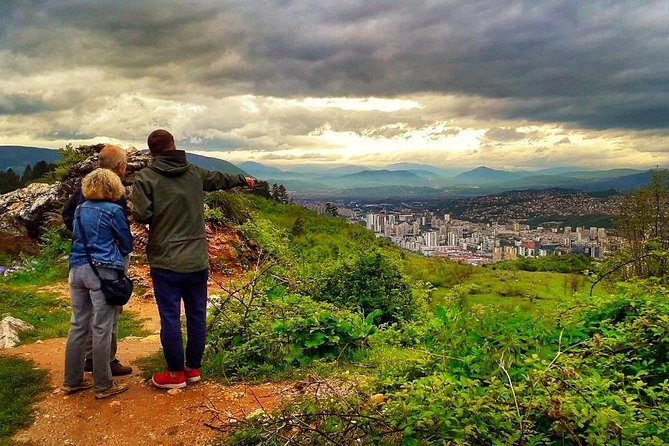
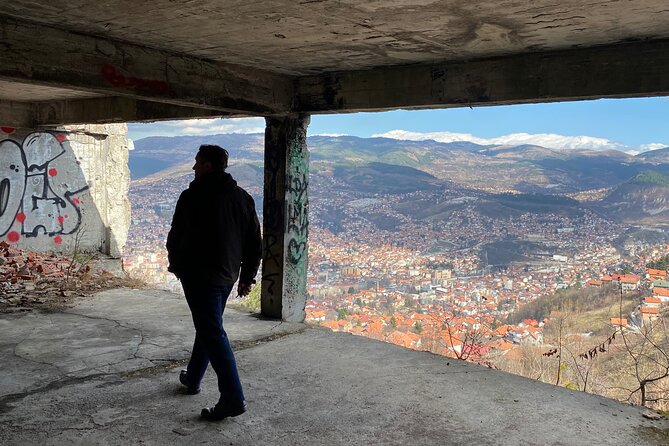
Trebević Vidikovac offers one of the best views over Sarajevo. During the siege, it was a position held by the Army of Republika Srpska. Looking down toward the city helps explain the military advantage of the surrounding hills and why residents faced such a dangerous situation below.
The stop lasts about 20 minutes, while the broader Trebević section takes around 30 minutes. Weather matters here. In poor conditions, the views may disappear, and the ground around the remains can be less comfortable. Yet one guide still took a group along the bobsleigh track during bad weather, which suggests the stop may continue unless conditions make it unsafe.
This is where the tour becomes especially visual. At the Tunnel Museum, you picture how people moved underground. On Trebević, you see the city’s exposure from above. The two stops work best together.
A few more options to weigh up in Sarajevo
- Sarajevo: Mostar, Konjic, Blagaj Tekke, Pocitelj & Waterfall
★ 4.9 · 1,335 reviews - Sarajevo: Mostar, Konjic, Sufi House, Pocitelj & Kravice Falls
★ 5.0 · 1,179 reviews - Sarajevo: Mostar, Konjic, Počitelj, Sufi House, & Waterfalls
★ 4.9 · 572 reviews - Sarajevo: 2 Hours Old Town Walking Tour With Local Guide
★ 5.0 · 505 reviews
Walking the abandoned Olympic bobsleigh track
The Sarajevo Olympic bobsleigh and luge track was built for the 1984 Winter Olympics. During the siege, it sat along a front-line area. Today, the concrete track is an abandoned site covered with graffiti from artists around the world.
The tour allows about 20 minutes here, though reaching the track can involve a longer walk from the vehicle. This is the one practical issue to take seriously if you have limited mobility. A companion may be able to explore while you remain at a nearby hotel, but confirm arrangements in advance rather than counting on an improvised solution.
For most people, this is one of the most memorable stops. The venue’s brutalist design already has a stark beauty, and the graffiti gives it a strange second life. Your guide also explains what happened at the site during the siege, preventing it from becoming just another abandoned-building photo stop.
The combination of sport, architecture, and war is distinctly Sarajevo. The track recalls the city’s Olympic pride, then shows how quickly that public image was replaced by military use and destruction. It is a compact lesson in the city’s complicated recent past.
The Jewish Cemetery and the return to Sarajevo
The last listed stop is Sarajevo’s Jewish Cemetery, one of Europe’s largest Jewish cemeteries. During the siege, it became a front-line position and sniper location for the Army of Republika Srpska.
You spend about 15 minutes here. The stop adds another layer to the tour because the cemetery is both a historic religious site and a wartime military position. It also brings you back toward the city after the mountain stops.
Do not expect a long cemetery tour or a full explanation of Sarajevo’s Jewish community. The focus remains on the siege and the cemetery’s role in the conflict. Still, the location reinforces one of the tour’s strongest ideas: Sarajevo’s history is layered, and places built for worship, sport, journalism, or ordinary life could all become part of the war.
Afterward, you are returned to your preferred location in Sarajevo. Drop-off is offered at the end, which is useful if you have a hotel away from the Funky Tours office.
Price, group size, and what you actually receive
At $48.39 per person, this is a fair price for a four-hour outing that includes transport, pickup and drop-off, an English-speaking veteran guide, taxes, and the War Tunnel admission. You are paying for access to scattered sites that would be awkward to connect independently, plus the guide’s personal interpretation.
The maximum group size is eight. That matters here. A large bus group would make personal questions harder and reduce the value of a survivor-led conversation. In a small group, you have a better chance to discuss details rather than simply listen from the back of a vehicle.
Food and drinks are not included. The tour lasts roughly four hours, so plan a meal before or after it. Confirmation is sent within 48 hours, subject to availability, and the tour is usually booked about 27 days ahead. If your Sarajevo dates are fixed, booking early is sensible.
Pickup is offered from your address in Sarajevo, and the tour starts either at the Funky Tours office or your chosen pickup point. The vehicle is air-conditioned, a useful comfort during warmer months and on the drive up Trebević.
The activity allows service animals and is near public transportation. It involves a low amount of walking overall, but the bobsleigh track and uneven wartime sites deserve special attention. Most people can participate, but the operator should know about mobility concerns before the day.
How to prepare for a respectful visit
Read a short account of the breakup of Yugoslavia before you go if the subject is new to you. You do not need to memorize names or dates. A basic grasp of the political breakup will help you follow the guide’s explanation of how Sarajevo became surrounded.
Bring questions. The guides are repeatedly praised for their willingness to discuss difficult points, including personal matters. Ask about daily life, the tunnel, the mountain positions, or how Sarajevo changed after the war.
Wear practical shoes. The tour is not a demanding hike, but the mountain and bobsleigh track may include uneven surfaces. Bring a light layer as well, since Trebević can feel different from the city.
Give the memorial stops your attention. Markale Market and the children’s memorial are brief pass-by points, but they are not background scenery. The tour works best when you treat them as moments of remembrance rather than quick photo opportunities.
Free cancellation is available if you cancel at least 24 hours before the start time. Changes or cancellations inside that window are not accepted for a refund.
Who should book this Sarajevo war tour?
I would choose this tour if you want to understand the siege through places and personal memory rather than museums alone. It suits first-time visitors, people with only a short stay, and anyone who wants a clear explanation of the war’s connection to Sarajevo’s streets and hills.
It is also a strong choice if you value conversation. The best part may be the guide’s ability to answer questions and connect broad political events with everyday life. Enes is known for a lively, humorous approach, while Adnan and Mustafa are praised for personal accounts and thoughtful discussion. Your guide will vary, so the exact tone will vary too.
I would think twice if you want a light morning, a strictly scripted lecture, or a tour focused mainly on architecture and scenic viewpoints. The subject is painful, and some stops involve damaged sites, memorials, and military remains.
For most visitors, I recommend booking it, especially near the beginning of a Sarajevo stay. The Tunnel of Hope is essential, but the mountain positions, Sniper Alley, cemetery, and Olympic track give it meaning. You leave with a clearer sense of what happened, where it happened, and why Sarajevo still carries the war so visibly.
FAQ
How long is the Sarajevo War Tour?
The tour lasts approximately four hours.
How much does the tour cost?
The listed price is $48.39 per person.
Is the War Tunnel admission included?
Yes. The War Tunnel Museum entrance fee is included in the tour price.
Does the tour offer hotel pickup and drop-off?
Yes. Complimentary pickup and drop-off are offered in Sarajevo if needed.
Where does the tour start?
You can meet at Funky Tours, Besarina čikma 5, Sarajevo, or arrange pickup at your preferred location.
Is the tour conducted in English?
Yes. An English-speaking Sarajevo war veteran leads the tour.
How large is the group?
The activity has a maximum of eight participants.
How much walking is involved?
The tour involves a low amount of walking overall. The bobsleigh track may require a longer walk from the parking area, and some mountain sites can have uneven ground.
Can children and students receive a reduced tunnel admission?
Yes. The stated War Tunnel admission is 10.5 euros for adults and 2.5 euros for children and students, and the fee is included in the tour.
What is the cancellation policy?
You can cancel at least 24 hours before the start time for a full refund. Cancellations or changes made less than 24 hours before the start time are not accepted for a refund.
Just added in Sarajevo
- Sarajevo Under Siege: A War History Tour★ 5.0 · 10 reviews
- Walking Tour in Sarajevo★ 5.0 · 3 reviews
- Private Full Day Safari Tour★ 5.0 · 8 reviews
- Bosnian Pyramid: The World’s Largest Pyramid (From Sarajevo)★ 5.0 · 1 review
- Mysterious Visoko Pyramids Driving and Walking Tour★ 5.0 · 7 reviews
- Ultimate adventure★ 5.0 · 2 reviews
- Travnik, Jajce, Pliva Lakes & Mills –Medieval & Ottoman Bosnia Full Day Tour★ 5.0 · 3 reviews
- Sarajevo to/from Zagreb Transfer Day Tour (North-central Bosnia)★ 5.0 · 4 reviews
Sarajevo War History Tours, compared.
Fall of Yugoslavia, Sarajevo War Tour with Tunnel of Hope Museum and Frontlines
Read our review →
ROSES OF SARAJEVO (Official WAR + CITY tour)- Story of a Survivor
Read our review →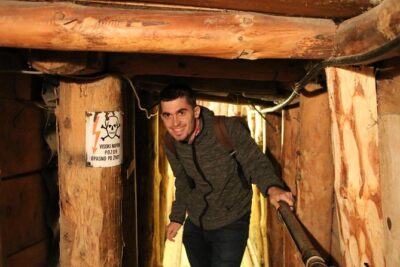
Tunnel Museum: Bosnian & Yugoslav Wars Tour with War Veteran
Read our review →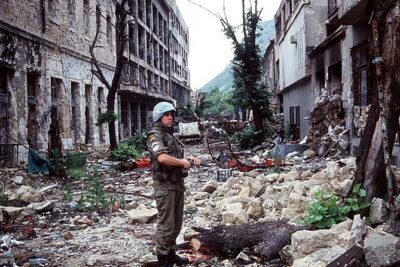
Break-up of Yugoslavia & The War in Mostar: Life Under Siege
Read our review →
Sarajevo to Srebrenica: Genocide Study Tour with War Veteran
Read our review →
Sarajevo Grand Tour: Old Town, War Tunnel, Olympic Sites & More
Read our review →
War Times Experience in Sarajevo – Half Day Tour
Read our review →Browse the lists this tour appears in