
REVIEW · SARAJEVO WAR HISTORY TOURS
The Death of Yugoslavia Tour in Mostar
The past is still hiding around Mostar. This thoughtful 2.5-hour outing takes you beyond the famous bridge to abandoned sites tied to Tito’s Yugoslavia, the Cold War, and the breakup of the country. I like the way it connects large political events with ordinary life, from factory work and youth programs to music, cars, and household brands. I also like the local storytelling, especially when guides such as Marko, Miran, Dario, Marin, and Sebi add personal or family memories.
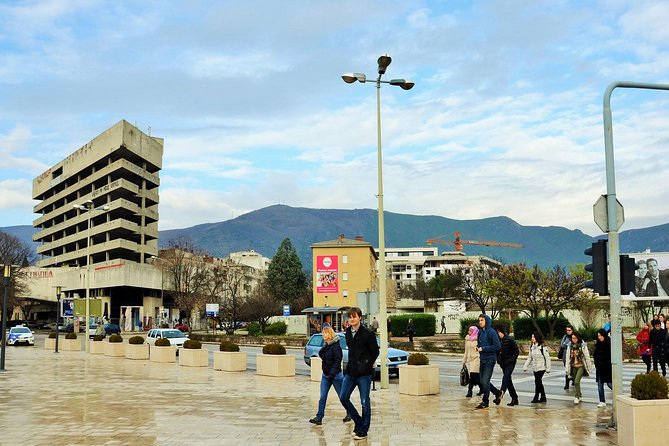
The main thing to consider is that this is not a sightseeing tour filled with polished monuments. Some stops are abandoned and decaying, and their appeal comes from what they represent rather than how they look. If you want pretty views and postcard scenery, choose a different Mostar excursion. If you want difficult modern history explained clearly, this is a strong choice.
In This Review
- Key points to know before booking
- Why this Mostar tour is different
- Meeting at iHouse Travel at 5 p.m.
- Chapter one at Gornje Gnojnice: fear behind the socialist state
- Chapter two at Rodoč: work, dreams, music, and everyday life
- Chapter three at Španski trg: how the country came apart
- Chapter four at the Partisan Cemetery: Bosnia and Herzegovina today
- The guides are the heart of the experience
- Is $47.17 a fair price?
- Who should book this tour?
- Should you book The Death of Yugoslavia Tour?
- FAQ
- Where does The Death of Yugoslavia Tour begin?
- What time does the tour start?
- How long does the tour last?
- Where does the tour finish?
- What places does the tour visit?
- Is transport included?
- Can I cancel for a full refund?
Key points to know before booking
- Four unusual Yugoslav-era locations: The tour visits sites most people would not find on their own, including Gornje Gnojnice, Rodoč, Španski trg, and the Partisan Cemetery.
- A clear four-chapter structure: The story moves from Cold War fear and Tito’s socialism to the Yugoslav wars and Bosnia and Herzegovina today.
- Music is part of the presentation: The guide uses songs to show changing moods and attitudes during different periods.
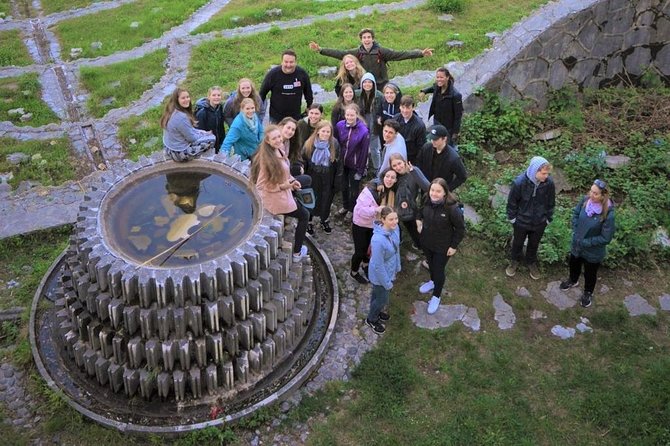
- A small group helps the conversation: The maximum group size is 16 people, with a driver-guide leading the outing.
- A 5 p.m. start fits a full sightseeing day: You can spend the afternoon around Mostar before setting off by vehicle.
- The price is about $47.17 per person: That is fair if you value access and explanation, though less appealing if you judge a tour mainly by its physical attractions.
Why this Mostar tour is different
Mostar is usually sold through its Ottoman bridge, stone lanes, river views, and nearby waterfalls. Those sights are worth your time, but they tell only part of the city’s story. This tour turns toward the 20th century, when Mostar and the wider region were shaped by socialism, industrial growth, Cold War tension, and war.
I like that the tour does not treat Yugoslavia as either a lost paradise or a simple dictatorship. The guide discusses its strengths, its controls, its economic troubles, and the reasons it eventually broke apart. That balance matters because the subject can quickly become sentimental or politically loaded.
The experience also uses places that are not standard attractions. Their worn condition is part of the point. You are not being driven to beautifully restored museums with neat labels. You are seeing physical reminders of a vanished state, then hearing the explanation that gives them meaning.
That approach can be powerful, but it asks more from you. You need to listen. The sites alone may seem plain, damaged, or even disappointing. The value is in the connection between place, story, music, and memory.
Other tours covering the siege of Sarajevo:
- Break-up of Yugoslavia & The War in Mostar: Life Under Siege
★ 5.0 · 136 reviews - Mostar War Heritage Walking Tour
★ 5.0 · 6 reviews - War Photo Exhibition Tour in Mostar
★ 5.0 · 2 reviews
Meeting at iHouse Travel at 5 p.m.
The tour begins at iHouse Travel, 25 Onešćukova in Mostar, at 5 p.m. It returns to the same meeting point. Hotel pickup and drop-off are not included unless you select an option that provides them, so plan to reach the office yourself.
The round-trip vehicle transport is useful here. Several locations are outside the usual center-city route, and getting between them independently would be awkward. You can sit back while the guide explains the next chapter on the road.
The outing lasts about 150 minutes, with roughly 30 minutes assigned to each main stop. Actual timing can run a little longer, so do not schedule a tight dinner reservation immediately afterward. The maximum group size is 16, which keeps this from feeling like a large coach excursion.
English is the offered language. Confirmation arrives when you book, and children must be accompanied by an adult. Most people can participate, though the information provided does not give detailed mobility guidance for every site. If that matters to you, ask iHouse Travel before paying.
Chapter one at Gornje Gnojnice: fear behind the socialist state
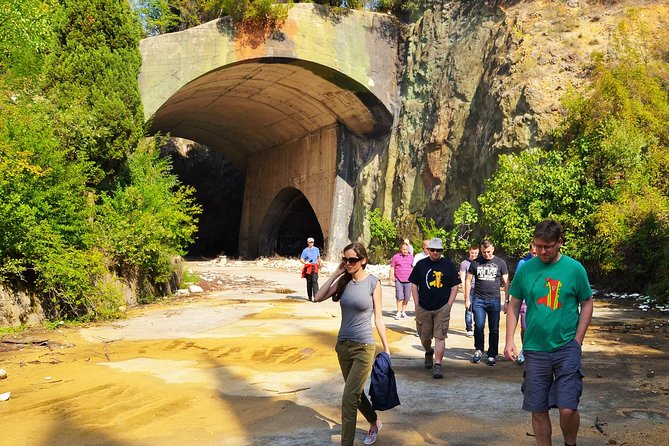
The first chapter begins during the drive to Gornje Gnojnice. The guide sets the scene with the Second World War and the creation of Socialist Yugoslavia, then moves into the country’s break with the Soviet Union.
That break created the Informbiro period, a tense chapter of Yugoslav history shaped by suspicion, internal repression, and fear of outside attack. The country responded with heavy militarization, and the first secret location connects those political pressures to a real place.
The secrecy is deliberate. You are not given a full public list of stops in advance, which makes the trip feel less like checking off attractions and more like following a historical trail. It also means you should not book this expecting a conventional monument with a large entrance sign.
Gornje Gnojnice is important because it introduces the contradiction at the center of Yugoslavia. The country tried to follow its own socialist path, separate from Moscow, while also preparing for the possibility of invasion. That tension shaped daily life and government policy for years.
This is one of the sections where a strong guide makes a major difference. Marko, praised for his clear explanations and humor, and guides such as Miran and Dario have been especially effective at making complicated political changes easier to follow. The stories are not presented as a lecture detached from Mostar. They are tied to the setting around you.
Chapter two at Rodoč: work, dreams, music, and everyday life
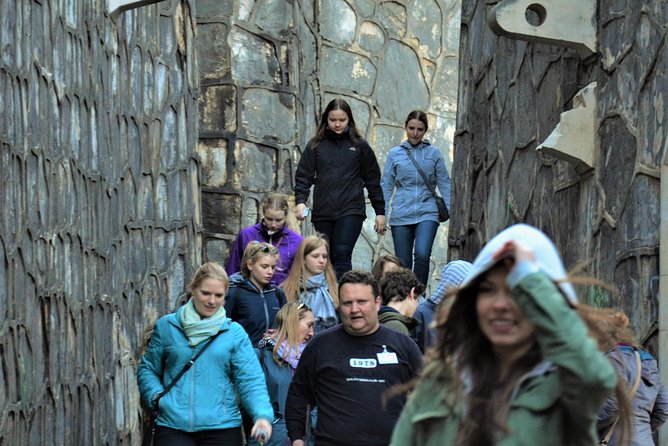
The drive to Rodoč turns to Josip Broz Tito, Yugoslavia’s long-serving leader. The guide covers Tito’s personal life, political achievements, and effort to build a form of socialism suited to Yugoslavia rather than copied directly from another country.
The next stop focuses on ordinary people. This is one of the best features of the tour because it moves beyond leaders and military events. You hear about Youth Work Actions, industrial growth during the 1950s and 1960s, and the hopes attached to building a modern country.
The presentation then reaches the 1970s and 1980s, when popular culture became a useful window into daily life. Expect discussion of Yugoslav brands, music, cars, industry, and lifestyle. These details help you understand what the state felt like to people who lived in it.
A guide’s personal connection can add a lot here. Sebi, Marko, Miran, and other guides have shared memories from growing up during Yugoslavia, along with family experiences from the period. Those details can make political ideas easier to grasp because you can relate them to school, work, entertainment, and family life.
The music presentation is another welcome touch. Songs help show changing public moods and the differences between eras. This is not just background audio during a drive. It is used to explain how culture reflected the country’s identity and shifting confidence.
The drawback is that the physical stop may not satisfy someone expecting a restored cultural attraction. The location is chosen for its connection to the story, not its beauty. Keep your attention on the explanation, and the stop becomes much more rewarding.
A few more options to weigh up in Mostar
- From Dubrovnik: Mostar and Kravica Waterfall Day Trip
★ 4.7 · 4,709 reviews - Dubrovnik: Kravica Waterfalls, Mostar and Pocitelj Day Trip
★ 4.5 · 3,045 reviews - Discover Herzegovina Day Tour from Mostar: Kravice Waterfalls, Blagaj, Počitelj
★ 5.0 · 742 reviews - Herzegovina Day Tour from Mostar: Blagaj, Pocitej, Kravice falls (Join Us! :D)
★ 5.0 · 372 reviews
Chapter three at Španski trg: how the country came apart
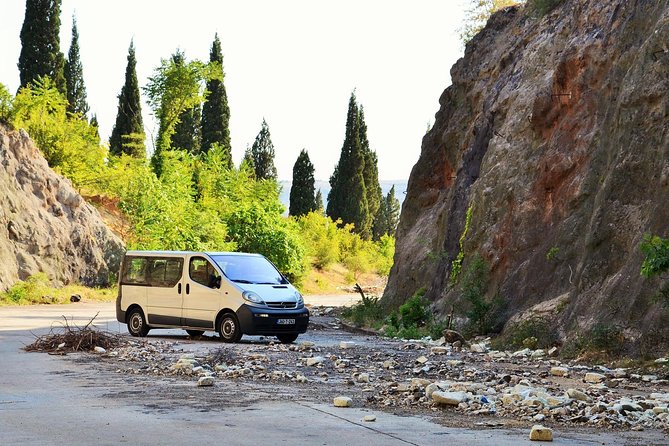
The third chapter begins with the 1980s and the 1984 Sarajevo Winter Olympics. The event is used to explain why that period is often remembered as a high point for Yugoslav socialism. It offers a useful pause before the story turns darker.
The guide then lays out the pressures that led to the breakup: economic depression, rising nationalism, and the weakening of the political system after years of strain. The wars began in Slovenia and Croatia before reaching Bosnia and Herzegovina a year later, where the violence became especially destructive.
This part requires careful listening because the political changes were complicated and the consequences remain sensitive. A good guide does not reduce the war to one cause or one group. Instead, the explanation links economics, political ambition, nationalism, and the collapse of a shared state.
Španski trg helps frame the difference between the Yugoslav dream and the reality that followed. The tour addresses destruction, deaths, and the lasting effects of the war without treating them as distant textbook events.
This is likely the most emotionally difficult section. You may find the mood changes sharply from the music and consumer culture of the previous chapter. That contrast is intentional. It shows how quickly a period remembered for confidence and possibility could give way to fear and conflict.
The strongest guides appear to be passionate storytellers. Marin has been singled out for making the subject relatable, while Marco has been praised for communication, humor, and an ability to paint a clear picture of the past. Guide assignments can change, so book this for the format and subject rather than a guaranteed individual guide.
Chapter four at the Partisan Cemetery: Bosnia and Herzegovina today
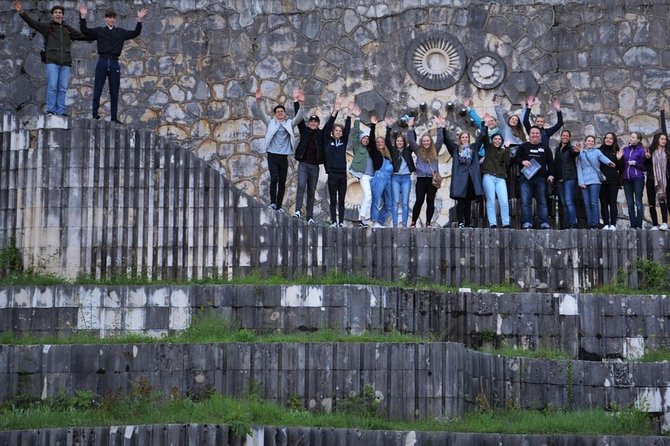
The final stop is the Partisan Cemetery, where the discussion shifts from the former country to present-day Bosnia and Herzegovina. The drive introduces the country’s political structure and the challenges it faces at the start of the 21st century.
The final walk connects the relics of an earlier ideal with the difficult work of recovery. The guide places Bosnia and Herzegovina within the wider question of possible European Union membership, along with its economic, cultural, and political needs.
This ending gives the tour a useful present-day focus. It does not suggest that the story ended when the war ended. Instead, you are encouraged to consider how institutions, identities, and memories continue to shape the country.
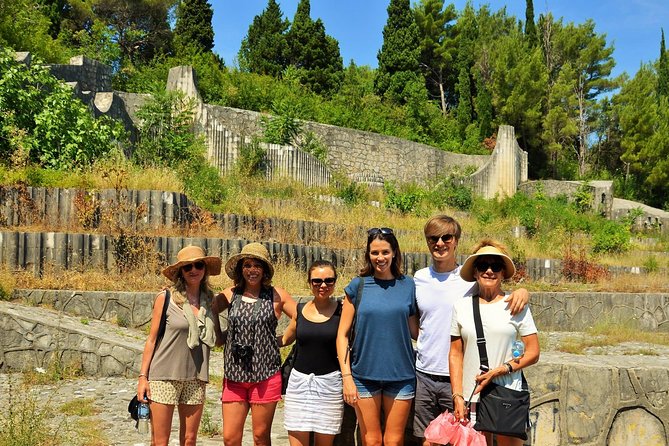
The Partisan Cemetery also gives the experience a fitting final setting. It carries the marks of an earlier era, but its meaning is not frozen in the past. The stop asks you to compare the ideals of the old state with the complicated reality that followed.
Again, do not expect a polished attraction. The cemetery may feel stark and weathered. That quality suits the tour’s purpose, but it is also the clearest warning about the experience: the sites can feel underwhelming if you want visual spectacle.
The guides are the heart of the experience
The most praised feature of this tour is the guiding. Names that have received especially warm attention include Marko or Marco, Miran or Myran, Dario, Marin, and Sebi. The exact guide depends on the day, but the pattern is clear: this experience relies heavily on personality and explanation.
The best guides combine facts with stories, humor, music, and personal memories. That mix helps you follow a complicated subject without turning the outing into a dry political seminar.
I also appreciate that the guide can offer broader advice about Bosnia and Herzegovina. Sebi, for example, was praised for sharing useful country tips beyond the formal subject of the tour. That sort of local perspective can help you understand what you are seeing during the rest of your stay.
Because the locations are secret and often decaying, the guide’s ability to explain why each place matters is essential. Without that context, you might simply see an abandoned structure or neglected memorial. With it, the same place becomes part of a larger story.
Is $47.17 a fair price?
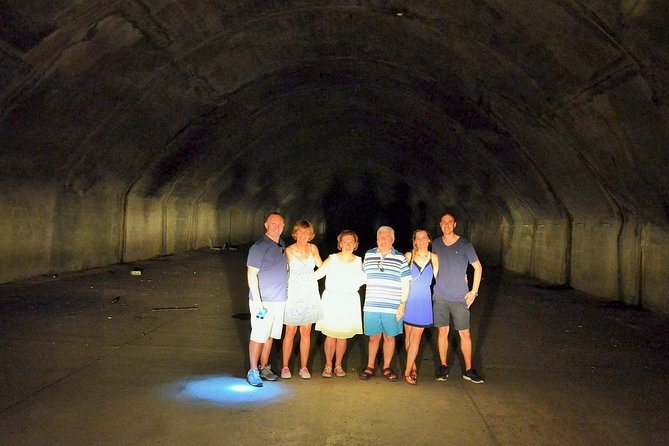
At about $47.17 per person, the price is reasonable for a small-group experience lasting around two and a half hours, especially because transport between several out-of-the-way sites is included. You are also paying for a driver-guide, local taxes, and the time needed to connect four historical chapters.
The value depends on what you want from a tour. If you prefer formal museums, attractive buildings, and clearly marked attractions, the price may feel high. One critical assessment called the sites poor value while still praising the guide’s explanation. That is a fair warning to take seriously.
On the other hand, you would have trouble finding these places and understanding their connection on your own. The tour provides access, transport, structure, and interpretation in one package. For anyone interested in Yugoslavia, modern Balkan politics, or Mostar’s recent past, that can justify the cost.
There is also a two-person minimum. If you book alone and the minimum requires a supplement, confirm the final price before committing. This policy has caused confusion, even though the operator says it is explained in advance and can be canceled with a full refund if you are unhappy with the arrangement before the tour.
Group discounts are available, so check the current rate if you are booking with several people.
Who should book this tour?
I would choose this tour if you:
- Want a serious look at Yugoslavia beyond Tito slogans and war headlines
- Prefer local explanation to sightseeing alone
- Are curious about daily life, music, industry, and popular culture
- Have already seen Mostar’s famous center and want a different side of the city
- Can give two and a half hours to a complicated and sometimes painful subject
- Appreciate unusual locations more for their meaning than their appearance
I would skip it if your Mostar schedule is short and you want only scenic highlights. I would also think twice if abandoned places frustrate you or if you do not enjoy political and military history.
Book at least a day ahead if possible. The experience is booked on average 19 days in advance, which suggests that it can fill before the date arrives. Free cancellation is available up to 24 hours before the 5 p.m. start, but changes or cancellations inside that window are not refunded.
Should you book The Death of Yugoslavia Tour?
Yes, if you want Mostar to make more sense.
The tour’s sites are rough, and the experience is not designed around visual beauty. Its strength is the way Marko, Miran, Dario, Marin, Sebi, and the other guides connect Cold War tension, Tito’s socialism, popular culture, the Yugoslav wars, and Bosnia and Herzegovina today.
At $47.17, it is best viewed as a guided history experience with transport, not a collection of impressive attractions. Go with that expectation, listen closely, and you will come away with a far more useful understanding of the country than a quick walk through the old town can provide.
FAQ
Where does The Death of Yugoslavia Tour begin?
It begins at iHouse Travel, Onešćukova 25, Mostar 88000, Bosnia and Herzegovina.
What time does the tour start?
The scheduled start time is 5 p.m.
How long does the tour last?
The experience lasts approximately 2 hours and 30 minutes, or about 150 minutes.
Where does the tour finish?
The tour returns to the starting point at iHouse Travel.
What places does the tour visit?
The main stops are Gornje Gnojnice, Rodoč, Španski trg, and the Partisan Cemetery. The exact locations are kept secret until the experience to make the journey more immersive.
Is transport included?
Round-trip transport from the Mostar meeting point is included. Hotel pickup and drop-off are not included unless you select an option that provides them.
Can I cancel for a full refund?
Yes. You can cancel at least 24 hours before the experience start time for a full refund. Cancellations or changes made less than 24 hours before the start are not refunded or accepted.
Just added in Mostar
- War Photo Exhibition Tour in Mostar★ 5.0 · 2 reviews
- Walking Tour in Old Town Mostar★ 5.0 · 5 reviews
- The Ottoman Experience Tour in Mostar★ 5.0 · 1 review
- Wine Tour & Tasting (Herzegovina)★ 5.0 · 1 review
- Transfer service from Mostar-Sarajevo★ 5.0 · 1 review
- Pocitelj City Tour★ 4.5 · 3 reviews
- Herzegovina Highlights Tour from Mostar★ 5.0 · 2 reviews
- Private Tour in Croatia★ 5.0 · 1 review
Sarajevo War History Tours, compared.
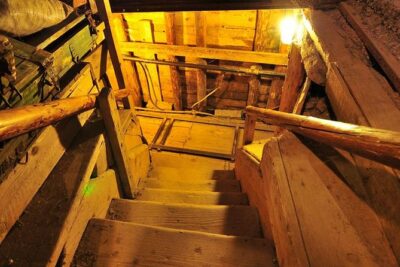
Fall of Yugoslavia, Sarajevo War Tour with Tunnel of Hope Museum and Frontlines
Read our review →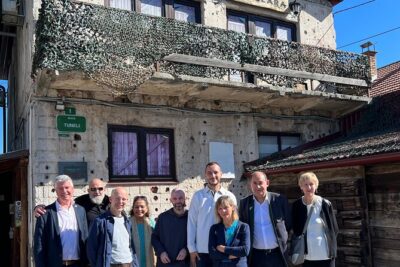
ROSES OF SARAJEVO (Official WAR + CITY tour)- Story of a Survivor
Read our review →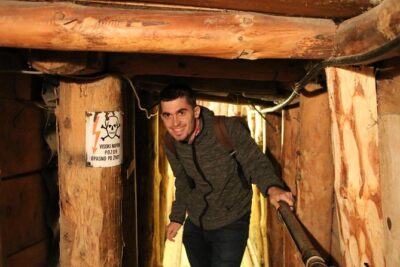
Tunnel Museum: Bosnian & Yugoslav Wars Tour with War Veteran
Read our review →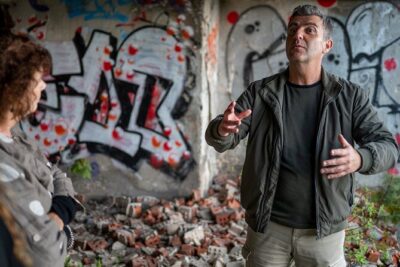
Sarajevo War Tour: A Veteran’s Story of the Siege (fees included)
Read our review →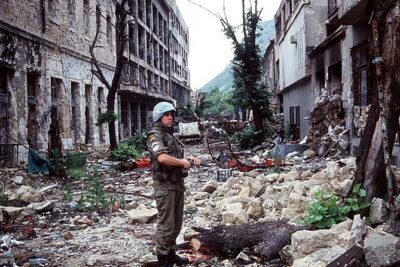
Break-up of Yugoslavia & The War in Mostar: Life Under Siege
Read our review →
Sarajevo to Srebrenica: Genocide Study Tour with War Veteran
Read our review →
Sarajevo Grand Tour: Old Town, War Tunnel, Olympic Sites & More
Read our review →
War Times Experience in Sarajevo – Half Day Tour
Read our review →Browse the lists this tour appears in