
REVIEW · SARAJEVO WAR HISTORY TOURS
Inside the Siege: Sarajevo’s Story of Survival
Sarajevo remembers in plain sight. I like the way this 2 to 3 hour tour connects the city’s wide views, damaged wartime sites, cemeteries, and personal stories instead of treating the siege as a list of dates. I also like the small maximum group of 16, which leaves room for questions and gives the guide space to explain difficult subjects properly.
The main consideration is the compact vehicle. A small group can mean a more personal outing, but one group of four found the car a little tight. You’ll also pay the €10 Tunnel of Hope entrance fee separately, in local currency, so the advertised price is not the full cost.
In This Review
- Five things to know before you go
- Why this Sarajevo war tour feels different
- Starting above the city at the Yellow Fortress
- Cemeteries and the cost paid by civilians
- Asim Ferhatovic Hase Stadium and a city changed by war
- Sniper Alley and the Presidency Building
- The Tunnel of Hope, Sarajevo’s secret lifeline
- The return drive and final view
- Is $54.22 a fair price?
- Who should book this experience?
- Should you book Inside the Siege?
- FAQ
- How long does the Sarajevo siege tour last?
- What time does the tour begin?
- Where does the tour meet?
- Where does the tour end?
- Is the Tunnel of Hope entrance fee included?
- Is the tour offered in English?
- How many people can join the tour?
- Can I cancel for a full refund?
Five things to know before you go
- The Yellow Fortress gives the clearest opening view: You can see Sarajevo and the former siege front lines from above.
- The Tunnel of Hope is the tour’s central stop: Allow about 50 minutes, with admission paid separately.
- The route links places to people: Cemeteries, children killed in the siege, Sniper Alley, and the Presidency Building all add human weight to the military story.
- The guide makes the difference: Adis Hamzic is praised for clear English, humor, balanced explanations, and local insight. His assistant has also offered a younger person’s view of the war.
- The tour covers a lot of Sarajevo: An air-conditioned vehicle makes it possible to reach sites that would take much longer on foot.
- It runs at 1:00 pm: The afternoon timing leaves your morning free for the old town or another walking tour.
Why this Sarajevo war tour feels different
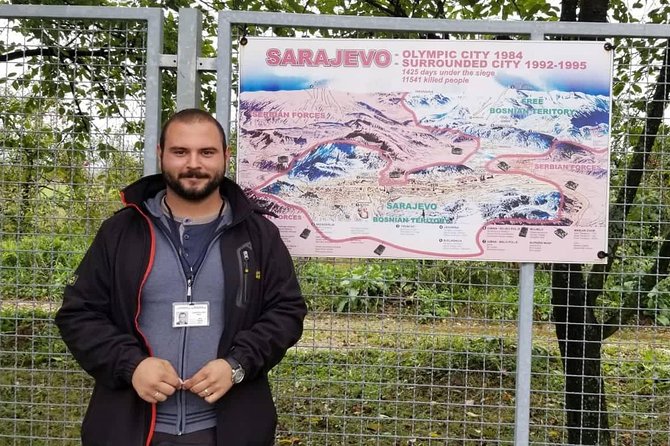
Sarajevo’s siege can be hard to understand from a museum label alone. The city is arranged in a valley, and the surrounding heights helped define the danger. From the Yellow Fortress, your guide can point out the city below and explain how the front lines shaped daily life.
That geography gives the tour a useful starting point. You are not only hearing about events from 1992 to 1996 in the abstract. You are looking across the city, seeing how hills, streets, public buildings, and residential areas fit together.
I especially like the human scale of the experience. The tour includes the resting places of people who fought to defend Sarajevo, sites linked with civilian massacres, and a memorial honoring the 1,601 children killed during the siege. These stops move the story away from military tactics and toward the cost paid by ordinary families.
The guide’s role matters here. Adis Hamzic is described as friendly, witty, and able to give a balanced account of Sarajevo’s past. His assistant has also led the route, offering a younger local perspective along with a strong grasp of the facts. Both are said to speak excellent English, which helps when the subject is complex and you want to ask direct questions.
This is not a light sightseeing loop with a few war references added for atmosphere. It is a serious afternoon, but the guides appear to keep it approachable. Humor is used carefully, not to make light of suffering, but to keep the conversation human.
Other tours covering the siege of Sarajevo:
- Fall of Yugoslavia, Sarajevo War Tour with Tunnel of Hope Museum and Frontlines
★ 5.0 · 1,314 reviews - ROSES OF SARAJEVO (Official WAR + CITY tour)- Story of a Survivor
★ 5.0 · 770 reviews - Tunnel Museum: Bosnian & Yugoslav Wars Tour with War Veteran
★ 5.0 · 551 reviews
Starting above the city at the Yellow Fortress
The tour begins at Mula Mustafe Bašeskije 65 at 1:00 pm. From the meeting point, you travel by air-conditioned vehicle toward the Yellow Fortress, where you spend about 15 minutes.
The stop is short, but the view does important work. You get a broad look at Sarajevo, including the city’s valley and the positions connected with the siege. A guide can use this high viewpoint to explain why some parts of Sarajevo were exposed and why movement through the city became so dangerous.
I would pay close attention here and ask questions. This is the point where the rest of the route begins to make sense. Once you understand the city’s shape, Sniper Alley, the cemeteries, and the Tunnel of Hope feel like connected parts of one story rather than scattered stops.
The Yellow Fortress itself is also a useful reminder that Sarajevo has a much longer past than the 1990s war. The tour does not appear to spend long on older history, though. The focus stays firmly on survival during the siege.
Cemeteries and the cost paid by civilians
Several short stops focus on people rather than buildings. You visit the resting place of those who fought to protect the city, along with a site linked to tragic civilian massacres during the siege.
These places can be quiet and emotionally heavy. The value of having a local guide is that you can hear the context behind them, including the way public memory is kept alive in Sarajevo. The stops are not simply photo opportunities. They show how the war remains part of the city’s everyday identity.
Another stop honors the 1,601 children killed during the siege. That figure is difficult to take in as a number. A memorial gives it a human face, even when no individual story is provided in the tour details.
You should expect moments when the pace slows. This is useful because the subject needs room to settle. If you prefer a fast route focused on architecture and views, this may feel intense. If you want to understand what the siege meant for residents, these stops are among the most important on the afternoon.
Asim Ferhatovic Hase Stadium and a city changed by war
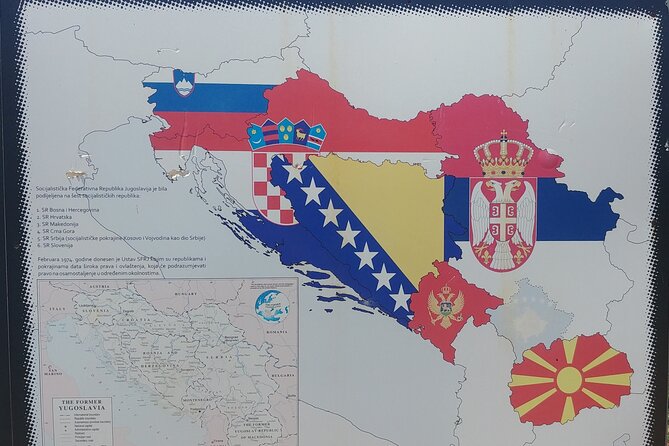
The Asim Ferhatovic Hase Stadium hosted the 1984 Winter Olympics. Ten minutes here shows the sharp contrast between Sarajevo as an Olympic city and Sarajevo during the war.
Parts of the stadium grounds were later used as a cemetery. That change gives the stop its force. A place associated with sport, international visitors, and celebration became part of the city’s wartime burial ground.
I find this kind of contrast more useful than a long lecture. It shows how quickly a familiar civic space can take on a new purpose. The guide can connect Sarajevo’s Olympic identity with the years of siege and then with the city you see today.
The short stop also keeps the overall tour moving. You are not spending most of the afternoon at one museum. Instead, the vehicle links several places, allowing you to compare different parts of Sarajevo and see how the war affected public spaces as well as homes and streets.
A few more options to weigh up in Sarajevo
- Sarajevo: Mostar, Konjic, Blagaj Tekke, Pocitelj & Waterfall
★ 4.9 · 1,335 reviews - Sarajevo: Mostar, Konjic, Sufi House, Pocitelj & Kravice Falls
★ 5.0 · 1,179 reviews - Sarajevo: Mostar, Konjic, Počitelj, Sufi House, & Waterfalls
★ 4.9 · 572 reviews - Sarajevo: 2 Hours Old Town Walking Tour With Local Guide
★ 5.0 · 505 reviews
Sniper Alley and the Presidency Building
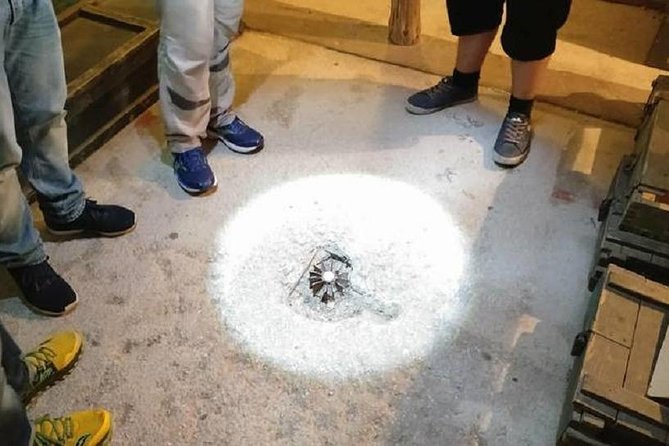
Sniper Alley was one of the most dangerous streets during the war. The name itself explains the fear attached to the route, but seeing the street in the wider setting of Sarajevo helps you understand why crossing it was so risky.
Your guide can explain the importance of the road and the sniper fire directed at people moving through the city. This is one of the places where a personal account can make a bigger difference than a standard description. Ask how residents managed basic errands, transport, or access between parts of Sarajevo if those subjects come up.
The Presidency Building provides a different angle. It was the political center during the war and remains an important historical site. After seeing the human cost at cemeteries and memorials, this stop brings attention back to the decisions and institutions at the center of the conflict.
Together, Sniper Alley and the Presidency Building broaden the tour. One shows the danger faced at street level. The other points to the political pressure surrounding the siege. You get a better sense of how civilian life and national decisions overlapped.
The Tunnel of Hope, Sarajevo’s secret lifeline
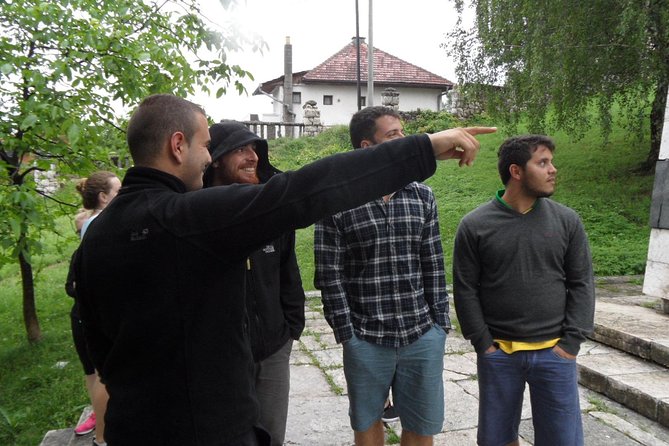
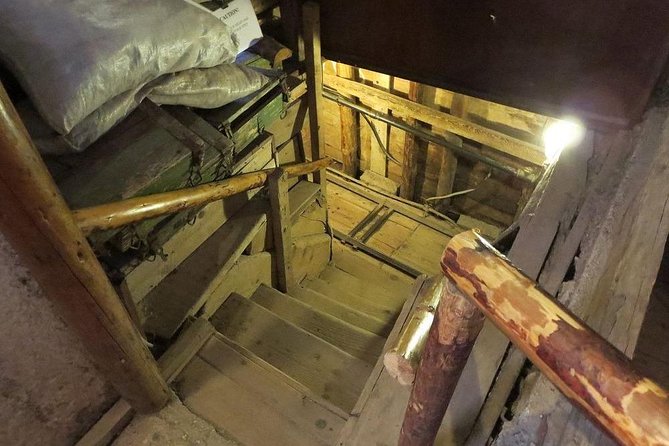
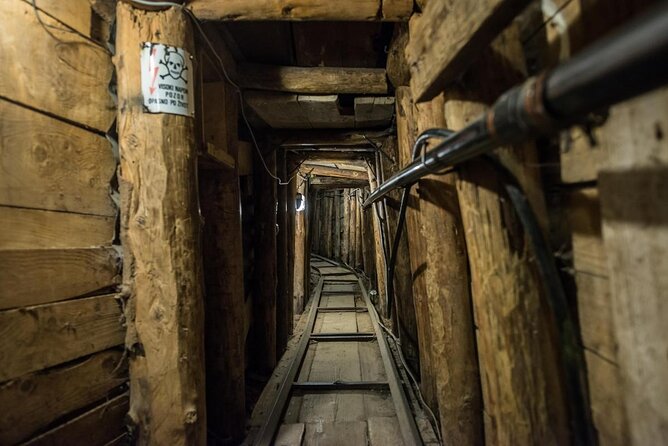
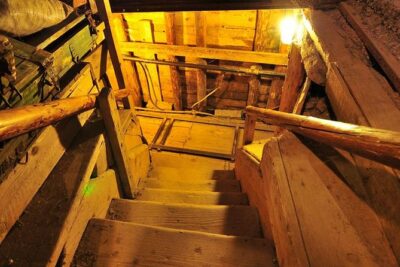
The Tunnel of Hope Museum is the longest stop, at about 50 minutes, and it is the part I would plan around. The tunnel served as Sarajevo’s secret lifeline, helping move supplies and support survival during the siege.
The tour includes transport to the museum, but the entrance fee is not included. You pay €10 per person separately on site, in local currency. Bring this extra cost into your budget, since it is the only major admission charge listed for the route.
The tunnel adds a physical dimension to the story. Views from the Yellow Fortress help you understand the city’s geography, while the museum shows how people responded to being cut off and under attack. The idea of a narrow underground route carrying supplies gives practical meaning to the word survival.
Fifty minutes is long enough to take in the museum without turning the whole experience into a rushed stop. It is also the point where the afternoon may feel most concentrated. The subject is difficult, and you may want a quiet moment afterward.
The entrance fee is reasonable when set against the total tour price, but the value depends on what you want. If you are mainly interested in city views, architecture, or a general introduction to Sarajevo, the additional museum charge may matter. If the siege is the reason you are booking, this is the stop that makes the tour worthwhile.
The return drive and final view
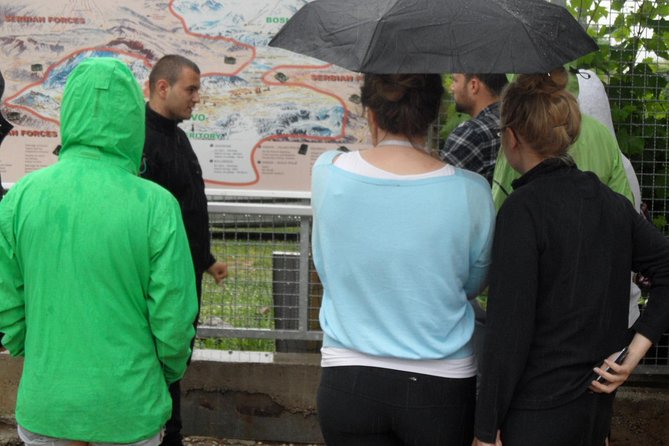
The route ends with a scenic drive back toward Sarajevo and a final panoramic view of the city. This gives you a little distance after the more painful stops and lets the afternoon close with the city as a living place, not only a site of wartime memory.
The return drive also helps you see more of Sarajevo without adding extra walking. That matters because the route covers several spread-out locations. You finish back at the original meeting point, rather than being left at the museum or another part of town.
Is $54.22 a fair price?
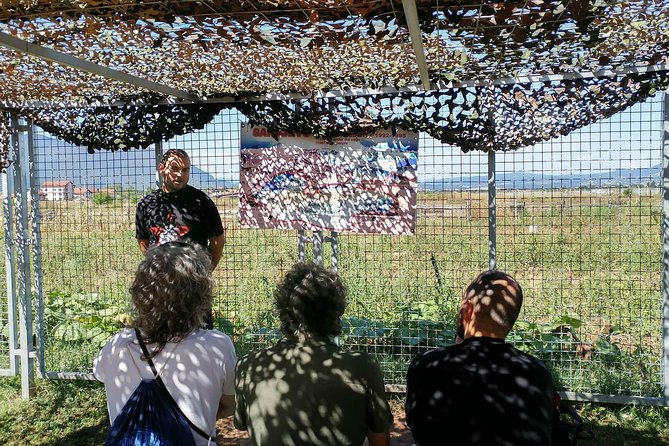
At $54.22 per person, this is not the cheapest way to see Sarajevo. It is, however, a reasonable price for a guided driving tour that lasts roughly three hours, includes an air-conditioned vehicle, and reaches sites that are not practical to connect on foot in one afternoon.
The strongest value comes from the guide. You are paying for explanation, local perspective, and the chance to ask questions as the route unfolds. The experience is also more efficient than arranging separate taxis or trying to piece together the sites yourself.
The group limit of 16 is helpful, though the actual group may be smaller. One outing had only four people and one guide, which allowed plenty of questions but made the car feel a little cramped. A small group can also make the emotional parts of the tour more comfortable, since the conversation is less formal and more personal.
Remember to add €10 for the Tunnel of Hope. Tips are optional but appreciated. Free cancellation is available if you cancel at least 24 hours before the 1:00 pm start. Changes or cancellations inside that window are not refunded, and the tour requires a minimum number of participants.
Who should book this experience?
I would recommend this tour to anyone who wants the Sarajevo siege explained by a local guide rather than encountered only through signs and maps. It suits first-time visitors who want a clear introduction, as well as people with a strong interest in the Bosnian War who want to ask detailed questions.
It is also a good choice if you have limited time. The afternoon route reaches viewpoints, memorials, the stadium, Sniper Alley, the Presidency Building, and the Tunnel of Hope in one outing.
Families with older children may find the route useful, but the subject includes massacres and the deaths of children. You should decide in advance how much detail is suitable for your group. Most people can participate, and service animals are allowed.
I would not choose it if you want a relaxed sightseeing trip with little discussion of war. The tone is respectful and sometimes friendly, but the subject remains serious throughout.
Should you book Inside the Siege?
Book it if you want Sarajevo’s wartime story tied to real streets, buildings, viewpoints, and people. The strongest reasons are the Yellow Fortress perspective, the Tunnel of Hope, and guides such as Adis Hamzic who can answer questions in clear English while keeping the discussion balanced.
Skip it if you have very little interest in recent history, dislike vehicle tours, or do not want to pay the separate museum fee. For most visitors who want to understand why Sarajevo looks and feels the way it does today, this is a thoughtful, well-organized afternoon at a fair price.
FAQ
How long does the Sarajevo siege tour last?
The experience lasts approximately 2 to 3 hours.
What time does the tour begin?
The tour starts at 1:00 pm.
Where does the tour meet?
You meet at Mula Mustafe Bašeskije 65, Sarajevo 71000, Bosnia and Herzegovina.
Where does the tour end?
The activity ends back at the original meeting point.
Is the Tunnel of Hope entrance fee included?
No. The museum entrance costs €10 per person and is paid separately on site in local currency.
Is the tour offered in English?
Yes. The experience is offered in English.
How many people can join the tour?
The maximum group size is 16 people.
Can I cancel for a full refund?
Yes. You can cancel at least 24 hours before the start time for a full refund. Cancellations or changes made less than 24 hours before the start time are not accepted for a refund.
Just added in Sarajevo
- Sarajevo Under Siege: A War History Tour★ 5.0 · 10 reviews
- Walking Tour in Sarajevo★ 5.0 · 3 reviews
- Private Full Day Safari Tour★ 5.0 · 8 reviews
- Bosnian Pyramid: The World’s Largest Pyramid (From Sarajevo)★ 5.0 · 1 review
- Ultimate adventure★ 5.0 · 2 reviews
- Mysterious Visoko Pyramids Driving and Walking Tour★ 5.0 · 7 reviews
- Travnik, Jajce, Pliva Lakes & Mills –Medieval & Ottoman Bosnia Full Day Tour★ 5.0 · 3 reviews
- Tour of Herzegovina – From Sarajevo★ 5.0 · 3 reviews
Sarajevo War History Tours, compared.
Fall of Yugoslavia, Sarajevo War Tour with Tunnel of Hope Museum and Frontlines
Read our review →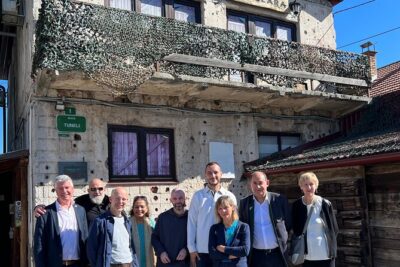
ROSES OF SARAJEVO (Official WAR + CITY tour)- Story of a Survivor
Read our review →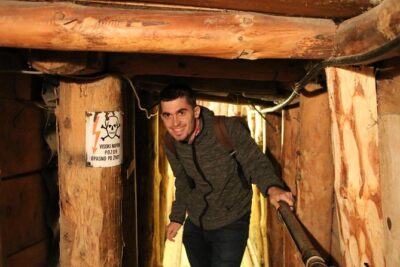
Tunnel Museum: Bosnian & Yugoslav Wars Tour with War Veteran
Read our review →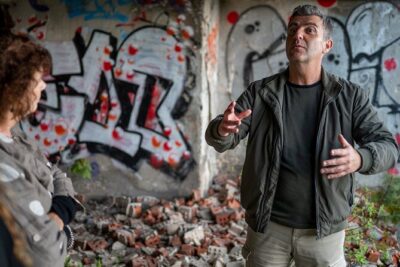
Sarajevo War Tour: A Veteran’s Story of the Siege (fees included)
Read our review →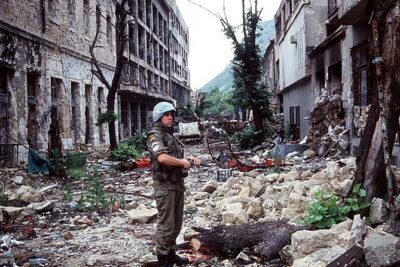
Break-up of Yugoslavia & The War in Mostar: Life Under Siege
Read our review →
Sarajevo to Srebrenica: Genocide Study Tour with War Veteran
Read our review →
Sarajevo Grand Tour: Old Town, War Tunnel, Olympic Sites & More
Read our review →Browse the lists this tour appears in