
REVIEW · SARAJEVO WAR HISTORY TOURS
Sarajevo War Tour with TRAVELPLUS
Sarajevo’s war story is still close at hand. This 3 to 4 hour tour links the Tunnel of Hope, Sniper Alley, Zmajevac, and the Olympic bobsled track, giving you both hard facts and sweeping views of the city. I like the small group size, limited to eight people, and the chance to hear personal memories from guides such as Haris and Aida.
I also like that the tour includes an air-conditioned vehicle, coffee or tea, and a return to the central meeting point. The main drawback is that the Tunnel museum entry fee is not included, and the emotional subject matter may feel heavy for some people.
In This Review
- Key points before you book
- Why this Sarajevo war tour matters
- Starting from central Sarajevo
- Sniper Alley and the view of Sarajevo
- Zmajevac, city views, and Bosnian coffee
- The Tunnel of Hope and Sarajevo’s lifeline
- Trebević’s abandoned Olympic bobsled track
- What the guide adds to the experience
- Is $46.25 a fair price?
- Who should take this tour?
- Booking, cancellation, and practical details
- Should you book the Travelplus Sarajevo War Tour?
- FAQ
- How long is the Sarajevo War Tour?
- Where does the tour begin?
- Where does the tour finish?
- What is the main historical site on the tour?
- Is entry to the Tunnel museum included?
- Is transportation included?
- Are coffee and tea included?
- How many people can join the tour?
- Is the tour available with a mobile ticket?
- Can I cancel for a full refund?
Key points before you book
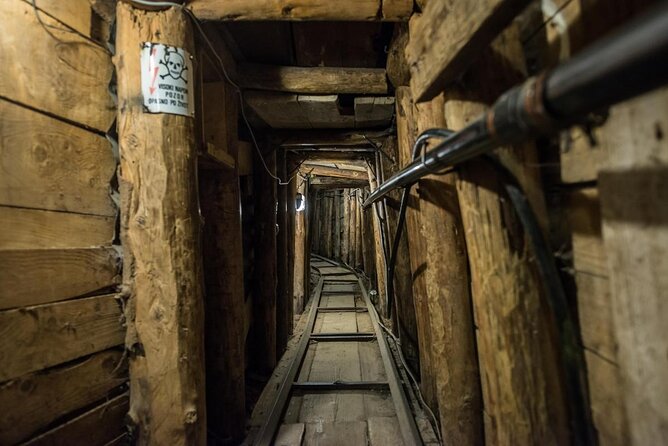
- The Tunnel of Hope is the central stop: You see part of the wartime passage that linked Dobrinja and Butmir during the Siege of Sarajevo.
- Personal stories add human weight: Guides Haris and Aida are praised for connecting historical facts with their own memories of the siege.
- The tour stays small: A maximum of eight people makes it easier to ask questions and follow the guide’s explanation.
- You see Sarajevo from several angles: Sniper Alley offers a panoramic look, while Zmajevac gives a higher city view with coffee or tea.
- The Olympic bobsled track has a wartime role: The abandoned 1984 venue was later used as an artillery position during the siege.
- The price covers transport, not everything: At $46.25 per person, you get the vehicle and refreshments, but you pay separately for museum admission.
Why this Sarajevo war tour matters
Sarajevo is easy to enjoy as a beautiful city of cafés, hills, markets, and Ottoman and Austro-Hungarian buildings. But its recent past is never far away. The 1992 to 1995 siege shaped the city and its people, and several places on this tour show how ordinary life continued under extreme pressure.
I think the strength of this experience is its mix of places. You are not sitting in one museum for several hours. Instead, you move through the city and surrounding hills, seeing locations tied to military danger, survival, international politics, and the 1984 Winter Olympics.
The most valuable part is likely to be the guide’s explanation. Haris is repeatedly praised for his personal memories, friendly manner, and ability to answer questions. Aida also receives warm praise, and some departures may involve both guides. That matters here because the subject is not simply a sequence of dates. It is about how people got food, moved through danger, found shelter, and tried to preserve normal life.
You should still treat the tour as an introduction rather than a full study of the Bosnian War. In three or four hours, you can see important places and understand the basic story, but you will not cover every political or military detail.
Other tours covering the siege of Sarajevo:
- Fall of Yugoslavia, Sarajevo War Tour with Tunnel of Hope Museum and Frontlines
★ 5.0 · 1,314 reviews - ROSES OF SARAJEVO (Official WAR + CITY tour)- Story of a Survivor
★ 5.0 · 770 reviews - Tunnel Museum: Bosnian & Yugoslav Wars Tour with War Veteran
★ 5.0 · 551 reviews
Starting from central Sarajevo
The tour begins at Hostel Vagabond Sarajevo on Ferhadija Street, a central location in Sarajevo. It ends at the same meeting point, which makes the outing fairly easy to fit into a short city stay.
Transport is provided in an air-conditioned vehicle. This is useful because the itinerary includes several points around the city and on Trebević mountain. You do not need to organize separate taxis or work out the route yourself.
The group can have up to eight people. That is a practical size for a history-focused outing. You get the ease of a shared tour without the distance that often comes with a large coach. If you want to ask about a particular building, road, or wartime event, a small group should make that more comfortable.
The duration is listed as approximately three to four hours. Allow some flexibility, since time at each stop and traffic can affect the pace. Confirmation is sent within 48 hours of booking, subject to availability.
Sniper Alley and the view of Sarajevo
The first listed stop is Sniper Alley, where you get a panoramic view and spend about 15 minutes. The stop is brief, but the location gives context to the city’s wartime geography.
The name Sniper Alley refers to roads in Sarajevo exposed to fire from surrounding positions during the siege. From a viewing point, your guide can help you connect the city below with the hills around it. That physical relationship is important. Sarajevo’s beauty comes partly from its valley setting, but during the war, the surrounding heights also made movement through the city dangerous.
Do not expect a large museum stop here. The listed time is only 15 minutes, so this is mainly a visual and explanatory pause. Its value depends on the guide’s ability to point out relevant areas and explain what daily movement meant during the siege.
I like this early stop because it gives you a quick frame for everything that follows. After seeing the city from above, the Tunnel of Hope becomes easier to understand. Sarajevo was not simply surrounded in an abstract sense. Its roads, neighborhoods, and routes out of the city were part of a very real system of danger.
Zmajevac, city views, and Bosnian coffee
At Zmajevac, you spend about an hour enjoying a broad view over Sarajevo. This is also where coffee or tea is included, and the guide uses the pause to talk about Bosnian coffee.
The stop adds a welcome change of pace. A war tour can become emotionally intense, so time to sit, look over the city, and talk gives the experience some breathing room. The view also helps you understand Sarajevo as a whole rather than as a set of separate memorial sites.
The coffee is a small inclusion, but a useful one. It creates a relaxed setting for questions, and the guide’s comments about Bosnian coffee add a local touch without turning the tour into a standard food outing.
You should not book this tour mainly for the beverage or the viewpoint. The central purpose is Sarajevo’s recent history. Still, Zmajevac helps balance the itinerary and makes the experience feel more like a guided look at the city than a series of grim locations.
The exact order of stops may vary. The supplied itinerary lists Sniper Alley first, followed by Zmajevac, the Olympic track, and the Tunnel of Hope as the key focus. Your guide may adjust the sequence according to traffic, timing, or local conditions.
A few more options to weigh up in Sarajevo
- Sarajevo: Mostar, Konjic, Blagaj Tekke, Pocitelj & Waterfall
★ 4.9 · 1,335 reviews - Sarajevo: Mostar, Konjic, Sufi House, Pocitelj & Kravice Falls
★ 5.0 · 1,179 reviews - Sarajevo: Mostar, Konjic, Počitelj, Sufi House, & Waterfalls
★ 4.9 · 572 reviews - Sarajevo: 2 Hours Old Town Walking Tour With Local Guide
★ 5.0 · 505 reviews
The Tunnel of Hope and Sarajevo’s lifeline
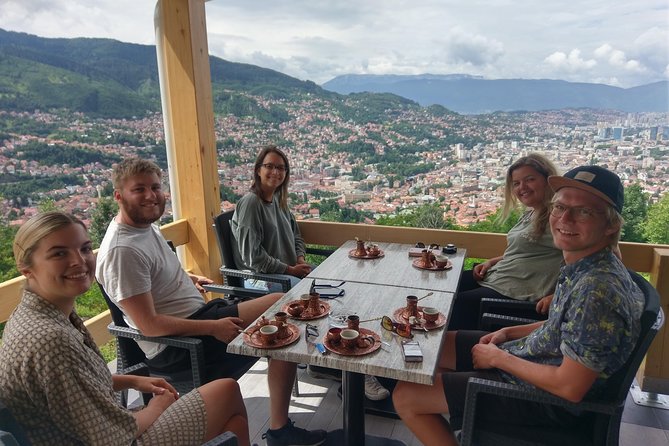
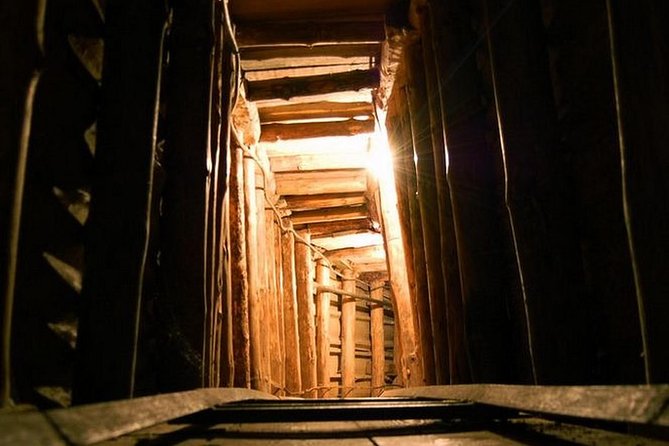
The Tunnel of Hope is the most important stop on the tour. It was built between March and June 1993, during the Siege of Sarajevo, by the Bosnian Army. The tunnel connected Dobrinja and Butmir under the Sarajevo Airport area.
Sarajevo had been cut off by Serbian forces, while the airport zone was under United Nations control. The tunnel created a narrow link between the besieged city and Bosnian-held territory beyond the airport. Food, war supplies, humanitarian aid, and people moved through it.
The tunnel also helped Sarajevo’s defenders receive weapons despite the international arms embargo. That detail shows why this was more than a civilian escape route. It was a supply line, a humanitarian passage, and a vital connection to the outside world.
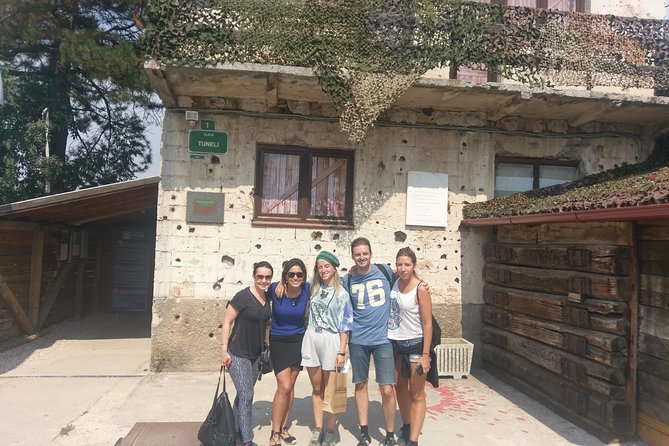
Only part of the original tunnel is open to the public through the Tunnel museum. You should expect a modest and serious museum setting rather than a polished, large-scale attraction. The physical space is what makes it powerful. A narrow passage communicates the difficulty of moving people and supplies better than a long explanation alone.
The museum admission is not included in the $46.25 tour price. Check the current entry cost when booking or before departure, since the supplied tour details do not state the amount. This extra fee is worth keeping in mind when comparing the total cost.
The guide’s role here is especially important. Haris is praised for explaining how the tunnel came to be, how it was used, and what life was like during the siege. His personal connection gives the stop an added human dimension, but you should also remember that personal accounts reflect one person’s experience. A good question to ask is how a specific story fits into the wider events of the siege.
Plan to listen rather than rush through the museum. This is not a place for casual sightseeing. The tunnel is physically small, and the subject matter is serious. Visitors who want to understand how Sarajevo survived should give this stop their full attention.
Trebević’s abandoned Olympic bobsled track
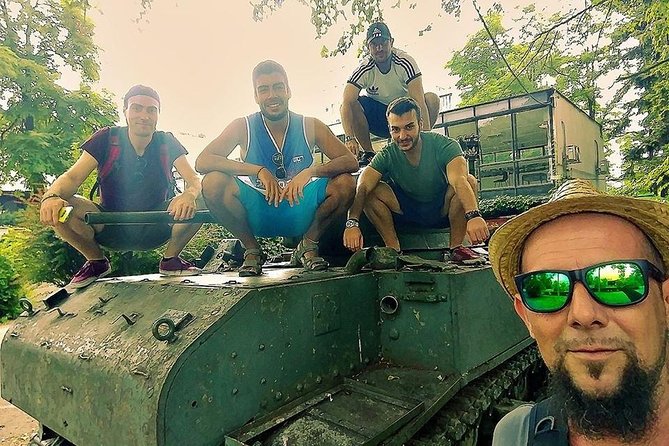
The Sarajevo Olympic Bobsleigh and Luge Track on Trebević mountain brings a different layer to the day. It was built for the 1984 Winter Olympic Games, when Sarajevo was presenting itself to the world as an international sporting city.
During the Siege of Sarajevo, the abandoned track was used as an artillery position. That change in purpose is striking. A venue created for speed, sport, and international celebration became part of a military setting only a few years later.
You spend about an hour at the site, and admission is listed as free. The track is not presented as a restored Olympic attraction. It is an abandoned structure with a wartime connection, so expect a rougher, more atmospheric stop rather than a conventional museum visit.
The site also helps you see how war affected the city beyond homes and roads. Sarajevo’s public spaces, sporting facilities, and mountain areas were pulled into the conflict. The bobsled track is a clear example of a place that carried two very different meanings in a short span of time.
The main limitation is that the supplied details do not describe the condition of the path or the exact walking surface. Wear practical shoes and be ready for an outdoor stop. That is sensible advice for any visit to an abandoned structure, though the tour data does not promise a specific accessibility standard.
What the guide adds to the experience
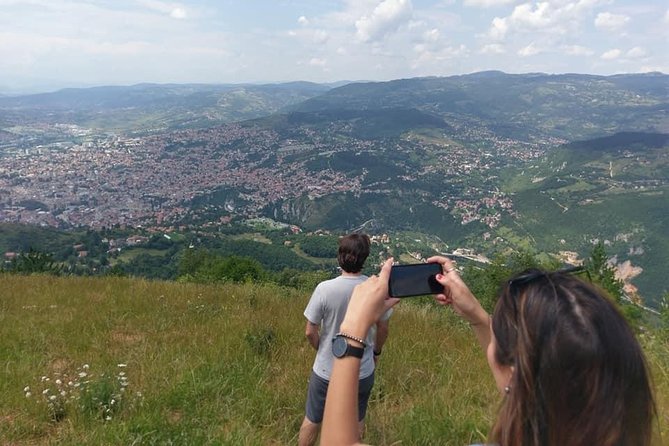
The strongest praise for this tour centers on Haris and Aida. Haris is described as friendly, well informed, and willing to share his own memories of Sarajevo during the war. Aida is also praised for helping lead a moving and thoughtful outing.
That personal connection can make a major difference. A guide who only recites dates may leave you with facts but little sense of daily life. Here, the emphasis is on stories about the Tunnel of Hope, Sniper Alley, the siege, and how people coped during those dark years.
I would still encourage you to listen critically and respectfully. The Bosnian War remains a painful and politically sensitive subject. Personal stories are valuable, but they work best alongside clear explanations of the broader context.
The tone appears to be warm rather than stiff. The feedback describes the guides as friendly, kind, and able to create a pleasant atmosphere within a serious tour. That balance is useful. You can ask questions without feeling you are attending a formal lecture, yet the sites are treated with appropriate respect.
The experience may also work well for solo visitors. The group size is small, and the shared vehicle and coffee stop create natural chances to talk with other people. The tour does not promise a private departure, so if you want complete control over the pace, a private arrangement would be a different type of experience.
Is $46.25 a fair price?
At $46.25 per person, the tour offers reasonable value if you want transport and a guide to connect several outlying sites. The air-conditioned vehicle matters because the route includes Trebević mountain and areas beyond the central pedestrian streets.
You also receive coffee or tea, hotel-style pickup at the stated meeting point, and a return there. The group limit of eight is another value point. A smaller shared group generally gives you more access to the guide than a large coach tour.
The museum ticket is extra. That does not make the tour poor value, but you should add the admission cost to your budget. The tour is most worthwhile for people who would otherwise need to arrange taxis, research the sites themselves, and find enough historical background to understand what they are seeing.
If you already know Sarajevo’s wartime history well and only want to visit the Tunnel museum, you may not need the full tour. If you want the city views, Olympic site, transport, and personal storytelling together, the price is easier to justify.
Who should take this tour?
I would recommend it to you if you want a focused introduction to Sarajevo’s recent past in half a day. It suits first-time visitors who want more than a general city walk, as well as people with a strong interest in the Bosnian War and the Siege of Sarajevo.
It is also a good choice if you value first-person accounts. Haris’s own memories are a central part of the experience, and that direct connection is one reason the tour has made such a strong impression.
You may want to skip it if you are looking only for cheerful sightseeing, shopping, or food. The views and coffee lighten the pace, but the heart of the outing is war, loss, survival, and the choices people made under siege.
The tour is suitable for most people according to the supplied information, and it is near public transportation. Still, the Tunnel and abandoned bobsled site may not suit everyone physically, since detailed accessibility information is not provided.
Booking, cancellation, and practical details
The tour uses a mobile ticket, so you can keep the booking on your phone. The meeting point is Hostel Vagabond Sarajevo, Ferhadija 21, Sarajevo 71000, and the activity returns there.
Confirmation arrives within 48 hours, subject to availability. The tour requires a minimum number of participants, so if that number is not reached, you are offered another date or experience, or a full refund.
Free cancellation is available up to 24 hours before the start time. Cancellations or changes made less than 24 hours before departure are not accepted for a refund, and the cut-off follows local Sarajevo time.
Because the subject is serious, I suggest leaving space in your day afterward. You may want time to process what you have seen rather than rushing straight into another appointment.
Should you book the Travelplus Sarajevo War Tour?
Book it if you want the Tunnel of Hope explained in context, not simply checked off a sightseeing list. The combination of the tunnel, Sniper Alley, Zmajevac, and the Olympic bobsled track gives you a clear picture of how Sarajevo’s geography and public spaces shaped life during the siege.
The best reason to choose this tour is the guide. Haris and Aida bring warmth, personal memory, and a human scale to difficult history. At $46.25, the small group and included transport make it a fair choice, though you should budget separately for the Tunnel museum entry.
I would not call it a light city excursion. I would call it an important one. If Sarajevo’s recent history matters to you, this is a thoughtful way to spend three to four hours.
FAQ
How long is the Sarajevo War Tour?
The tour lasts approximately 3 to 4 hours.
Where does the tour begin?
It begins at Hostel Vagabond Sarajevo, Ferhadija 21, Sarajevo 71000, Bosnia and Herzegovina.
Where does the tour finish?
The activity ends back at the meeting point.
What is the main historical site on the tour?
The main site is the Tunnel of Hope Museum, connected to the underground tunnel built during the Siege of Sarajevo.
Is entry to the Tunnel museum included?
No. The Tunnel museum entry ticket is not included in the tour price.
Is transportation included?
Yes. An air-conditioned vehicle is included.
Are coffee and tea included?
Yes. Coffee and/or tea are included, with the Zmajevac stop providing time for a city view and a drink.
How many people can join the tour?
The tour has a maximum of eight travelers.
Is the tour available with a mobile ticket?
Yes. The experience offers a mobile ticket.
Can I cancel for a full refund?
Yes, if you cancel at least 24 hours before the experience start time. Cancellations made less than 24 hours before the start time are not refunded.
Just added in Sarajevo
- Sarajevo Under Siege: A War History Tour★ 5.0 · 10 reviews
- Walking Tour in Sarajevo★ 5.0 · 3 reviews
- Private Full Day Safari Tour★ 5.0 · 8 reviews
- Bosnian Pyramid: The World’s Largest Pyramid (From Sarajevo)★ 5.0 · 1 review
- Ultimate adventure★ 5.0 · 2 reviews
- Mysterious Visoko Pyramids Driving and Walking Tour★ 5.0 · 7 reviews
- Travnik, Jajce, Pliva Lakes & Mills –Medieval & Ottoman Bosnia Full Day Tour★ 5.0 · 3 reviews
- Sarajevo to/from Zagreb Transfer Day Tour (North-central Bosnia)★ 5.0 · 4 reviews
Sarajevo War History Tours, compared.
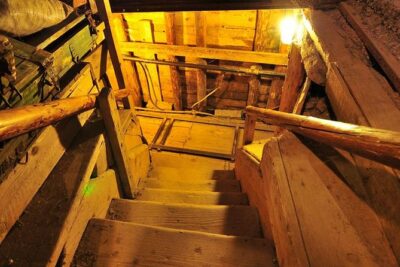
Fall of Yugoslavia, Sarajevo War Tour with Tunnel of Hope Museum and Frontlines
Read our review →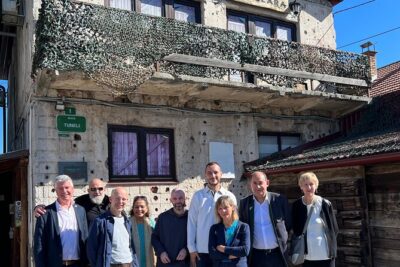
ROSES OF SARAJEVO (Official WAR + CITY tour)- Story of a Survivor
Read our review →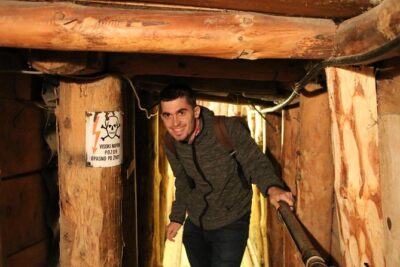
Tunnel Museum: Bosnian & Yugoslav Wars Tour with War Veteran
Read our review →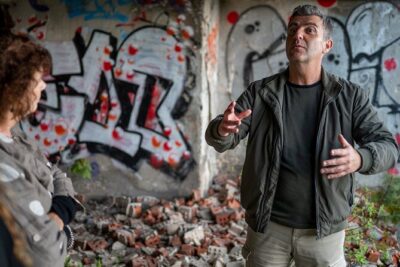
Sarajevo War Tour: A Veteran’s Story of the Siege (fees included)
Read our review →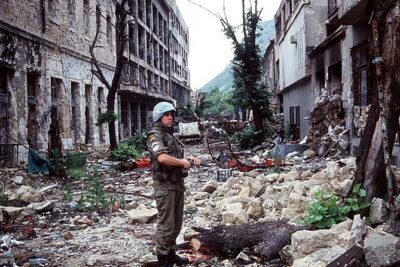
Break-up of Yugoslavia & The War in Mostar: Life Under Siege
Read our review →
Sarajevo to Srebrenica: Genocide Study Tour with War Veteran
Read our review →
Sarajevo Grand Tour: Old Town, War Tunnel, Olympic Sites & More
Read our review →Browse the lists this tour appears in