
REVIEW · SARAJEVO WAR HISTORY TOURS
The Siege of Sarajevo Tour
Sarajevo remembers everything. This private four-hour tour connects the city’s wartime sites with the Tunnel of Hope, Olympic grounds, cemeteries, and streets that civilians once crossed under sniper fire. I like the personal focus, since your guide shares stories about the Bosnian War, and I like the private vehicle, which keeps the pace flexible. The main drawback is that the War Tunnel museum ticket costs extra.
I also appreciate the range of stops. You see shell-damaged places, former front lines, memorials, and wide views from Trebević and the Yellow Fortress, rather than spending four hours in one museum. The subject is painful, so this is not a light sightseeing outing, but the careful route gives you a clearer sense of how the siege shaped daily life in Sarajevo.
In This Review
- Key points to know before booking
- Sarajevo’s wartime story, told across the city
- Sarajevo City Hall and the first signs of destruction
- Markale, the postwar monument, and the Presidency
- The boulevard known as Sniper Alley
- Asim Ferhatovic Hase Stadium and Sarajevo’s Olympic past
- The Tunnel of Hope, Sarajevo’s lifeline
- Trebević and the abandoned bobsleigh track
- The Jewish Cemetery, once a front line
- The Yellow Fortress and Kovači Cemetery
- What the private format adds
- Who should book the Siege of Sarajevo Tour?
- Should you book it?
- FAQ
- How long does the Siege of Sarajevo Tour last?
- Is the tour private?
- Where does the tour start?
- Does the tour offer hotel pickup?
- Is transportation included?
- Is the Tunnel of Hope admission included?
- What sites are visited?
- Can I cancel for a full refund?
Key points to know before booking
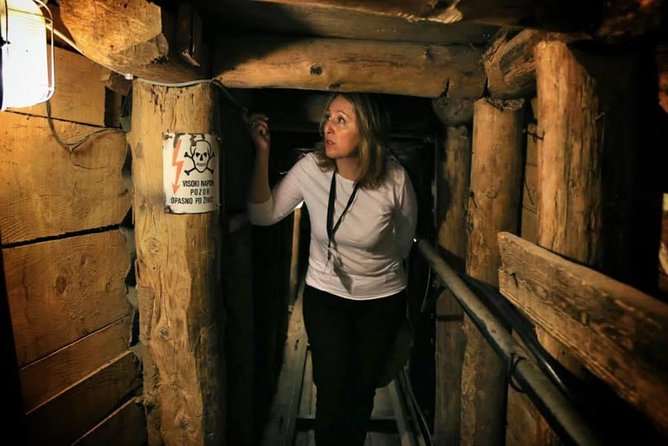
- The Tunnel of Hope is the tour’s central stop: You watch a short film, walk through part of the tunnel, and see the house that concealed its entrance.
- You visit former danger zones: The main boulevard, Jewish Cemetery, Trebević, and the city fortifications all show how the siege affected ordinary movement.
- The Olympic connection adds useful context: Asim Ferhatovic Hase Stadium and the bobsleigh track reveal Sarajevo before and during the war.
- The private format matters: Only your group participates, with a licensed guide and driver in an air-conditioned vehicle.
- The best city views come late: Trebević and the Yellow Fortress give you two different perspectives over Sarajevo.
- Budget for the museum admission: The War Tunnel ticket is not included in the $34.91 price.
Sarajevo’s wartime story, told across the city
The Siege of Sarajevo Tour is a compact history lesson on wheels. Over about four hours, you move from central streets to Olympic sites, a former front line, a wartime tunnel, and hilltop viewpoints.
I think the route works because it does not treat the siege as a single museum subject. You see where people gathered, where shells struck, how snipers used high ground, and how the city’s position made escape and supply so difficult. The guide’s personal stories add a human scale that a display case cannot provide.
This is a private tour, so your own group travels together. That is useful for a difficult subject. You can ask questions without worrying about holding up a large bus, and your guide can spend more time on the places that interest you most. The included air-conditioned vehicle also saves you from arranging separate taxis between the old center, the tunnel, Trebević, and the eastern viewpoints.
The advertised price is $34.91 per person. For a private half-day outing with hotel pickup, transport, a licensed guide and driver, and bottled water, that is a reasonable price, especially if you are traveling with several people. The value depends partly on your group size. A solo visitor pays the same listed per-person rate, while a family or small group gets more from the private setup.
Other tours covering the siege of Sarajevo:
- Fall of Yugoslavia, Sarajevo War Tour with Tunnel of Hope Museum and Frontlines
★ 5.0 · 1,314 reviews - ROSES OF SARAJEVO (Official WAR + CITY tour)- Story of a Survivor
★ 5.0 · 770 reviews - Tunnel Museum: Bosnian & Yugoslav Wars Tour with War Veteran
★ 5.0 · 551 reviews
Sarajevo City Hall and the first signs of destruction
The tour begins at Sarajevo City Hall, also known as Vijećnica, near Brodac 1. The building has been rebuilt, but its wartime story is not erased by the fresh exterior.
It was first shelled and then burned during the Siege of Sarajevo. That detail gives the opening stop real weight. City Hall is not simply a grand building to photograph. It represents the destruction of Sarajevo’s civic and cultural life, and the effort to restore what the war damaged.
Starting here also places you near the historic center before the vehicle heads farther out. If you arrange hotel pickup, confirm the exact starting plan in advance, since the listed meeting point is City Hall and hotel pickup is offered as an option.
Markale, the postwar monument, and the Presidency
The next central sights help fill in the city’s public story. You see the Markale green market, a place associated with civilian life during the siege, along with a monument built after the Second World War and the Presidency building.
Markale is especially important because a market is an ordinary place. It is where people went for food and daily supplies, not a military site. On a tour focused on war, this kind of stop reminds you that the danger reached into routine errands and crowded public spaces.
The postwar monument and Presidency building add political context, though the supplied itinerary does not identify the monument by name. Your guide is the right person to explain its specific meaning and connection to the city’s wider twentieth-century story.
These central stops are brief, so do not expect long museum visits at each one. Their value comes from seeing them in sequence, with a guide connecting the places rather than treating them as unrelated photo stops.
The boulevard known as Sniper Alley
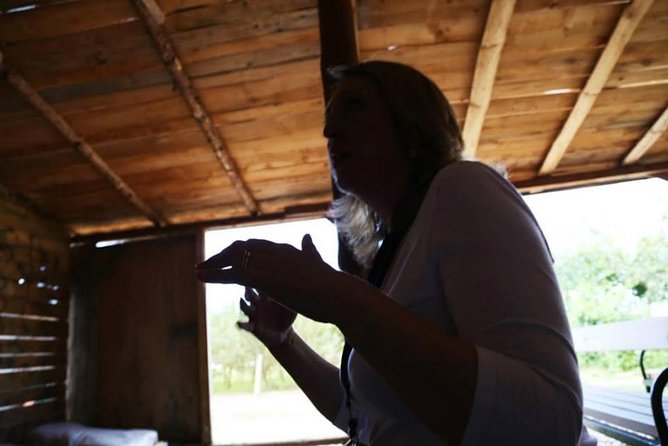
One of the most sobering parts of the central route is Sarajevo’s main boulevard. During the siege, sniper posts lined the surrounding heights, and the street became infamous as a dangerous route for civilians.
From a vehicle, the boulevard may look like a normal city thoroughfare. That contrast is the point. You are seeing an everyday road while learning how exposed it was during the war. The guide can help you understand why crossing it was so frightening and why movement through the city demanded such care.
This stop is strongest when you pay attention to the relationship between the road and the hills around Sarajevo. The tour later takes you to higher ground, where that relationship becomes easier to see. The sequence gives the sniper story a physical setting instead of leaving it as an abstract phrase.
A few more options to weigh up in Sarajevo
- Sarajevo: Mostar, Konjic, Blagaj Tekke, Pocitelj & Waterfall
★ 4.9 · 1,335 reviews - Sarajevo: Mostar, Konjic, Sufi House, Pocitelj & Kravice Falls
★ 5.0 · 1,179 reviews - Sarajevo: Mostar, Konjic, Počitelj, Sufi House, & Waterfalls
★ 4.9 · 572 reviews - Sarajevo: 2 Hours Old Town Walking Tour With Local Guide
★ 5.0 · 505 reviews
Asim Ferhatovic Hase Stadium and Sarajevo’s Olympic past
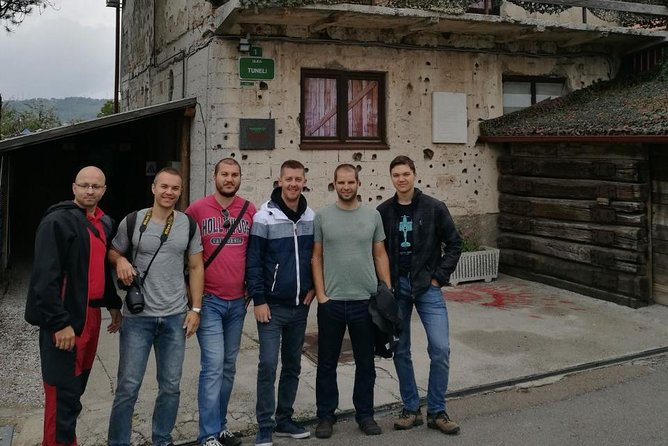
The tour then reaches Asim Ferhatovic Hase Stadium, the Olympic stadium. You spend about 10 minutes here, and admission is free.
Sarajevo hosted the Winter Olympic Games before the war, so the stadium helps establish a sharp before-and-after picture. The city was once presenting itself to the world as an international sports center. Soon afterward, many familiar sites were tied to shelling, military positions, displacement, and survival.
Because the stop is short, think of it as a visual marker rather than a full Olympic visit. You are not given a long stadium program in the supplied details. Still, it earns its place on the route because the Olympic story is central to understanding how dramatically Sarajevo’s public image and daily reality changed.
The Tunnel of Hope, Sarajevo’s lifeline
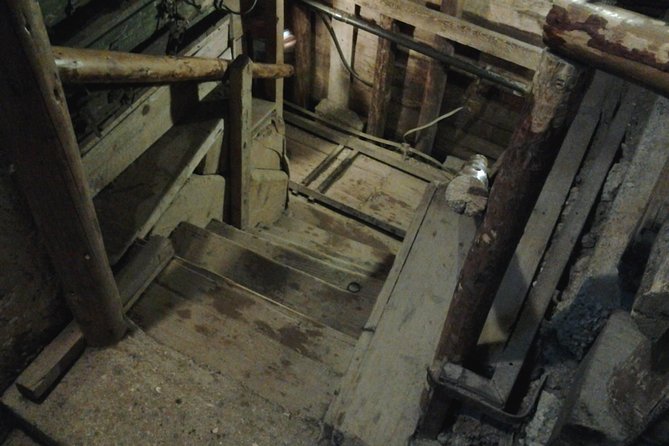
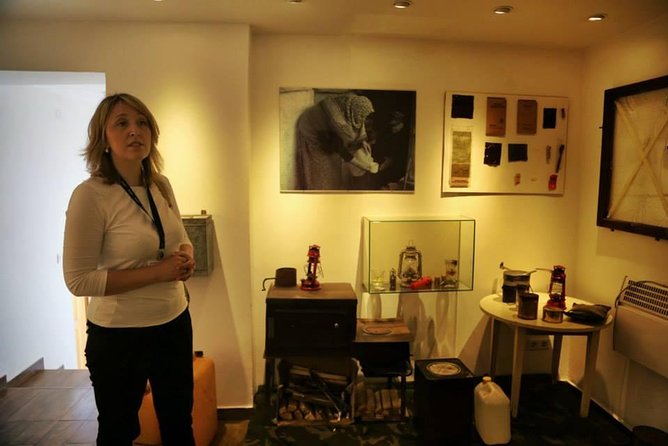
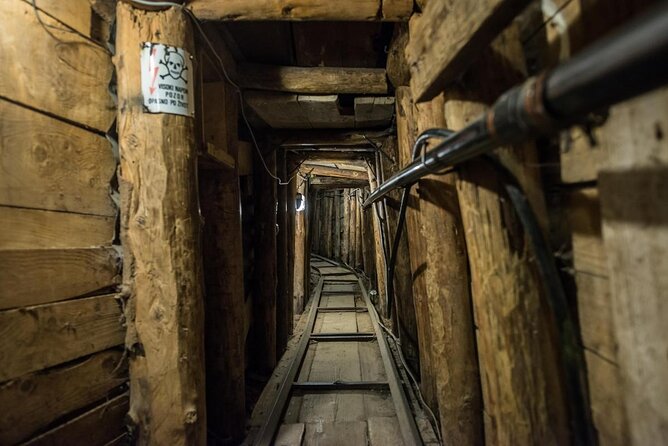
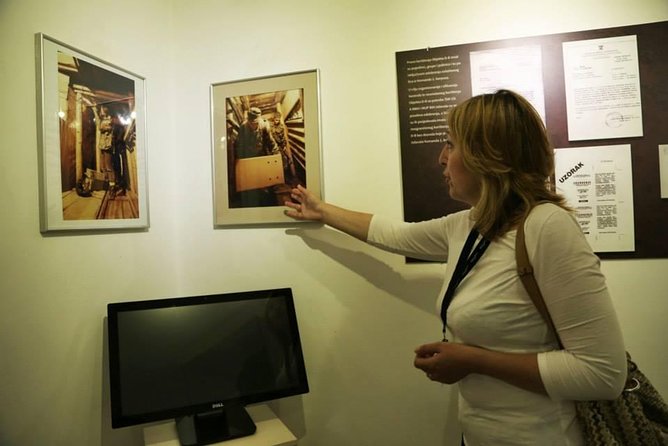
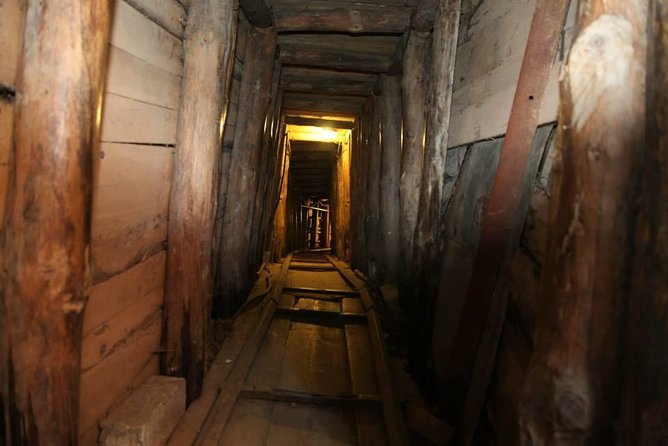
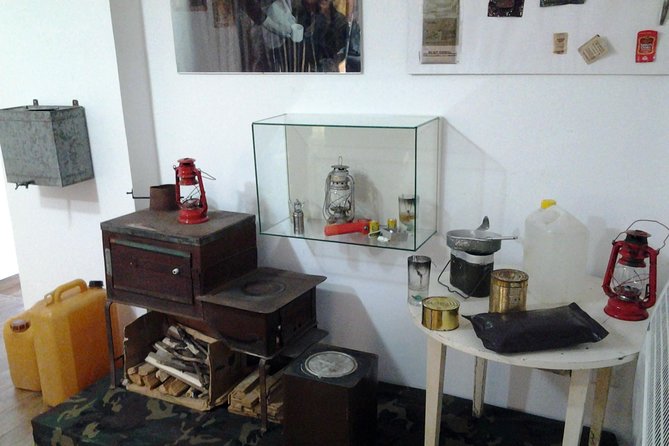
The Sarajevo War Tunnel is the emotional center of the tour. You spend about an hour here, including a short film about the siege, a brief walk through the tunnel, a guided look at the grounds, and a visit to the house where the tunnel was hidden.
The passage allowed food, supplies, and aid to move into the besieged city. That simple purpose explains its importance better than a list of dates can. With roads and open routes under threat, this narrow connection helped maintain movement and basic support.
You should set realistic expectations. Only a brief section of the tunnel is open for walking, not the entire original passage. Even so, the confined space makes the engineering and hardship easier to grasp. The house museum adds another layer because the tunnel entrance was concealed there, blending a civilian home with a major wartime operation.
A short film comes before the walk. That is useful preparation, since it gives you the basic setting and shows the siege before you enter the passage. The guided grounds visit then links the film to the actual site.
The museum ticket is not included. This is the clearest extra cost on the tour, so ask about the current admission price when booking or before departure. The rest of the listed stops have free admission, which makes the separate tunnel charge easy to plan for.
Trebević and the abandoned bobsleigh track
After the tunnel, the vehicle climbs Trebević, the Olympic mountain above Sarajevo. The tour includes about 30 minutes at the Sarajevo Olympic Bobsleigh and Luge Track, with time to walk along the abandoned course.
The track has two identities. It was built for the Winter Olympics, then became part of the front line during the siege. Its weathered concrete and overgrown surroundings give you a strong sense of how war can interrupt a place designed for sport and celebration.
You also get one of the tour’s best panoramic views of Sarajevo from Trebević. This makes the stop useful beyond its visual appeal. Looking down over the city helps you see its bowl-like setting and the surrounding heights that played such an important military role.
The track is an outdoor stop, and the walking surface may not suit everyone. The provided details say most people can participate, but they do not specify the condition of every section or the amount of walking. Wear practical shoes and ask your guide about the exact route if mobility is a concern.
The Jewish Cemetery, once a front line
The Jewish Cemetery Sarajevo offers one of the tour’s most serious pauses. You spend about 20 minutes there, learning how the cemetery’s elevated position was used as a front line during the siege.
The Bosnian Serb Army used the strategic viewpoint for sniper fire directed toward civilians in the city. The cemetery’s tombstones and distinctive monuments were also damaged by shelling and shooting over the nearly three-year siege.
This stop is valuable because it joins cultural memory with military geography. The cemetery is not presented only as a religious or historic site. Its position above the city made it part of the conflict, and the visible damage shows how fighting affected places that had nothing to do with military operations.
Twenty minutes is enough for an introduction, but not a long examination of every monument. Keep your expectations focused. You are coming for the setting, the wartime explanation, and the chance to see how the cemetery fit into the siege’s front lines.
The Yellow Fortress and Kovači Cemetery
The final listed stop is the Yellow Fortress, one of the fortifications that formed part of the defensive wall around Sarajevo. You spend about 20 minutes here, with a broad view over the city.
The viewpoint offers a quieter ending after the tunnel, boulevard, and cemetery. From the fortress, you can also see Kovači Cemetery, where Sarajevo’s defenders from the siege are buried, along with the grave of the first president of independent Bosnia and Herzegovina.
That view brings together several themes from the day: the old city’s defenses, the hills around Sarajevo, the positions used during the war, and the people who defended the city. It is also a good place to ask your final questions, since the geography is spread out below you.
The Yellow Fortress is popular because of its outlook, but this tour gives you a reason to look beyond the photograph. Your guide can connect the visible cemetery and city streets to the events discussed earlier.
What the private format adds
A private tour changes the experience more than the word private may suggest. You are not simply sharing a minibus with strangers while following a fixed speech. Only your group participates, and the guide also serves as driver.
That arrangement is useful for a subject that may raise personal or political questions. You can ask for clarification, pause over a site, or keep moving if the subject becomes too heavy. The tour still has an outlined route, but it is easier to have a conversation than on a large group excursion.
Hotel pickup is offered, and the tour ends back at the meeting point at Sarajevo City Hall. Since both a preset meeting point and pickup are described, confirm which option applies to you. Bottled water and an air-conditioned vehicle are included, small details that matter during a four-hour drive between central and hillside sites.
One past booking gives a useful clue about the guiding style. Danijela was praised for arriving on time at the hotel and for making the four hours pass quickly despite the difficult subject. If Danijela is assigned to your group, you can expect a personal approach based on that feedback, though guide assignment should be confirmed rather than assumed.
Who should book the Siege of Sarajevo Tour?
I recommend this tour if you want the Bosnian War explained through real places instead of a general city lecture. It suits first-time visitors who need geographic context, as well as returning visitors who want to understand what they saw in the streets of Sarajevo.
It is particularly useful for:
- You want a focused half-day history experience.
- You prefer a private guide to a large group.
- You want the Tunnel of Hope, Olympic sites, and viewpoints in one outing.
- You value personal stories and can handle serious wartime subject matter.
- You prefer included transport between scattered locations.
You may want another activity if your main interest is Sarajevo’s food, architecture, or everyday cultural life. This tour has those subjects only as background. It also may feel intense if you want a relaxed morning, since many stops involve civilian deaths, shelling, sniper fire, or damaged religious sites.
The tour is usually booked well in advance, with an average booking lead time of 119 days. That does not guarantee every date will sell out, but it is a useful reason to reserve early if your Sarajevo schedule is fixed.
Free cancellation is available if you cancel at least 24 hours before the start time. Changes or cancellations inside that window are not refunded, and the cutoff follows local time.
Should you book it?
Book the Siege of Sarajevo Tour if you want a clear, personal explanation of the city’s wartime geography and a practical route to the Tunnel of Hope, Trebević, the Jewish Cemetery, and the Yellow Fortress. The strongest features are the private format, the mix of indoor and outdoor sites, and the guide’s personal perspective.
At $34.91 per person, it offers good value for a private four-hour outing with transport and hotel pickup, but remember to add the War Tunnel admission. Choose it with the right expectations: this is a serious history tour, not a casual sightseeing loop. If that is what you came to Sarajevo to understand, it is a strong choice.
FAQ
How long does the Siege of Sarajevo Tour last?
The tour lasts approximately four hours.
Is the tour private?
Yes. Only your group participates in the activity.
Where does the tour start?
The listed meeting point is Sarajevo City Hall, Brodac 1, Sarajevo 71000, Bosnia and Herzegovina.
Does the tour offer hotel pickup?
Yes. Hotel pickup is offered, although the listed meeting point is Sarajevo City Hall. Confirm your pickup arrangement when booking.
Is transportation included?
Yes. A licensed tour guide and driver, an air-conditioned vehicle, and bottled water are included.
Is the Tunnel of Hope admission included?
No. The ticket for the War Tunnel museum is not included in the tour price.
What sites are visited?
The route includes Sarajevo City Hall, Markale green market, a post-Second World War monument, the Presidency building, the main boulevard known for sniper fire, Asim Ferhatovic Hase Stadium, the Sarajevo War Tunnel, the Olympic bobsleigh and luge track, the Jewish Cemetery, and the Yellow Fortress.
Can I cancel for a full refund?
Yes. You can cancel for a full refund at least 24 hours before the experience start time. Cancellations or changes made less than 24 hours in advance are not refunded.
Just added in Sarajevo
- Sarajevo Under Siege: A War History Tour★ 5.0 · 10 reviews
- Walking Tour in Sarajevo★ 5.0 · 3 reviews
- Private Full Day Safari Tour★ 5.0 · 8 reviews
- Bosnian Pyramid: The World’s Largest Pyramid (From Sarajevo)★ 5.0 · 1 review
- Ultimate adventure★ 5.0 · 2 reviews
- Mysterious Visoko Pyramids Driving and Walking Tour★ 5.0 · 7 reviews
- Travnik, Jajce, Pliva Lakes & Mills –Medieval & Ottoman Bosnia Full Day Tour★ 5.0 · 3 reviews
- Sarajevo to/from Zagreb Transfer Day Tour (North-central Bosnia)★ 5.0 · 4 reviews
Sarajevo War History Tours, compared.
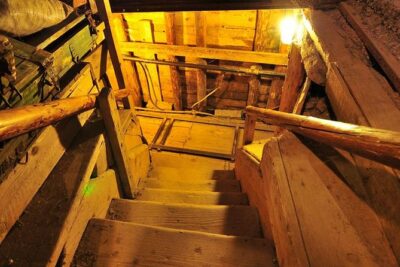
Fall of Yugoslavia, Sarajevo War Tour with Tunnel of Hope Museum and Frontlines
Read our review →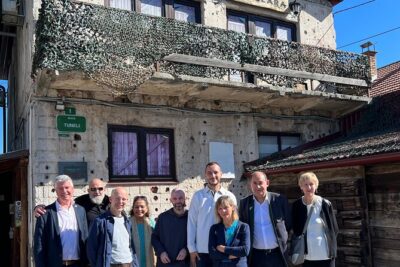
ROSES OF SARAJEVO (Official WAR + CITY tour)- Story of a Survivor
Read our review →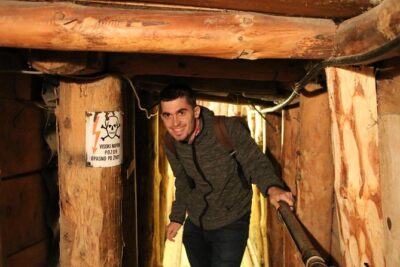
Tunnel Museum: Bosnian & Yugoslav Wars Tour with War Veteran
Read our review →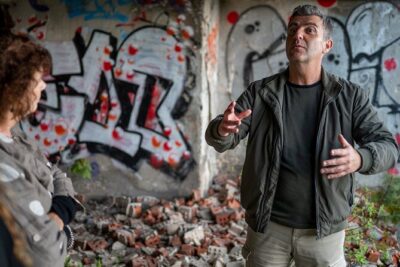
Sarajevo War Tour: A Veteran’s Story of the Siege (fees included)
Read our review →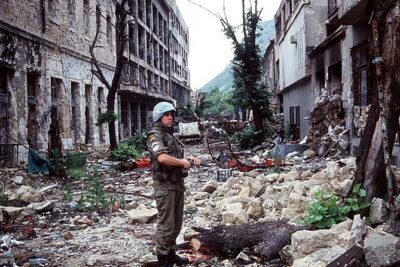
Break-up of Yugoslavia & The War in Mostar: Life Under Siege
Read our review →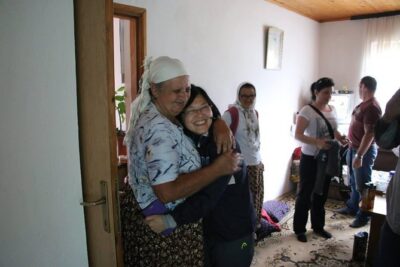
Sarajevo to Srebrenica: Genocide Study Tour with War Veteran
Read our review →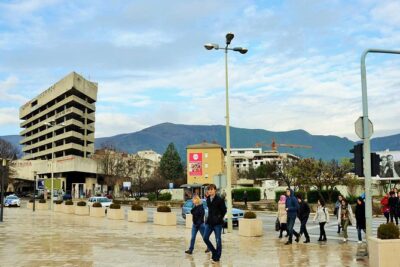
Sarajevo Grand Tour: Old Town, War Tunnel, Olympic Sites & More
Read our review →Browse the lists this tour appears in