
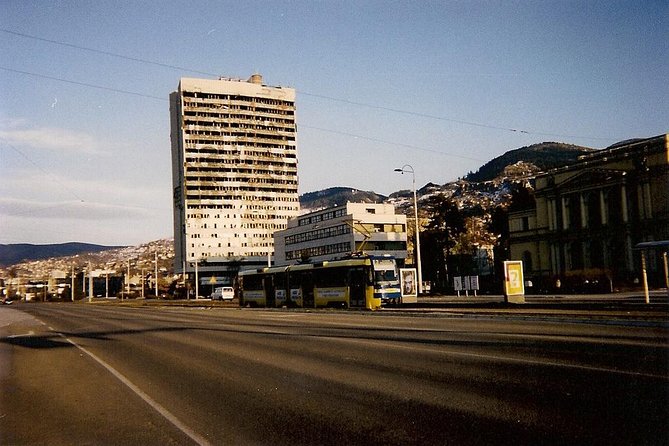
REVIEW · SARAJEVO WAR HISTORY TOURS
Times of Misfortune – Life Under Siege and the Tunnel of Hope
Sarajevo’s war story begins above the rooftops. I like the personal guide accounts and the way the tour links famous sights to the Siege of Sarajevo. I also like that transportation covers a wide area, from the old city to the Tunnel of Hope, without making you sort out each stop yourself. The main drawback is that the Tunnel Museum ticket costs extra, and much of the city portion is viewed from the vehicle.
This 3-hour-30-minute experience gives Sarajevo’s recent past a clear shape. You see defensive positions, memorials, hospitals, government buildings, and streets made famous by wartime reporting. If you want a light sightseeing outing, this is not it. If you want a serious, human look at life under siege, it offers strong value at $32.58 per person.
The guide can make or break a tour like this. Nermin receives especially warm praise for his direct knowledge of the war, including personal experience and his former work as a police officer. His stories appear to give the facts a human scale, though the subject matter can be painful and emotionally demanding.
In This Review
- Key points to know before booking
- Why this Sarajevo tour matters
- Meeting near Zelenih beretki 30
- Yellow Fortress and Kovači Cemetery
- City Hall, Markale, and Sarajevo’s public memory
- Olympic memories at Asim Ferhatović Hase Stadium
- The maternity hospital and the cost of ordinary life
- Parliament, the Holiday Inn, and Sniper Alley
- Inside the Tunnel of Hope Museum
- The guide’s role in making sense of the past
- Is $32.58 a fair price?
- Who should book this experience?
- Should you book Times of Misfortune?
- FAQ
- Where does the tour begin?
- Where does the tour end?
- How long does the experience last?
- Is transportation included?
- Is the Tunnel of Hope museum ticket included?
- How much is the Tunnel of Hope museum ticket?
- What language is the tour offered in?
- How many people can join the tour?
- Can I cancel for a full refund?
- What happens if bad weather cancels the tour?
Key points to know before booking
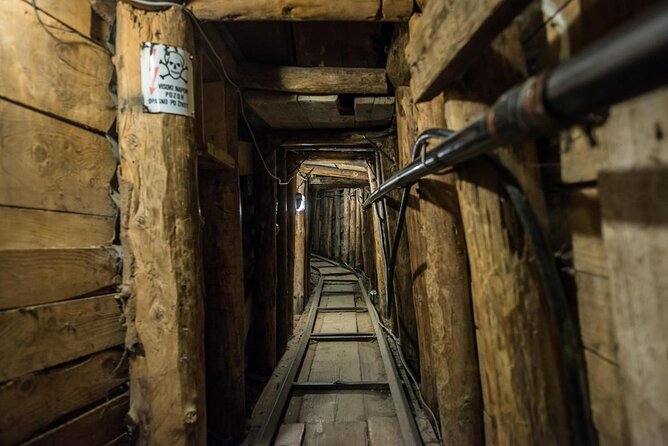
- The Tunnel of Hope is the emotional center: Allow 1 hour 15 minutes for the museum and underground passage.
- Yellow Fortress opens the tour with a view: You get a useful sense of Sarajevo’s position and wartime defenses from above.
- Nermin brings firsthand perspective: His personal memories and former police work add weight to the historical explanation.
- Most city stops are viewed briefly or from the vehicle: The tour covers a lot of ground, but it is not a long walking tour.
- The museum ticket is extra: Adults pay 20 BAM, or about 10.50 euros, while students pay 8 BAM, or about 4.50 euros.
- The small group limit helps: A maximum of 20 people keeps the guide’s explanation more manageable.
Why this Sarajevo tour matters
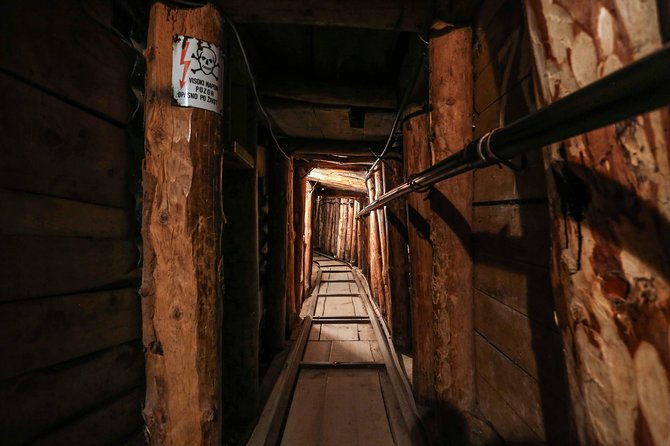
Sarajevo is a city where recent events remain close to daily life. The Siege of Sarajevo lasted from 1992 to 1995 during the breakup of Yugoslavia, and the tour focuses on how that conflict affected ordinary people, public buildings, hospitals, journalists, and families.
I like that the experience does not rely on one memorial alone. Instead, it builds a chain of places. A hilltop fortress explains defense. A cemetery shows the human cost. A maternity hospital points to medical courage. A road called Sniper Alley shows how movement through the city became dangerous. The Tunnel of Hope then explains how Sarajevo maintained a link with the outside world.
That sequence gives you more than isolated facts. It helps you understand how the city functioned under pressure. You see both the public story, including the presidency, parliament, television, and city hall, and the private struggle to obtain food, medicine, and safe passage.
The tone is serious. You should expect discussion of death, destruction, and hardship. This is not a polished sightseeing loop designed to keep the mood cheerful. That honesty is one of its strengths, but it may not suit every person, especially young children or anyone who prefers to avoid wartime subjects.
Other tours covering the siege of Sarajevo:
- Fall of Yugoslavia, Sarajevo War Tour with Tunnel of Hope Museum and Frontlines
★ 5.0 · 1,314 reviews - ROSES OF SARAJEVO (Official WAR + CITY tour)- Story of a Survivor
★ 5.0 · 770 reviews - Tunnel Museum: Bosnian & Yugoslav Wars Tour with War Veteran
★ 5.0 · 551 reviews
Meeting near Zelenih beretki 30
The tour begins at Sarajevo Insider, on Zelenih beretki 30, in the city center. The meeting point is also the end point, so you do not need to arrange a separate return transfer.
A mobile ticket keeps the start simple. Confirmation arrives when you book, and the tour is offered in English. Public transportation is nearby, though the included vehicle is the important part of the experience because several stops are spread across Sarajevo.
The group can include up to 20 people. That is not an intimate private tour, but it is still small enough for a guide to speak to the group directly. A smaller turnout is possible. One booking even had a single participant, with Nermin serving as both driver and guide.
That possibility is worth keeping in mind. Group size can affect how much personal contact you have with the guide, but the exact number is not guaranteed. The tour is generally suitable for most people, though the supplied information does not promise specific accessibility features.
Yellow Fortress and Kovači Cemetery
The first major stop is Yellow Fortress, where you spend about 20 minutes. The view matters because Sarajevo’s wartime story makes more sense once you see the city’s position among the surrounding hills.
From this height, the city appears orderly and compact. The view offers a practical introduction to the defensive geography that shaped the siege. Your guide can point out why elevated positions mattered and how the city below became vulnerable.
You do not need a long stop here for the view to do its work. Twenty minutes is enough to get your bearings, hear the basic wartime context, and take photographs if you wish. Still, this is not the place for a relaxed scenic pause. The purpose is to connect the view with the military reality.
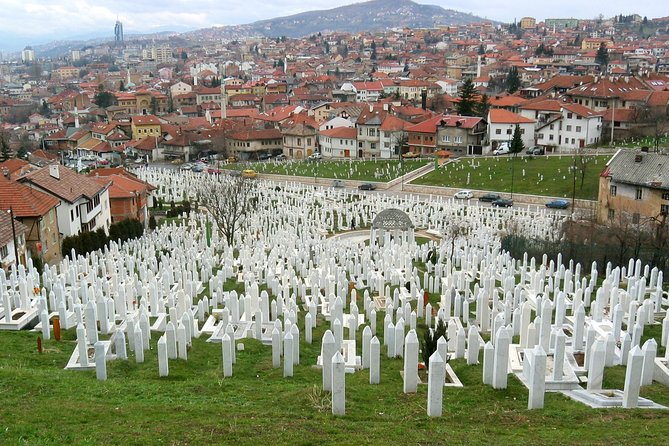
Nearby, Kovači Cemetery provides a much quieter moment. The five-minute stop is brief, but it is focused. This national memorial honors Bosnia’s defenders from the 1992 to 1995 war.
I would treat this as a place for reflection rather than sightseeing. You may not have enough time for a long visit, but the stop helps move the tour away from maps and buildings and toward individual loss. The contrast with Yellow Fortress is effective: one gives you a broad view, while the other asks you to pause at ground level.
City Hall, Markale, and Sarajevo’s public memory
The vehicle then passes several important sites in central Sarajevo. These stops are not listed as long visits, so you should expect explanation and views from the vehicle rather than extended time on foot.
City Hall is tied to the war through its destruction and later symbolic restoration. The building also carries importance beyond the conflict, making it a useful reminder that Sarajevo’s public institutions were damaged along with homes and infrastructure.
Markale City Market is another key location. It was a functioning marketplace, not a military outpost, and its wartime history shows how dangerous ordinary errands became. Passing the site allows the guide to place one of the city’s best-known wartime locations within the daily city center.
Trg Djece Sarajeva, or the Square of Sarajevo Children, adds another layer. Its name points to the civilian cost of the siege and the city’s effort to remember children affected by the violence.
The Presidency Building gives you a view of Bosnia and Herzegovina’s political center during a period of extreme pressure. These public buildings help explain how political decisions, international attention, and life on the street overlapped.
I appreciate the breadth here, but you should set your expectations correctly. You will not get a detailed interior visit at every landmark. The value comes from the guide’s explanation and the way the sites connect, not from time spent inside them.
A few more options to weigh up in Sarajevo
- Sarajevo: Mostar, Konjic, Blagaj Tekke, Pocitelj & Waterfall
★ 4.9 · 1,335 reviews - Sarajevo: Mostar, Konjic, Sufi House, Pocitelj & Kravice Falls
★ 5.0 · 1,179 reviews - Sarajevo: Mostar, Konjic, Počitelj, Sufi House, & Waterfalls
★ 4.9 · 572 reviews - Sarajevo: 2 Hours Old Town Walking Tour With Local Guide
★ 5.0 · 505 reviews
Olympic memories at Asim Ferhatović Hase Stadium
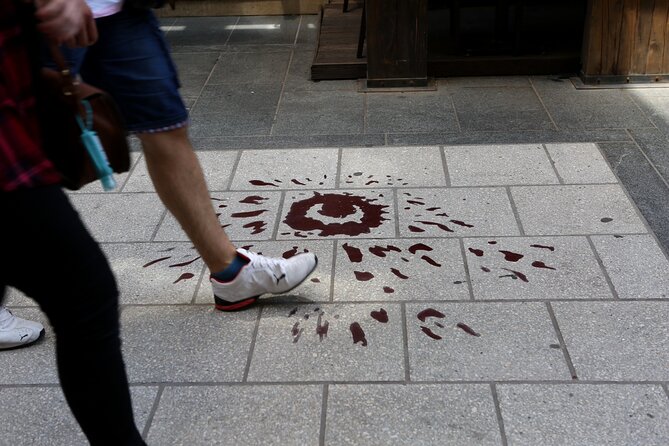
The stop at Asim Ferhatović Hase Stadium lasts about 10 minutes. The stadium and Hall Zetra show Sarajevo’s two sharply different identities: Olympic host city and war-torn capital.
The 1984 Winter Olympics gave Sarajevo an international image built around sport and celebration. The siege later transformed the meaning of many public places. A stadium or sports hall was no longer simply a venue for competition. It became part of a city trying to continue functioning under attack.
You will also see how a single location can carry several memories at once. That contrast is one of the tour’s more useful ideas. Sarajevo is not only a place defined by the 1990s war, and the guide helps connect the Olympic period with what followed.
Ten minutes is enough for a concise explanation and a quick look. If you want a long architectural visit, you may find this stop too short. Its purpose is context, not a full stadium tour.
The maternity hospital and the cost of ordinary life
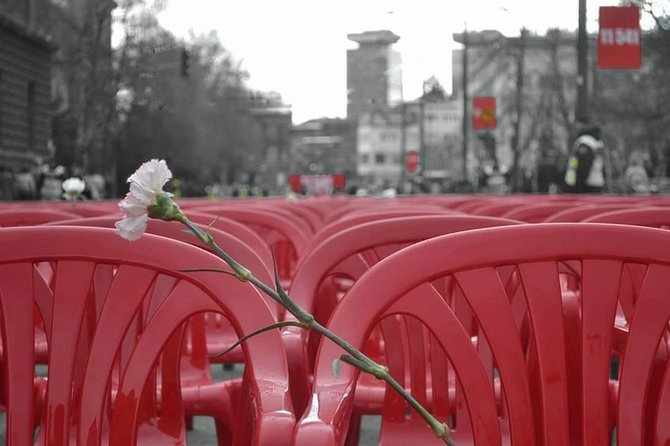
The Sarajevo Maternity Hospital receives another 10-minute stop. The guide explains the efforts of medical staff during the siege, when caring for mothers and newborns required courage under conditions that were already extremely difficult.
This is one of the strongest stops because it shifts attention from military strategy to basic human needs. Birth did not stop because the city was under siege. Medical workers still had to treat patients, and families still had to face moments of joy and fear in an unsafe city.
The hospital also gives you a way to understand the conflict without reducing it to maps, leaders, and weapons. The focus is on people trying to provide care. That human scale is a repeated strength of the tour, especially when the guide adds personal memories.
Again, the time is short. You will hear the story and see the location, but you should not expect a hospital visit or an extended walk through the building.
Parliament, the Holiday Inn, and Sniper Alley
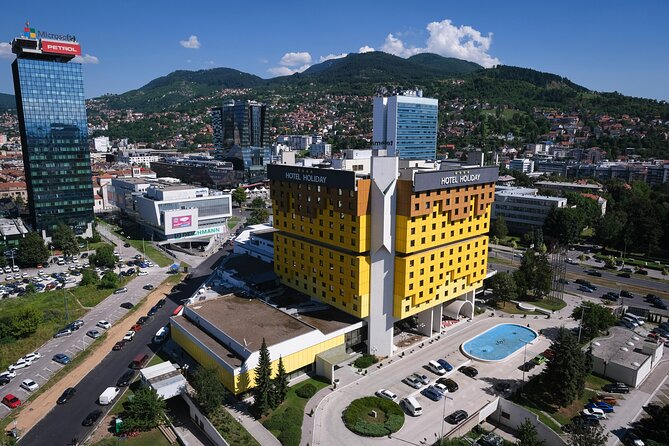
The next section passes the Parliament and Holiday Inn Hotel. These places are linked to political decisions and wartime journalism. The Holiday Inn became closely associated with reporters covering the siege, while parliament represented the political struggle taking place as the city came under attack.
You then travel along Sniper Alley, one of Sarajevo’s most infamous wartime streets. The name alone can sound like a piece of dramatic branding, but here it refers to the real danger people faced while moving through the city.
Seeing the road from a vehicle gives you a practical sense of distance and exposure. You can consider how a routine crossing or drive could become a serious risk. The guide’s explanation is important because the street itself may look ordinary today. Without context, you could pass through without understanding why it matters.
RTV Dom, the national television building, is also viewed on the way. Its broadcasts helped carry news of the conflict, making the building part of the public record of the siege.
This section is best for people who want the city’s political and media story included. If your main interest is architecture, these brief views may feel limited. The tour is using the buildings as evidence in a larger explanation, not presenting them as stand-alone attractions.
Inside the Tunnel of Hope Museum
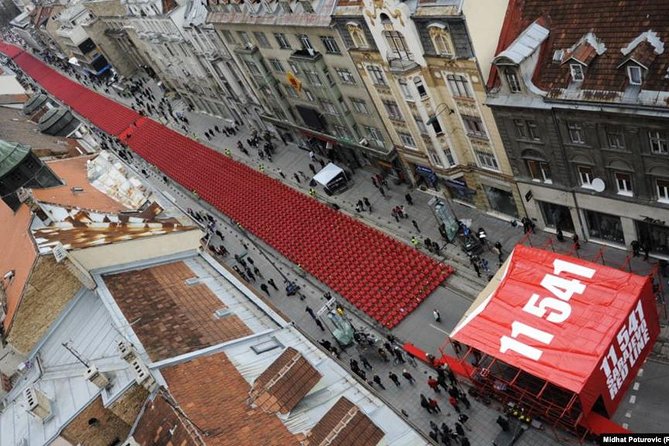
The final major stop is the Tunnel of Hope Museum, where you spend about 1 hour 15 minutes. This is the part most likely to stay with you after the tour.
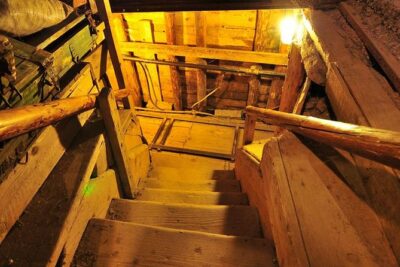
The tunnel was an underground passage connecting Sarajevo with the outside world. Built and used during the siege, it provided a vital route for supplies, people, and communication. The museum explains its construction, purpose, and role in keeping the city connected.
You will hear stories and watch a film about the siege before seeing the tunnel itself. The movie helps establish the wider setting, while the passage gives that information a physical focus. The tunnel was not a grand engineering project for public display. Its importance came from necessity.
I would plan your energy around this stop. After several hours of difficult material, the museum can feel emotionally heavy. That is also why the long visit is worthwhile. You have enough time to listen, watch the film, and consider how an underground route could become a lifeline.
The tunnel ticket is not included. Adults pay 20 BAM, listed as about 10.50 euros, and students pay 8 BAM, about 4.50 euros. Add that amount to the tour price when comparing the total cost. At $32.58 for the tour itself, the experience remains fairly priced for an English-speaking guided outing with transportation, especially because it covers locations that are not all close together.
The museum is not a substitute for seeing the wider city. Its best role is as the final piece of the story. By the time you arrive, you have already seen the hills, memorials, hospitals, government sites, and roads. The tunnel then shows one of the concrete ways Sarajevo endured.
The guide’s role in making sense of the past
A tour about war needs more than dates. It needs clear explanation and a careful tone. Nermin is repeatedly praised for making the events understandable through personal experience, and one account describes him as a former police officer.
That background can change the feel of the outing. Instead of hearing only a prepared speech, you may hear how the conflict affected someone who lived through it. Personal stories can help you understand fear, shortages, movement, and uncertainty in ways that a textbook cannot.
At the same time, firsthand storytelling is not a reason to stop asking questions. The strongest experience will be one where the guide combines memory with clear historical framing. Nermin appears to do that well, explaining both the breakup of Yugoslavia and the daily reality of Sarajevo during the siege.
The high rating and 98 percent recommendation figure support the sense that the guiding is a major strength. Still, guides can vary by date, and Nermin is not guaranteed. If you meet him, expect a direct and personal approach rather than a light entertainment act.
Is $32.58 a fair price?
The price is $32.58 per person, before the Tunnel of Hope admission. Included are a licensed guide and transportation. The tour lasts about three and a half hours and covers several parts of the city.
I consider that reasonable value if you want a focused introduction to Sarajevo’s wartime past. You are paying for the guide’s interpretation, the vehicle, and the time saved by moving between distant sites. You are not paying for a long series of interior admissions, so the value depends heavily on how much you want historical explanation.
The extra museum fee is modest but easy to overlook. Budget 20 BAM for an adult or 8 BAM for a student. Since the Tunnel of Hope is the emotional center of the outing, I would not skip it simply to reduce the cost.
The tour is usually booked around 10 days ahead. That does not guarantee it will sell out, but booking early is sensible if your Sarajevo schedule is tight. Free cancellation is available up to 24 hours before the start time. Poor weather or an insufficient minimum group can lead to a changed date or a full refund.
Who should book this experience?
I would choose this tour if you want to understand Sarajevo beyond its old streets and Austro-Hungarian buildings. It suits anyone interested in the breakup of Yugoslavia, the Siege of Sarajevo, civilian life during war, or the role of local people in preserving the city.
It is also useful early in a Sarajevo visit. The route gives you names and places that can add meaning to later independent walks. You may want more time at some locations, but the guided overview helps you decide which subjects deserve further attention.
You should think twice if you want an easy, cheerful city outing. The subject is painful, several stops are brief, and the museum film may be upsetting. The tour also offers limited walking time at many sites, so it is not the best choice if your main aim is to explore every landmark on foot.
Should you book Times of Misfortune?
Book it if the Siege of Sarajevo is a central reason for your visit, or if you want a clear introduction to the conflict from someone with personal experience. The combination of Yellow Fortress, Kovači Cemetery, Sniper Alley, the maternity hospital, and the Tunnel of Hope gives the story both scale and human detail.
I especially recommend it for first-time visitors who want transportation between scattered sites and an English-speaking guide who can explain what you are seeing. Add the museum ticket to your budget, prepare for difficult material, and keep your expectations realistic about brief drive-by stops.
Skip it only if you want a relaxed sightseeing tour or prefer to avoid wartime history. For everyone else, the price is fair, the route is purposeful, and the Tunnel of Hope gives the experience a powerful final focus.
FAQ
Where does the tour begin?
It begins at Sarajevo Insider, Sarajevo City Tours and Excursions, at Zelenih beretki 30 in Sarajevo, Bosnia and Herzegovina.
Where does the tour end?
The tour ends back at the meeting point on Zelenih beretki 30.
How long does the experience last?
It lasts approximately 3 hours and 30 minutes.
Is transportation included?
Yes. Transportation and a licensed guide are included.
Is the Tunnel of Hope museum ticket included?
No. Museum admission is paid separately.
How much is the Tunnel of Hope museum ticket?
Adults pay 20 BAM, listed as about 10.50 euros. Students pay 8 BAM, listed as about 4.50 euros.
What language is the tour offered in?
The experience is offered in English.
How many people can join the tour?
The maximum group size is 20 people.
Can I cancel for a full refund?
Yes, if you cancel at least 24 hours before the experience start time. Cancellations made less than 24 hours before the start time are not refunded.
What happens if bad weather cancels the tour?
You will be offered a different date or a full refund if poor weather causes the cancellation.
Just added in Sarajevo
- Sarajevo Under Siege: A War History Tour★ 5.0 · 10 reviews
- Walking Tour in Sarajevo★ 5.0 · 3 reviews
- Private Full Day Safari Tour★ 5.0 · 8 reviews
- Bosnian Pyramid: The World’s Largest Pyramid (From Sarajevo)★ 5.0 · 1 review
- Ultimate adventure★ 5.0 · 2 reviews
- Mysterious Visoko Pyramids Driving and Walking Tour★ 5.0 · 7 reviews
- Travnik, Jajce, Pliva Lakes & Mills –Medieval & Ottoman Bosnia Full Day Tour★ 5.0 · 3 reviews
- Tour of Herzegovina – From Sarajevo★ 5.0 · 3 reviews
Sarajevo War History Tours, compared.
Fall of Yugoslavia, Sarajevo War Tour with Tunnel of Hope Museum and Frontlines
Read our review →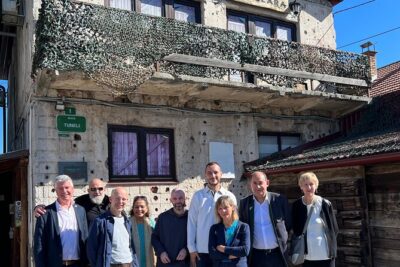
ROSES OF SARAJEVO (Official WAR + CITY tour)- Story of a Survivor
Read our review →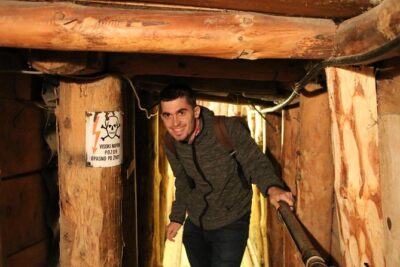
Tunnel Museum: Bosnian & Yugoslav Wars Tour with War Veteran
Read our review →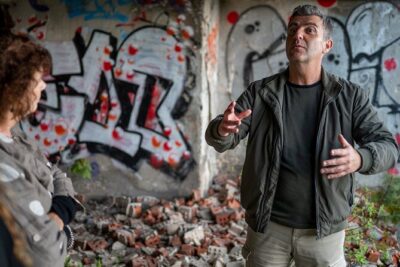
Sarajevo War Tour: A Veteran’s Story of the Siege (fees included)
Read our review →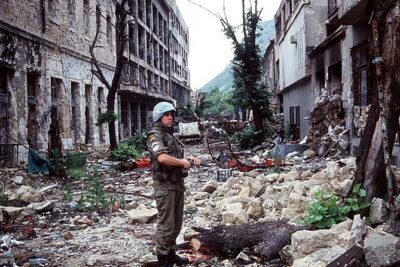
Break-up of Yugoslavia & The War in Mostar: Life Under Siege
Read our review →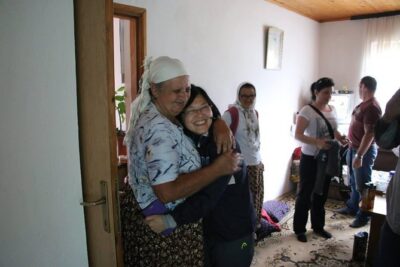
Sarajevo to Srebrenica: Genocide Study Tour with War Veteran
Read our review →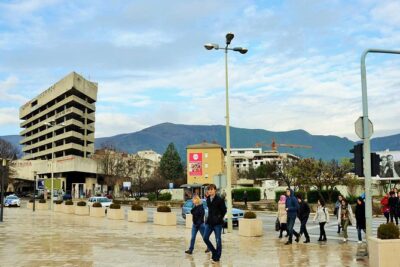
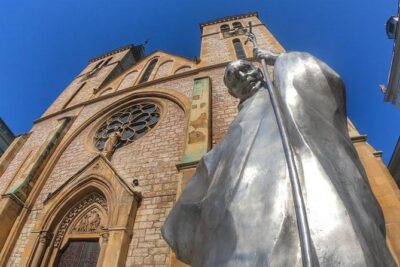
Sarajevo Grand Tour: Old Town, War Tunnel, Olympic Sites & More
Read our review →Browse the lists this tour appears in