
REVIEW · SARAJEVO WAR HISTORY TOURS
Utopia of Tito’s Yugoslavia, Tito’s Bunker & Siege of Sarajevo
One day, two eras, one hard look at Bosnia. This tour links Tito’s secret nuclear bunker near Konjic with Sarajevo’s wartime tunnel, Olympic ruins, and mountain battle sites. I like the small group of eight, which gives the guide room to explain difficult subjects without turning the day into a history lecture. I also like the mix of underground military sites, mountain views, and abandoned Olympic structures.
The main drawback is the length. Ten hours in a vehicle, with several stops and serious wartime material, can feel full. Lunch is not included, and the day involves walking, including a 45-minute walk on the bobsleigh track, so comfortable shoes and a little stamina matter.
In This Review
- Key points to know before booking
- Why this Sarajevo day trip has real range
- Konjic Bridge and the road to Tito’s bunker
- Inside ARK D-0, Tito’s 6,500-square-meter bunker
- Igman and the broken promise of the 1984 Olympics
- The Sarajevo War Tunnel and the city’s wartime lifeline
- Trebević viewpoints, trenches, and Sarajevo below
- Walking Sarajevo’s Olympic bobsleigh track
- The Jewish Cemetery and the view toward Sniper Alley
- How the day works, and what the price includes
- Who will appreciate this tour most
- Should you book the Tito bunker and Sarajevo siege tour?
- FAQ
- Where does the tour start?
- What time does the tour begin?
- Does the tour return to Sarajevo?
- Is hotel pickup included?
- Is lunch included?
- What admissions are included?
- How many people can join the group?
- Is the tour offered in English?
Key points to know before booking
- Tito’s bunker is the star attraction: Facility D-0 covers 6,500 square meters and was built over 26 years to shelter 350 Yugoslav leaders and military officers.
- The Sarajevo War Tunnel brings the siege close: You see a museum, watch a short film, and walk through part of the passage that helped keep the city alive.
- A maximum of eight people keeps the day personal: Guides such as Hamza, Emir, Ahmed, Salem, Amir, Mustafa, and Agnar have been praised for clear, passionate storytelling.
- Olympic sites meet wartime ruins: You visit Igman, the ruined Olympic hotel, Trebević, the bobsleigh track, and the Jewish Cemetery.
- The $101.85 price covers the important admissions: Tito’s bunker, the War Tunnel, transport, a professional English-speaking guide and driver, and taxes are included.
- Sarajevo pickup makes the early start simple: Pickup is available from your hotel, or you can meet at the Funky Tours office in the old town at 8:00 a.m.
Why this Sarajevo day trip has real range
Many Sarajevo tours focus only on the 1992 to 1995 siege. This one gives you a wider frame. You begin with Yugoslavia under Josip Broz Tito, see the grand promise of the 1984 Winter Olympics, and then confront the destruction that followed less than a decade later.
That sequence matters. The bunker shows a state spending vast sums to prepare for a nuclear war that never came. Sarajevo’s tunnel shows ordinary people building a crude lifeline during a war that did come. The Olympic sites reveal how quickly a city built for international friendship could be pulled into conflict.
I like that the tour does not treat these as unrelated photo stops. The guide connects them through the political collapse of Yugoslavia, Cold War fear, the siege of Sarajevo, and the physical scars still visible in the hills.
The small-group limit is important here. A group of eight allows room for questions, and it makes the day less like a bus outing. Several guides have been singled out for bringing personal experience to the story. Ahmed, for example, was praised for explaining the war through his own experience of living through it. That kind of local voice can change the feel of a difficult subject.
Other tours covering the siege of Sarajevo:
- Fall of Yugoslavia, Sarajevo War Tour with Tunnel of Hope Museum and Frontlines
★ 5.0 · 1,314 reviews - ROSES OF SARAJEVO (Official WAR + CITY tour)- Story of a Survivor
★ 5.0 · 770 reviews - Tunnel Museum: Bosnian & Yugoslav Wars Tour with War Veteran
★ 5.0 · 551 reviews
Konjic Bridge and the road to Tito’s bunker
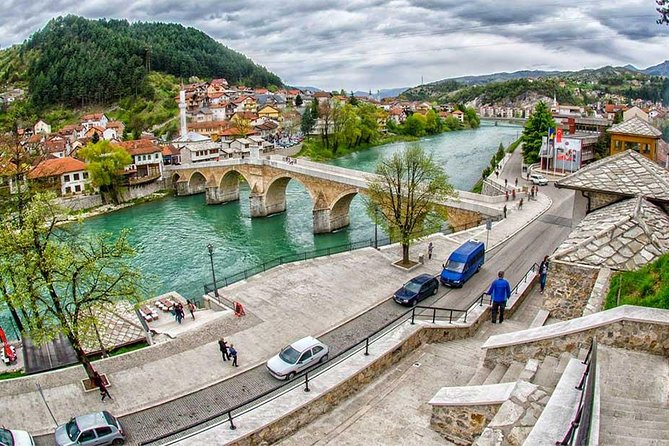
The first stop is Konjic, an old town beside the turquoise Neretva River. The visit is short, about 30 minutes, but it gives you time to see the historic six-arch bridge and the older part of town.
Konjic has a long human past, and the bridge is the visual reason for the stop. You get a quick sense of the town before heading toward one of Yugoslavia’s most secret and costly military projects.
This is also a useful transition. Above ground, Konjic feels sunny and open. Soon you are heading toward a facility designed for the opposite: isolation, secrecy, and survival after a nuclear strike.
Do not expect a long guided walking tour of Konjic. The schedule allows only a brief visit, so treat it as an introduction and a chance for photographs rather than a full town exploration.
Inside ARK D-0, Tito’s 6,500-square-meter bunker
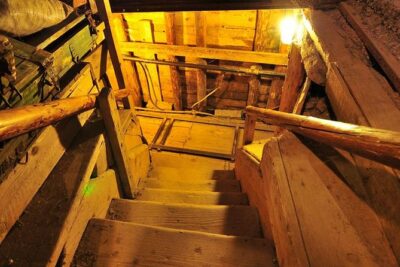
Facility D-0, also called ARK or Tito’s Nuclear Bunker, is the strongest part of the day. Construction lasted 26 years, and the finished facility covers about 6,500 square meters. Its purpose was to shelter and support roughly 350 Yugoslav leaders and army generals during a nuclear war.
Inside, you move through a maze of corridors and rooms built for command, communication, and long-term protection. The appeal is not just the concrete and machinery. The bunker shows how seriously the Yugoslav government feared a conflict between the superpowers, and how much money it was willing to spend preparing for that possibility.
The project cost about $4.6 billion in military spending, making it one of the most expensive Yugoslav military projects. That figure becomes more meaningful once you are inside a place built to hide the country’s leadership from the world above.
The atmosphere is stark. You might find the bunker cold, plain, and strangely preserved. Its rooms tell a story of strict hierarchy and Cold War paranoia without needing much decoration.
The site also serves as a venue for a biennial of contemporary art. That contrast gives the bunker a second life. A structure created for military command now carries modern art into rooms designed for catastrophe.
Admission to the bunker is included. A local guide leads the bunker visit, while your tour guide helps place it in the larger story of Yugoslavia and its eventual collapse. Plan around 90 minutes here, though the exact rhythm can depend on the group and site schedule.
If Tito’s bunker is your main reason for booking, this tour gives you the advantage of pairing it with Sarajevo’s wartime sites. You do not spend the whole day underground, and the later mountain stops show what military power looked like when it reached the city itself.
Igman and the broken promise of the 1984 Olympics
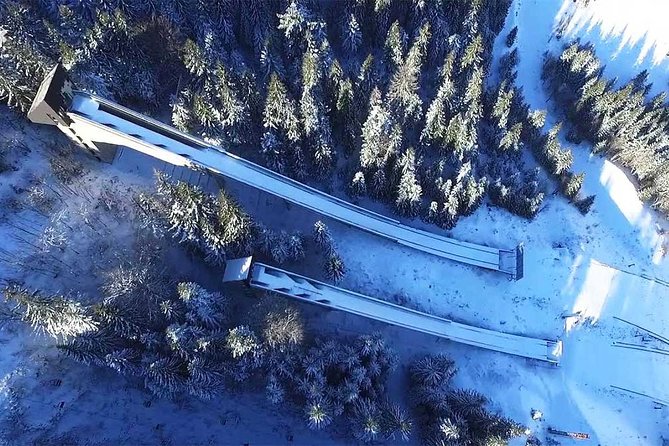
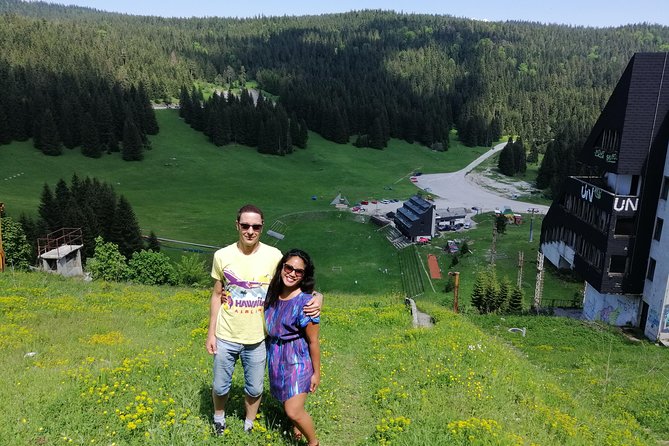
The drive back toward Sarajevo leads to Mount Igman, one of the day’s most striking changes in mood. Igman is tied to Sarajevo’s 1984 Winter Olympics, and you visit the Olympic ski jumps and podium area.
You can take photographs and climb the ski jumps, imagining the excitement of the Games. The stop lasts about an hour, so it is not just a roadside glance. Still, the tour does not present Igman as a fully restored Olympic attraction. The point is the contrast between celebration and damage.
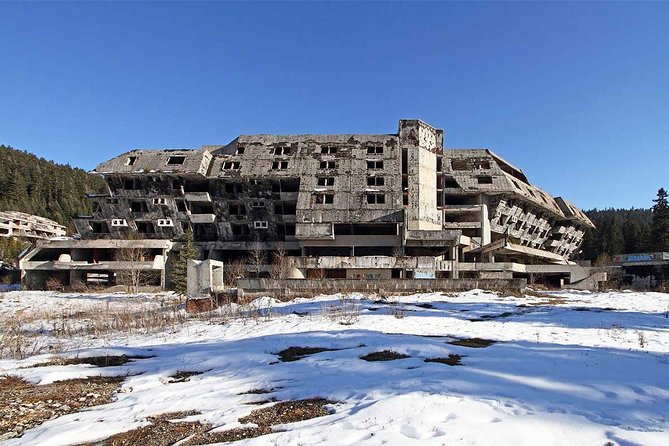
The Igman Olympic Hotel makes that contrast especially clear. Built with a spirit of unity and optimism for the 1984 Games, the 162-room hotel was later badly damaged during the Balkan War and the siege of Sarajevo.
You might find the ruined structure more moving than the polished Olympic remains. It shows how recent the city’s past is. The Games took place in 1984, and the war began in the early 1990s. In a single lifetime, a mountain hotel could move from international showcase to war ruin.
This stop suits you if you like places where history remains visible in the buildings. It may disappoint you if you expect a maintained Olympic museum with extensive displays. The emphasis is on seeing the site and hearing its story.
A few more options to weigh up in Sarajevo
- Sarajevo: Mostar, Konjic, Blagaj Tekke, Pocitelj & Waterfall
★ 4.9 · 1,335 reviews - Sarajevo: Mostar, Konjic, Sufi House, Pocitelj & Kravice Falls
★ 5.0 · 1,179 reviews - Sarajevo: Mostar, Konjic, Počitelj, Sufi House, & Waterfalls
★ 4.9 · 572 reviews - Sarajevo: 2 Hours Old Town Walking Tour With Local Guide
★ 5.0 · 505 reviews
The Sarajevo War Tunnel and the city’s wartime lifeline
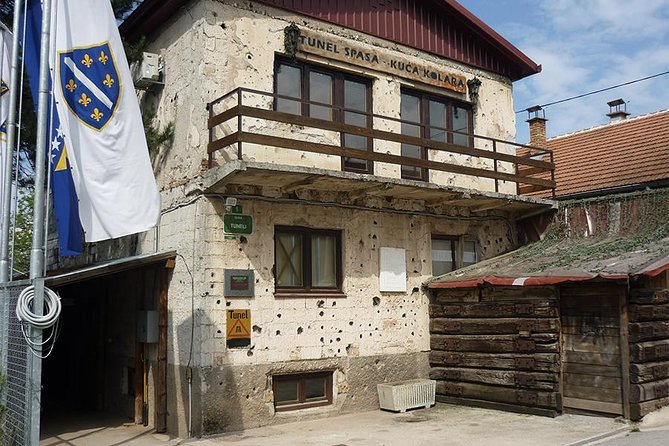
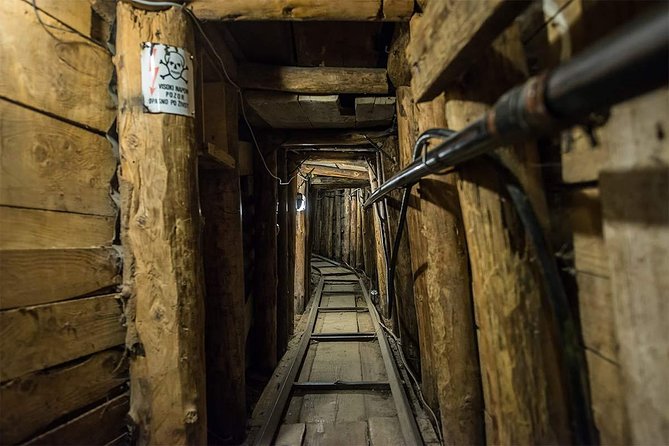
The Sarajevo War Tunnel is the tour’s most direct encounter with the siege. You visit the museum exhibition, see objects connected to the conflict, watch a short film, and walk through part of the tunnel itself.
The passage was built because Sarajevo needed a way to move people and supplies while the city was surrounded. The museum helps explain the urgent reason for its construction before you enter the narrow section open to the public.
The tunnel is not presented as a grand monument. Its value is practical. You see how a passage under the airport area became essential to life in a city under siege.
The visit lasts about 90 minutes, giving enough time for the exhibition, film, and walk. The material is serious, and you should expect stories of hardship rather than a light sightseeing stop. That is part of the tour’s strength. The guide does not let the siege become a distant set of dates.
I would pay close attention here, even if you have already visited a war museum. The tunnel gives the conflict a physical scale. You are not only hearing about shortages and danger. You are walking through the type of space that made movement possible.
The entrance fee is included, with the stated adult admission priced at 5 euros and the child and student admission at 2.50 euros. That inclusion helps the tour’s value, especially since it also covers the more expensive bunker entrance.
Trebević viewpoints, trenches, and Sarajevo below
After the tunnel, the route passes through Dobrinja, an Olympic village with its own wartime story. This neighborhood was part of a city under siege, so the guide can connect the Olympic ideal with the daily reality of civilians living through the conflict.
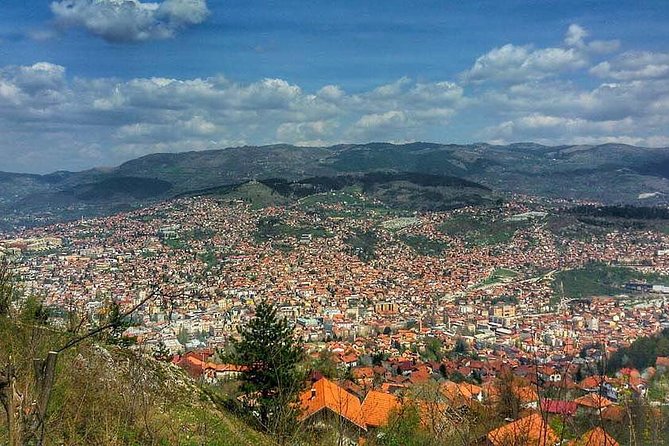
You then head to Mount Trebević. Much of the mountain served as a front line during the siege, and the viewpoints give you a clearer sense of the military geography around Sarajevo.
From above, you can see why the mountain mattered. The position offered commanding views over the city, yet the forces holding the heights did not simply take Sarajevo. The tour uses the panorama to explain the difficult contest between the city and the surrounding positions.
At Trebević, you might see bunker remains, minefields, tank tracks, trenches, bullet marks, grenade damage, and abandoned structures. Some sites remain unrestored, so do not expect neat paths and polished interpretation at every stop.
That roughness is also the point. The mountain still carries visible evidence of the war. You get a sense of how close the fighting was to the city rather than viewing the siege only through a museum display.
The Trebević viewpoint provides one of the day’s best photo opportunities, but the photos should not erase the place’s purpose. The same slopes that offer a broad view of Sarajevo were once military positions and battlefields.
Walking Sarajevo’s Olympic bobsleigh track
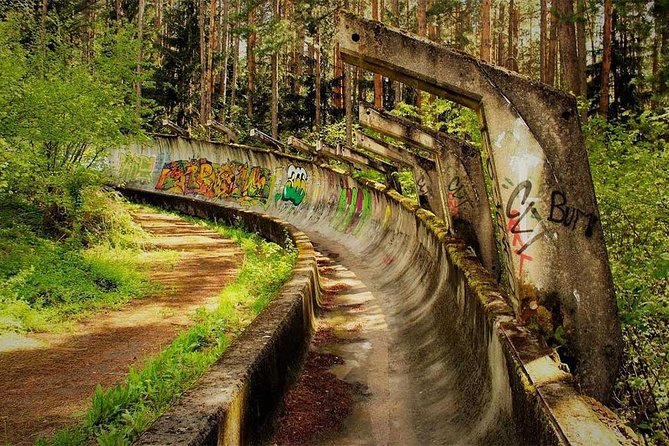
The 1984 Olympic Bobsleigh and Luge Track is visited on foot, with about 45 minutes for the walk. The track is now famous for its abandoned appearance and its street art.
This is one of the tour’s more unusual stops. The curved concrete track recalls Sarajevo’s Olympic ambitions, while graffiti and weathering show how the site changed after the Games and the war.
You should wear shoes suited to uneven walking. The provided information does not describe every surface condition, but this is an abandoned sports structure rather than a polished attraction. The walking portion is manageable for most people according to the tour details, but it is still worth keeping your footing in mind.
I like the way this stop breaks up the heavier museum visits. You get movement, mountain air, photographs, and art, while still standing inside a place tied to both Olympic pride and Sarajevo’s troubled recent past.
The Jewish Cemetery and the view toward Sniper Alley
The last stop is Sarajevo’s Jewish Cemetery, one of the largest Jewish cemeteries in Europe. During the siege from 1992 to 1995, it became a front-line position and a sniper site overlooking parts of the city, including Sniper Alley.
The visit is brief, about 20 minutes, but its location gives it force. A cemetery is already a place of memory. Knowing that it was also used as a military position adds another layer to the city’s wartime geography.
This is not a full cemetery tour. You will have limited time, so expect a short visit focused on its historical importance and its role during the siege.
The stop also completes the day’s movement from hidden command centers to exposed city views. At the bunker, leaders planned for survival underground. At Trebević and the cemetery, you see the positions from which Sarajevo was watched and attacked.
How the day works, and what the price includes
The tour starts at 8:00 a.m. You can arrange pickup from any Sarajevo hotel or meet at the Funky Tours office at Besarina čikma 5 in the old town. It ends back at the meeting point.
Transportation is by air-conditioned vehicle with a professional English-speaking guide and driver. With a maximum of eight people, the vehicle should feel more personal than a large coach, and the guide can adjust explanations to the group.
The listed price is $101.85 per person. For a 10-hour day, that is a fair price when you count the included bunker and War Tunnel admissions, transport, guide, driver, and taxes. Tito’s bunker alone carries a stated adult admission of 10 euros, and the War Tunnel adds another 5 euros for adults.
Lunch is not included. You should plan for that gap, since the schedule is long and includes several mountain stops. The supplied information does not specify a lunch stop or meal arrangement, so ask the operator how the day handles food before you go.
The tour is offered in English and uses a mobile ticket. Confirmation is sent within 48 hours of booking, subject to availability. It is often reserved well ahead of time, with an average booking point of 37 days before departure, so booking early is sensible if your Sarajevo dates are fixed.
Free cancellation is available if you cancel at least 24 hours before the local start time. Changes or cancellations made later are not accepted for a refund.
Who will appreciate this tour most
I would choose this tour if you want Sarajevo’s recent past explained through places, not just dates. It suits anyone interested in Cold War politics, Yugoslavia, military construction, the 1984 Olympics, abandoned sites, or the siege of Sarajevo.
It is also a strong choice for solo visitors. A small group can make a long day feel more sociable, and guides such as Salem have been praised for being attentive with solo participants.
You should think twice if you want a relaxed day with long meals and plenty of free time. The route is packed, the subject matter is heavy, and the combination of driving and walking leaves little room for wandering on your own.
Families can consider it too, since most people can participate and service animals are allowed. Still, parents should decide if the war material and abandoned military sites suit their children.
The tour works best for you if you want the full picture: Tito’s state, Olympic Sarajevo, the siege, and the physical remains left behind.
Should you book the Tito bunker and Sarajevo siege tour?
Yes, if you have one full day and want a serious, well-connected look at Sarajevo and its surroundings. The bunker is the main draw, but the War Tunnel, Igman Hotel, Trebević positions, bobsleigh track, and Jewish Cemetery give the day much greater value than a single-attraction outing.
I would book it especially if this is your first visit to Sarajevo and you want help understanding how the city’s modern story fits together. Just bring water, wear comfortable shoes, expect no included lunch, and prepare for a long day with difficult subject matter.
If Tito’s bunker is your only priority, confirm the schedule before paying. If you want the bunker plus a thoughtful look at the city that survived the siege, this is a strong use of your Sarajevo time.
FAQ
Where does the tour start?
You can meet at the Funky Tours office at Besarina čikma 5 in Sarajevo’s old town, or arrange pickup from any hotel in Sarajevo.
What time does the tour begin?
The tour begins at 8:00 a.m. and lasts about 10 hours.
Does the tour return to Sarajevo?
Yes. The activity ends back at the meeting point in Sarajevo.
Is hotel pickup included?
Yes. Pickup can be arranged from any hotel in Sarajevo.
Is lunch included?
No. Lunch is not included in the tour price.
What admissions are included?
Admission to Tito’s bunker and the Sarajevo War Tunnel is included, along with all stated fees and taxes.
How many people can join the group?
The tour has a maximum of eight participants.
Is the tour offered in English?
Yes. The tour includes an English-speaking guide and driver.
Just added in Sarajevo
- Sarajevo Under Siege: A War History Tour★ 5.0 · 10 reviews
- Walking Tour in Sarajevo★ 5.0 · 3 reviews
- Private Full Day Safari Tour★ 5.0 · 8 reviews
- Bosnian Pyramid: The World’s Largest Pyramid (From Sarajevo)★ 5.0 · 1 review
- Mysterious Visoko Pyramids Driving and Walking Tour★ 5.0 · 7 reviews
- Ultimate adventure★ 5.0 · 2 reviews
- Travnik, Jajce, Pliva Lakes & Mills –Medieval & Ottoman Bosnia Full Day Tour★ 5.0 · 3 reviews
- Sarajevo to/from Zagreb Transfer Day Tour (North-central Bosnia)★ 5.0 · 4 reviews
Sarajevo War History Tours, compared.
Fall of Yugoslavia, Sarajevo War Tour with Tunnel of Hope Museum and Frontlines
Read our review →
ROSES OF SARAJEVO (Official WAR + CITY tour)- Story of a Survivor
Read our review →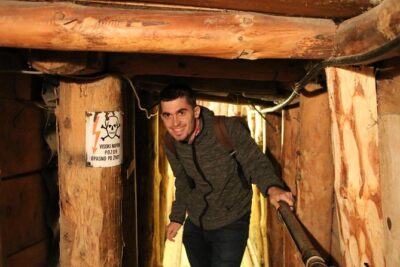
Tunnel Museum: Bosnian & Yugoslav Wars Tour with War Veteran
Read our review →
Sarajevo War Tour: A Veteran’s Story of the Siege (fees included)
Read our review →
Break-up of Yugoslavia & The War in Mostar: Life Under Siege
Read our review →
Sarajevo to Srebrenica: Genocide Study Tour with War Veteran
Read our review →
Sarajevo Grand Tour: Old Town, War Tunnel, Olympic Sites & More
Read our review →Browse the lists this tour appears in